
Soller adopts park low-emission zone — who wins, who loses?
Soller adopts park low-emission zone — who wins, who loses?
Soller has reallocated around 700 parking spaces for residents and redirected visitors to park-and-ride on the outskirts. A reality check: relief or displacement?
Soller adopts park low-emission zone — who wins, who loses?
Key question
Who really benefits from the low-emission zone (LEZ) in Soller that has been in effect since February 27 — the residents, the visitors, or merely the traffic statistics?
Critical analysis
The municipality has converted about 700 previously paid ORA spaces into resident parking and moved visitor parking areas to the outskirts with the aim of relieving the historic centre. This policy was described in Sóller wants to tame the parking chaos: Three parking lots and 300 resident spaces — is that enough? On paper it seems logical: fewer non-resident parkers, quieter alleys, more space for locals. In practice, however, cracks appear. Many drivers avoid paid park-and-ride facilities and still try to park close to the centre for free or in zones that are still allowed. Where the new ZAR rules (green zone) do not yet cover all side streets, such as Carrer de Sa Mar, competition for free spaces remains high.
What's missing in the public debate
There is often a lack of self-critical discussion about enforcement, payment models and the convenience of transfer options: How often do shuttle buses run from the park-and-ride? Are prices structured so that tourists actually use the peripheral lots? And what about people with reduced mobility who depend on proximity to the centre? Rarely discussed are possible displacement effects to neighbouring towns or the long-term measurement strategy: which indicators should show whether air quality, traffic noise and shop revenues benefit? A similar discussion arose when Palma introduced a restrictive zone, documented in Palma locks out holidaymakers: Low-emission zone with side effects.
An everyday scene from Soller
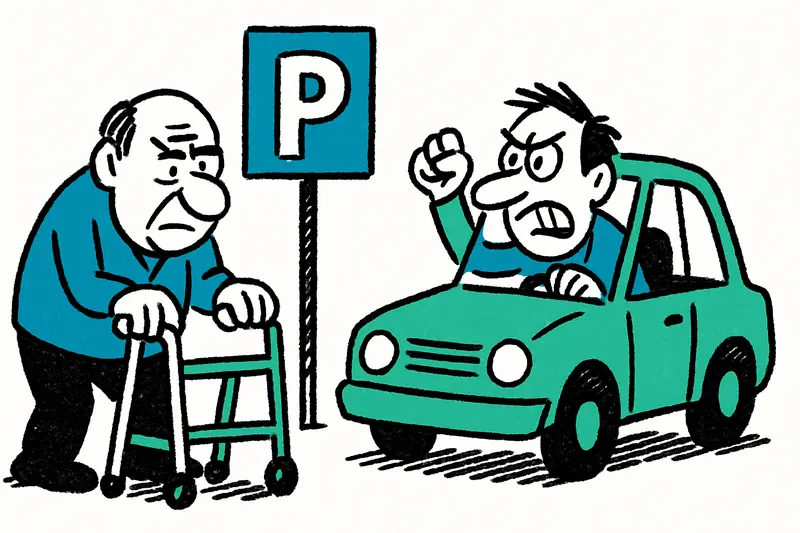
In the morning, when the tram clatters past the station and the market smells of orange blossom, it becomes clear: a delivery van is manoeuvring in the Rua, a pensioner makes his rounds with a walker searching for a familiar parking spot, and two cars slowly circle Carrer de Sa Mar — too often the hunt ends with an annoyed look and the decision to stop in the next side street. The adjustment is noticeable, but not without friction.
Concrete solutions
1) Immediate, large-scale signage and an information campaign in several languages; 2) Increased frequency of shuttle services from the park-and-ride (at least every 10–15 minutes during the high season) and the introduction of inexpensive combined tickets; 3) Flexible pricing: short-term offers in the centre for people with need, day rates at the P+R for day-trippers; 4) Digital resident parking permits and temporary visitor permits via an app to reduce abuse; 5) A monitoring phase with publicly accessible indicators after three, six and twelve months so adjustments can be made transparently. For background on stalled projects affecting P+R and bypass plans, read Soller in permanent gridlock: Why the bypass isn't progressing.
Concise conclusion
The idea of relieving Soller’s historic heart of non-resident parkers is sound. What will be decisive is how the municipality closes the gap between rules and everyday life: without reliable connections, fair prices and solid enforcement the measure risks becoming a displacement campaign rather than a sustainable improvement. Anyone sitting on the Plaça and hearing the tram whistle will quickly notice: politics alone are not enough; practical solutions must follow.
Frequently asked questions
What does the low-emission zone in Sóller mean for parking in the town centre?
Is it still easy to find parking in Sóller if you are not a resident?
Are park-and-ride facilities in Sóller worth using?
Will the new parking rules in Sóller help residents?
How are low-emission zones in Mallorca usually enforced?
What should visitors to Sóller know before driving into the historic centre?
Does the parking change in Sóller affect people with reduced mobility?
Why do parking changes in Sóller often create debate?
Similar News

Record season, empty coffers: Who really benefits from the tourism boom?
Full hotels and more flights: the numbers sound impressive — yet many locals feel no benefit. A reality check with an ev...

Pool ordered for €46,000 – €23,000 paid, no work carried out: A fraud case in Palma
A homeowner in Palma transferred €23,000 for the construction of a pool. Weeks later it emerged that no building applica...

Summer greetings from the Pitiusas island: Gottschalk and Krüger enjoy the sun on Ibiza
A friendly photo of Thomas Gottschalk and Mike Krüger on Ibiza evokes memories of their shared film years and shows that...
Occupied in a Few Days: When Property in Mallorca Turns into a Dispute
Six young men were arrested in Palma after homeowners returned and could no longer open their own door. A case that rais...

Serious fall at Port d’Andratx: Who protects cyclists on this route?
A 66-year-old German cyclist fell between Port d'Andratx and Camp de Mar, hit his head and was taken to hospital. One ac...
More to explore
Discover more interesting content

Can Cap de Bou

Townhouse Lleo 72
