
Soller in permanent gridlock: Why the bypass isn't progressing
For months the Soller bypass has been stalled: plans for roundabouts, a cycle path and park-and-ride exist, but signatures, responsibilities and enforcement are missing. What this means for residents, bus drivers and tourists — and which steps are now necessary.
Soller in permanent gridlock: Why the bypass isn't progressing
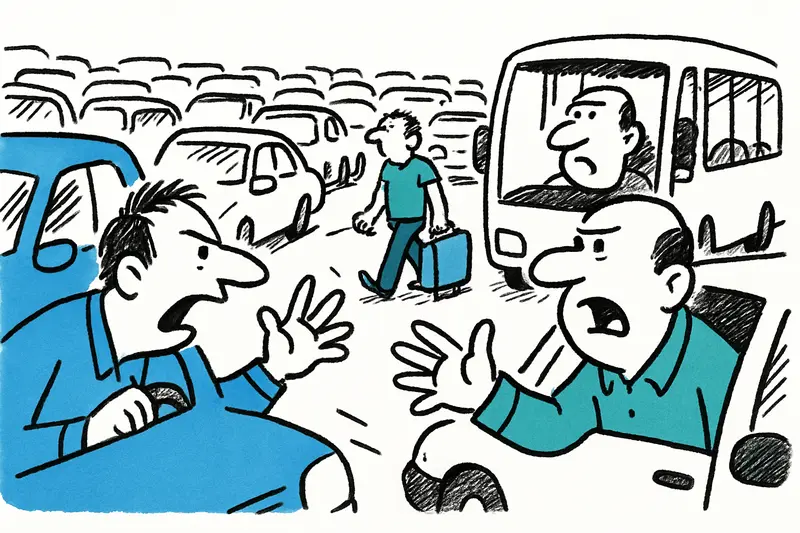
It's just after nine, the sun sparkles on the café tiles, and yet there is no holiday calm on Soller’s bypass. Traffic moves slowly, buses struggle at narrow spots, tourists with suitcases use the carriageway because there is no sidewalk — and the familiar horns drift over from Can Repic each morning. In the evenings between 17:00 and 19:00 the same scene repeats: patience, congestion, annoyed faces.
The plan — and why it doesn't leave the desk
Everything is actually well thought-out: four new roundabouts, a continuous cycle path, clearly designated park-and-ride areas and parking bans on the hard shoulders. For many, a clear gain in safety and quality of life. Still, nothing happens. The central question is: Is the problem the plans themselves or the organisation behind them?
The answer is more complicated than a technical report. It's not a lack of proposals but a lack of reliable exchange between the island council, the traffic authority DGT and the municipal administration. Responsibilities are being passed around. Signatures, approvals, coordination — all of this has been dragging on for months. People talk about it in the cafés at the Plaza; their tone is sceptical, as described in Atasco, discusión y estancamiento: la circunvalación de Sóller está atascada. "The plans are there, but the signature is missing here and the OK there," says a resident who often travels by bike. A typical scene: good intentions, weak management.
Under the radar — seasonal parking closures and the power of convenience
One cause that receives too little attention in public debate is seasonal effects. Official parking areas are sometimes temporarily closed — for safety reasons or because of events — and drivers then simply park on the hard shoulders. Bollards have been installed and new parking spaces signposted, yet many ignore them. Not only out of thoughtlessness, but also out of convenience: the shortest route to the sea or a shop is more tempting than searching for the park-and-ride.
The result: blocked lanes, delayed buses, delivery vans forced to reverse, a pattern noted in Kilometer-long traffic jams towards Soller: Why clouds paralyze the village. Enforcement? Hardly any. The local police cannot be everywhere at once. The outcome is a continual patchwork of temporary solutions instead of a clear traffic layout.
The hidden costs of the standstill
What sounds like a bothersome everyday phenomenon has a price. Traffic-related delays mean longer delivery times for businesses, timetable delays for bus companies and more noise and fumes for residents. The scale of vehicle flows is highlighted in Soller Tunnel: Daily Record and the Problem Behind It. Last but not least, the risk for pedestrians rises, especially for older people or families with children, when they have to share the street because a sidewalk is missing.
Less considered is the opportunity a well-designed cycle path would bring: less car traffic, better air, more visitors exploring the town on foot or by bike. But that remains visionary as long as implementation is open.
Concrete steps needed now
1. A binding timeline with clear deadlines and responsible parties. Not just talks, but signed agreements between the island council, DGT and the municipality.
2. Interim solutions for the next season: temporary sidewalk protections, clear markings for pedestrian routes, modular temporary roundabouts where needed. Small measures that show quick results and reduce dangers.
3. Increased enforcement and flexible parking rules: mobile teams, targeted operations during peak times and clear communication to tourist groups — in German, English and Spanish — so that no one walks on the carriageway out of ignorance.
4. A mediator or project manager to take on coordination and drive the process forward measurably. Often it's not the money that's missing but the person who unties the knot.
5. Involvement of residents: a citizens' forum could shorten months of waiting because those affected can name concrete problems — from the school route to the daily bus line.
What could happen if the deadlock is resolved
If the roundabouts are built and the cycle path completed, the daily soundscape will change. Less honking, less frantic manoeuvring, more space for cafe chairs on cooler afternoons. Buses will run on time, deliveries will go more smoothly, and pedestrians will feel safer. This is not a distant dream but a realistic goal — provided the responsible parties finally sign what's needed and implement the first visible measures before the next season.
Until then, Soller will remain a bottleneck at peak times. The bakeries in the morning will continue to witness stressed drivers who hope for a solution with coffee in hand. Skepticism is justified. Yet a binding plan, short-term protective measures and more communication could turn the permanent traffic jam into a genuine opportunity for a more liveable main road.
The horns may echo for a few more months — but they could also be the starting signal for decisive action at last.
Frequently asked questions
Why is traffic in Sóller so bad at peak times?
Is it safe to walk along the bypass in Sóller?
Why hasn’t the Sóller bypass project moved forward?
What changes are planned for traffic around Sóller?
Where should you park when visiting Sóller by car?
Does the traffic problem in Sóller affect buses and deliveries?
What would improve daily life in Sóller if the bypass were fixed?
What can authorities do now to ease congestion in Sóller?
Similar News

Release after bloody attack in Palma: Why the court's decision raises questions
An 18-year-old who allegedly inflicted a serious neck injury on a man at Plaza Gomila using a wristwatch wrapped around ...
Kidnappings in Inca: Three young men forced into car trunks and abused in the forest – a reality check
In Inca, three 18-year-old men were forced into car trunks by masked assailants at the Plaça des Bestiar, taken to a for...
Spreading Massification: The Brake That Still Has Much Work to Do
Marga Prohens announces limits on volume tourism. The measures sound harsh — but are they enough to save everyday life, ...

Through the Keyhole onto the Party Yacht: How Daniela Katzenberger Is Planning Her 40th on Mallorca
Daniela Katzenberger turns 40 and wants to celebrate it on the island — likely with a boat, cake and her mother. A relax...
By Boat Instead of the Road: Palma's Water Bus — a Reality Check
The 'Bus Nàutic' launches in two stages — but questions remain over interim operations, fares and environmental requirem...
More to explore
Discover more interesting content

Can Cap de Bou

Townhouse Lleo 72
