
When the Sóller Valley Becomes a Sea of Cars: Tunnel Closures, Traffic Jams and What's Missing Now
When the Sóller Valley Becomes a Sea of Cars: Tunnel Closures, Traffic Jams and What's Missing Now
On Thursday midday numerous rental cars flooded the Sóller Valley. Tunnels were temporarily closed, residents were stuck – a situation that raises questions about control, mobility and safety.
When the Sóller Valley Becomes a Sea of Cars: Tunnel Closures, Traffic Jams and What's Missing Now
Key question: How much traffic can the valley still handle – and who ensures that help can get through in an emergency?
On Thursday midday the valley of Sóller turned for several hours into a road full of stationary vehicles. Rental cars lined up onto the country roads, the tunnel was temporarily closed so that the queues could "drain off." On the mountain route to Valldemossa vehicles also accumulated. Clinic and ambulance vehicles reportedly had difficulty finding a way through. At the same time village festivals had reduced the number of parking spaces. These are not abstract figures; this was an afternoon of honking engines, hot bonnets and exasperated people.
In short: the infrastructure in this corner is not built to absorb a wave of short-term visitors for hours. Narrow, winding roads, historic rail connections, orange groves right next to the carriageway and squares that barely suffice for two or three hundred cars collide with the rental car stream. At almost 40 degrees the situation also becomes a safety issue: long waiting times, restricted access for emergency services and stressed residents.
Critical analysis: several adjustment knobs interact. First: the supply of rental cars remains high, while a steering mechanism for particularly frequented day-trip destinations is missing. Second: local events like village festivals are not always linked to external traffic management; parking spaces shrink without alternative parking being offered. Third: signage and information for tourists are often fragmented and inconsistently multilingual – many drivers simply follow their GPS and end up in the traffic.
What is missing from the public debate: concrete responsibilities. Who must react when a tunnel is used temporarily as a "traffic meter"? Who coordinates between the municipality, police, traffic authority and rental car companies? Hardly discussed either is how to proactively encourage visitors to use other modes of transport – the historic train and the beaches are attractive alternatives, but they are not promoted enough or linked with practical park-and-ride offers.
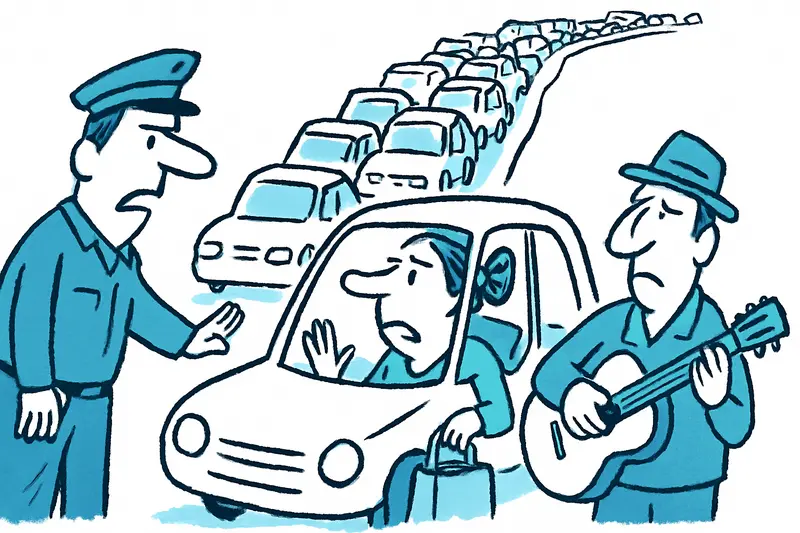
A scene from everyday life: in front of the café at Sóller station locals stand while the scent of orange groves drifts by; a musician tunes a guitar as a line of German and Spanish license plates inches along behind him. An older woman with a shopping bag sits in her car and waits; she gestures to the police patrol to point out the blocked side streets. The hum of engines mixes with the church bells – a contradiction between village idyll and traffic chaos.
Concrete solutions that could have quick effect: temporary park-and-ride points on the main roads with shuttle buses to the town center; coordinated access windows for rental cars on weekends and during events; clear priority lanes and passage rules for emergency services; digital, multilingual real-time information for guests already at vehicle pickup; stricter controls against illegally parked vehicles that block narrow streets. Rental companies are also called upon: short information sheets with rules of conduct for sensitive routes, indications of parking alternatives and fines for blocking emergency routes would help.
In the long term planning is needed to steer visitor behavior: better promotion of the train and bus connections, expansion of secure parking areas outside the historic core, and a joint emergency strategy by municipalities and traffic authorities. Technical measures such as variable signs and traffic light control at bottlenecks can provide targeted relief.
Conclusion: the Sóller Valley is not a highway system – it is a cultural landscape with narrow roads, lively villages and sensitive processes. When weekend trips meet mass tourism, the valley reaches its limits. Responsibility is spread across several parties: administrations, traffic planners, organizers, rental car companies and the guests themselves. Without coordinated, practical measures such afternoons risk becoming the norm – with increased danger for people and emergency care. It is time to name the problem openly and take concrete steps before the next traffic jam costs not only nerves but lives.
Frequently asked questions
What is the best time to visit Mallorca for good weather and outdoor activities?
Are Mallorca beaches suitable for families with kids?
What activities should I consider in Mallorca for outdoor enthusiasts?
What should I pack for a trip to Mallorca in spring and summer?
Is it safe to swim in Mallorca waters and what safety should I know?
Which towns or sights in Mallorca are worth a day trip?
How can I get around Mallorca without renting a car?
What should I know about Mallorca’s weather patterns and seasonal wind?
Similar News
A Glimpse Beneath the Surface: Rare Green Sea Turtle Sighted off Magaluf
While diving off Magaluf, a recreational diver filmed a green sea turtle — an unusual sight in the western Mediterranean...
When the Trees Flew: Whirlwind Hits Cala Millor – Who Protects Terraces and People?
Early in the morning strong gusts uprooted pines on terraces in Cala Millor. There were only property damages, but the i...

From the Studio to the Beach Villa: Jana Azizi Starts Anew in the Real Estate Business in Mallorca
Former TV presenter Jana Azizi brings her media experience to the island: together with Kühn Properties she will in futu...

Security alert at Ballermann? Emmy Russ accuses Megapark
After a night at Ballermann, German reality star Emmy Russ reports a physical confrontation with security staff at the M...

From Studio to Villa: Jana Azizi Becomes a Real Estate Agent in Mallorca
The former TV presenter is building a second professional chapter in Mallorca: together with partners from the real esta...
More to explore
Discover more interesting content

Boat Tour with BBQ along Es Trenc Beach

Private transfer from Mallorca Airport (PMI) to Pollensa
