
When Parking Lots Become Neighborhoods: Son Hugo and the Logic of the Housing Shortage
When Parking Lots Become Neighborhoods: Son Hugo and the Logic of the Housing Shortage
Around 150 people live in caravans at Son Hugo. They are forming a neighborhood association — and raise the question: Who takes responsibility for housing in Palma?
When Parking Lots Become Neighborhoods: Son Hugo and the Logic of the Housing Shortage
Around 150 people in caravans demand recognition — and pose an uncomfortable guiding question
Guiding question: Can a makeshift cluster of caravans at Palma's ring road legitimately exist as a neighborhood — or is it merely a symptom of a larger political failure?
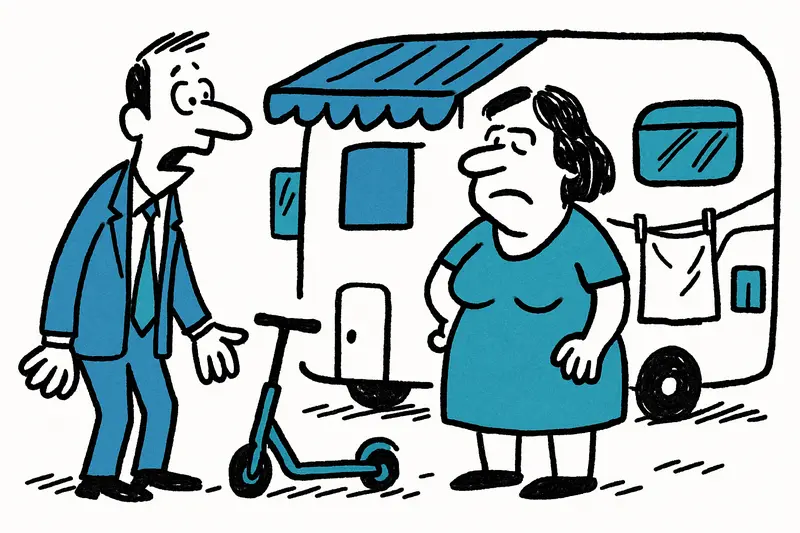
If you pass the Son Hugo sports facility in the early morning, you won't see a headline but an everyday scene: children's scooters next to awnings, laundry fluttering, the smell of chlorine from the pool somewhere nearby, and the Vía de Cintura roaring in the background. About 150 people have found a new address here — not out of adventure, but out of economic necessity. Many are employed, some are self-employed, and there are about a dozen children. Their situation is clear: many can no longer afford the usual rents in Palma.
The immediate trigger is known: a simple two-room flat now commands cold rents of around €1,500. For workers with ordinary incomes, that often means housing searches fail at the price barrier. Some families and individuals initially moved their vehicles across various public spaces — until Son Hugo became a more long-term location because there was space and, for the time being, no eviction.
The provisional settlement is now becoming organized: at the end of this month the residents plan to formally establish themselves as a neighborhood association. Local spokespeople are stepping forward. Under current plans, Begoña Iglesias is to take the chair and Javier Gómez the office of treasurer. Already in autumn 2025, representatives such as Javier González and Begoña Gómez travelled to Brussels to draw attention to the situation of island residents. Their demands targeted speculative vacancies and called for stronger regulation of investors.
This is an unusual step — and at the same time a clear signal: those affected are not just asking for temporary aid, they want legal recognition, rules and contact persons. But this is exactly where it formally fails: the site belongs to the city and is designated as a parking lot for a sports facility. There is no development plan, no official address, and therefore no simple way to receive mail, register children, or permanently access municipal services.
Two further reasons emerge from the local development. First: displacement from other places. Parts of the group came from Son Güells, where construction by a major developer is creating new residential complexes and space for caravans is disappearing, as documented in Son Bordoy under scrutiny: when new development swallows the neighborhood.
Second: a lack of social housing offers in sufficient numbers. Together, both factors turn parking areas into provisional neighborhoods, reminiscent of Son Espases parking chaos.
What is often underrepresented in the public discourse I want to point out here: first, the perspective of the children and the working people who need a fixed address — not only for dignity but for access to school, health care and jobs. Second, the role of municipal land: why do parts of public land remain unused while people live there provisionally, even while plans like Palma plans 131 parking spaces on the Lluís Sitjar site are debated? Third, the management of second homes and holiday rentals: empty apartments are often mentioned in debates, but concrete instruments to reactivate them are missing.
Concrete solutions that go beyond appeals could look like this: in the short term a regulated interim solution — official recognition as a temporary neighborhood area with minimal supply standards (sanitary facilities, waste disposal by Emaya, electricity connections). In the medium term the conversion of parts of municipal land into social housing and the establishment of a mandatory register of vacant apartments with a tax surcharge for non-use. In the long term: a binding quota of social housing in new developments and stricter control of holiday rentals so that housing serves local needs.
On the side: the residents themselves signal willingness to share responsibility. They want to maintain the site, remove weeds and seek dialogue with the operators of the swimming facility. Emaya has explicitly offered support with waste disposal; such practical arrangements are important to avoid tensions with neighbors and users of the facility.
An everyday sentence you must not ignore: many here pay taxes, are employed — but the housing situation makes social participation difficult. Recognition by the town hall or clear legal regulations would not mean covering up problems. On the contrary: it would create transparency and obligations for all involved.
Conclusion: Son Hugo is not an isolated case but a warning signal, as shown in When the Neighborhood Gives Way to the Market: Paths Out of Mallorca's Housing Shortage. The honest question for administration and politics is not whether to tolerate caravans, but how to design housing policy so that people are not forced to live in parking lots. Those who clear the site now without offering alternatives only shift the problem. Those who combine pragmatic recognition models, investments in social housing and an effective vacancy tax can turn the provisional into a bridge to more stable housing.
The morning at Son Hugo remains the same: children's laughter, the smell of chlorine, the drone of the ring road. It would be good if politics and society soon found the same rhythm so that this place is no longer just a stopover.
Frequently asked questions
Why are some people living in caravans near Son Hugo in Palma?
How expensive are rents in Palma right now?
Can a caravan settlement in Palma become an official neighbourhood?
Why is a fixed address so important for people living in temporary housing in Mallorca?
What happened to the caravan residents from Son Güells in Palma?
Is there enough social housing in Palma to help people leaving temporary camps?
What solutions are being discussed for the housing shortage in Mallorca?
What is happening at Son Hugo in Palma today?
Similar News
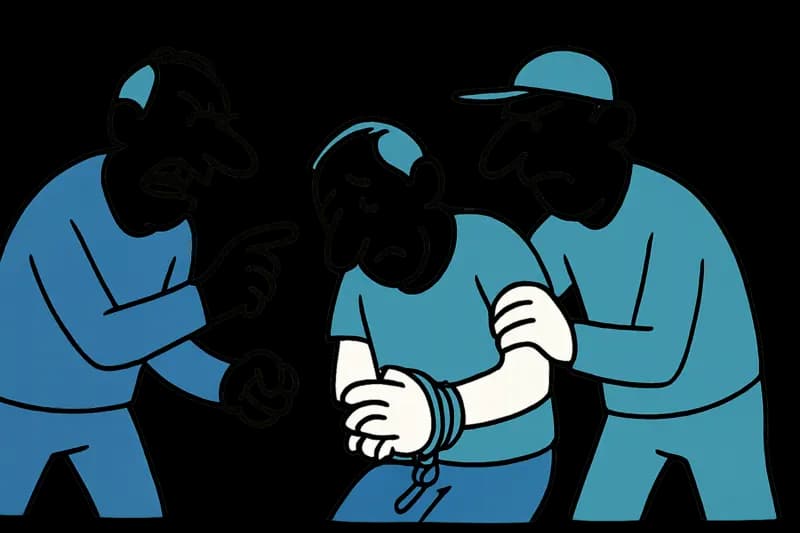
Mistaken identity with fatal consequences: Brutal assault in S'Aranjassa — what's missing in the follow-up?
At S'Aranjassa a visitor to a finca was tied up, beaten and thrown out of a van. Three men have been arrested, including...
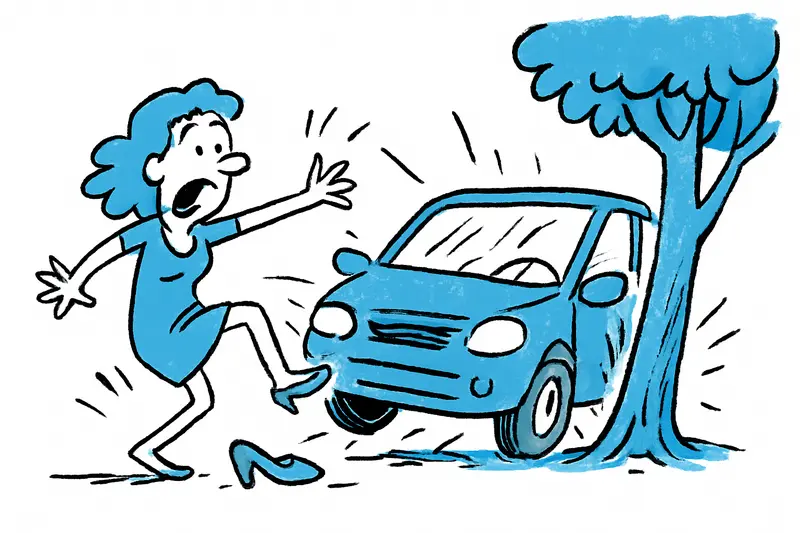
High heel slips, car accelerates: accident on Camí de Son Hugo
A woman lost a high-heeled shoe on the forecourt of the sports facility at Camí de Son Hugo. The car accelerated, mounte...
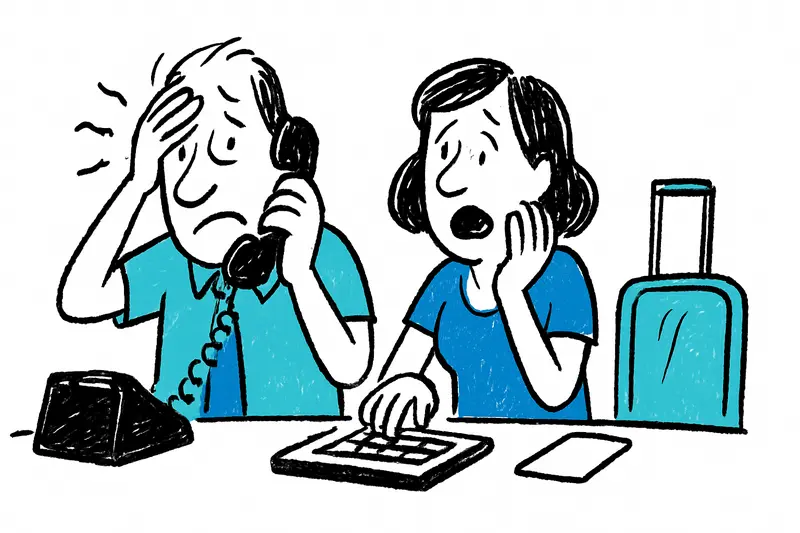
Phone Scam: How Two Hotel Employees at Playa de Palma Lost Thousands of Euros
One morning in September, two reception employees at Playa de Palma were pressured by alleged alarm-company staff — in t...
When the Wallet Becomes a Danger: Attack in Peguera and Lessons for Mallorca
In Peguera, two women are said to have stolen the wallet from a 75-year-old German couple. When the victim intervened, t...
Plata stays Plata: Young people take over, Llonguets remain
A small bar on Carrer de l'Argenteria will continue: Tolo Serra hands the place over to young Mallorcans at the end of t...
More to explore
Discover more interesting content

Can Cap de Bou

Townhouse Lleo 72
