
Son Sant Joan: Madrid halts explosives depot — a reprieve with unresolved questions
Son Sant Joan: Madrid halts explosives depot — a reprieve with unresolved questions
Madrid has halted plans for an explosives depot at the Son Sant Joan air base for now. The decision brings relief — but many practical and democratic questions remain unresolved.
Son Sant Joan: Madrid halts explosives depot — a reprieve with unresolved questions
Key question
Key question: Was the planning of an explosives depot near the airport adequately carried out — and who is responsible for safety and transparency on site?
What happened
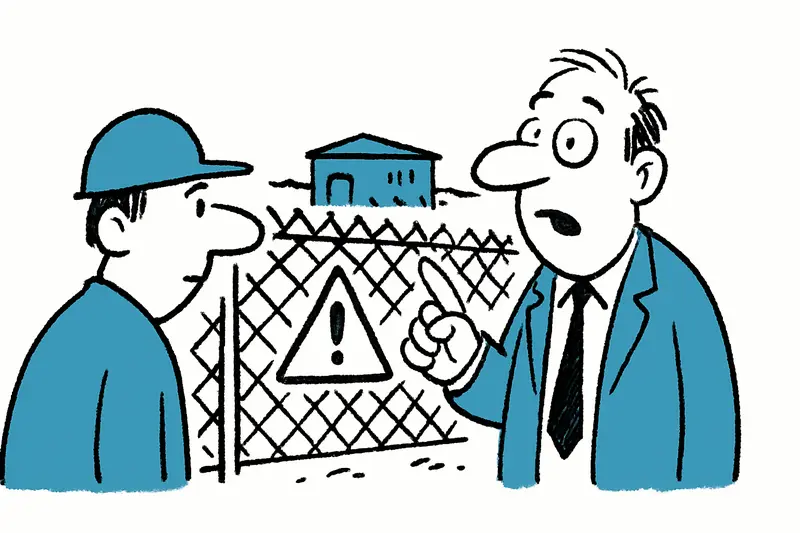
The originally announced logistics project of the armed forces at the Son Sant Joan air base is currently no longer being actively implemented, as reported by Ammunition Depot at Son Sant Joan: Prohens Demands Clarification — Growing Concern in Palma. The area where work had been prepared — parts have already been fenced off — remains untouched for the time being while Madrid searches for other locations, apparently also outside the Balearics. Technical documents, including an extensive pyrotechnic safety study, played a role in the internal assessment. Among other things, this study examined safety distances for a maximum storage capacity of 75 tonnes; for this maximum variant the required distances proved unacceptable at this location. The analysis then lists several configurations with reduced charge quantities and calculated minimum distances for each.
Critical analysis
The pause in the decision is reassuring in the short term, but not a solution. First, the sequence shows how quickly strategic decisions can be planned without regard to the local context: land is cordoned off, plans announced, the population reacts with concern — and then it is stopped. That leaves people who work daily at the airport with a sense of uncertainty: baggage handlers, taxi drivers, hoteliers who talk in the morning in the departure hall about whether construction will disrupt operations, a concern described in Weapons Depot at the Airport: How Safe Is Mallorca Really?.
Second, the question of risk assessment remains open. A technical study may show which distances are necessary under certain assumptions. But it does not replace an independent assessment of the possible consequences for civil infrastructure, the local environment and the tourism economy, which are strongly interwoven here. Third, there is a democratic gap: Who decides concretely which interests — military, civilian, tourist — have priority and according to which criteria?
What is missing in the public discourse
The debate revolves too much around buzzwords like "strategy" and "safety distances" and too little around concrete, comprehensible information for residents. Clear answers are missing to questions such as: What quantities would be permanently required? Who controls transport and security? Are there emergency plans for coordination with airport operators, hospitals and municipalities? Which alternatives were seriously considered — infrastructure on the mainland, existing military depots with adequate distance, or decentralized storage models? More context on the implications of the site's classification can be found in Mallorca on Uneasy Standby: What the 'Defense-Interest' Status Really Means for Son Sant Joan.
Everyday scene from Mallorca
In the early afternoon, when planes taxi in and out and the cafés near the airport are full of service staff, residents and workers hear the familiar mix of rolling suitcases, taxi horns and seagull cries. It is here that uncertainty now arises: a construction site that suddenly goes quiet; a fenced patch of earth behind the security fence; conversations at kiosks about possible impacts on the coming summer. These small scenes show how much strategic decisions affect everyday life.
Concrete solutions
1) Independent, publicly accessible review: The technical reports should be externally reviewed — by civilian pyrotechnics and safety experts, environmental specialists and port/airport experts. The results must be published in an understandable form.
2) Local participation: Information and hearing rounds with municipal representatives, the airport company, unions, hoteliers and neighborhood initiatives; this local engagement is also called for in Munitions Bunker Near Son Sant Joan: Why Mallorca's Citizens Should Have a Say. Decisions must not only be technical but also politically legitimate.
3) Transparent comparison of alternatives: Every option under consideration — relocation to the mainland, use of existing military depots, decentralized storage concepts — must be compared in terms of safety, cost, time and impacts on tourism and the environment.
4) Preventive measures: As long as a solution is missing, binding transport and security protocols are required, reduced storage quantities and regular safety exercises with civilian authorities. This also includes a publicly accessible emergency plan for surrounding municipalities and hospitals.
5) Economic safeguards: If infrastructure is nevertheless built near the airport, compensation arrangements for those affected in the tourism sector and clear commitments on operating hours and noise limits are necessary.
Conclusion
The suspension of the project gives Mallorca a breather. It is an opportunity to develop the discussion from technical details toward a more transparent, democratic decision. Those who want to minimize future risks must now ask the right questions, involve experts and inform the people on site. Without such steps, the matter is only postponed — and the unease in the cafés and taxi queues in front of Son Sant Joan remains.
Frequently asked questions
Is the explosives depot near Son Sant Joan airport still going ahead?
Why has the ammunition depot plan near Mallorca airport raised concern?
How could an explosives depot near Son Sant Joan affect airport workers and daily operations?
What safety checks are important before storing explosives near Mallorca airport?
Could the explosives depot be moved outside Mallorca?
What does the pause in the Son Sant Joan depot project mean for Mallorca residents?
What should Mallorcans ask about any military storage project near Palma airport?
Why does the Son Sant Joan depot debate matter for Mallorca’s tourism sector?
Similar News
Magaluf: Watchtower Alarm – Lifeguards Pull Unconscious Beachgoer from the Water
After a drama in the late afternoon, two lifeguards at Magaluf beach rescued an unconscious 44-year-old man. He was stab...
Turquoise in the City: How dangerous is the color play of the Sa Riera?
The Sa Riera in Palma suddenly turned turquoise — a pretty motif, but behind the effect lies a discharge of saline waste...

Jeckliner at Sunnesching: Cologne spirit sets sail from Palma
In September 2027 the Mein Schiff 2 briefly becomes a floating carnival stage: four days with Cologne bands, comedy and ...
Finally Home: Mike and Leyla Heiter Buy Villa with Sea View in Mallorca
The reality TV couple Mike and Leyla Heiter have bought a house in Mallorca with a roof terrace and sea view. An Instagr...

Arrest after series in Palma: Who protects apartments from repeat offenders?
The National Police arrested a man in Palma who investigators say may have broken into several apartments. In one incide...
More to explore
Discover more interesting content

Can Cap de Bou

Townhouse Lleo 72
