
Son Servera Draws a Line: E-Scooters Banned on the Coast
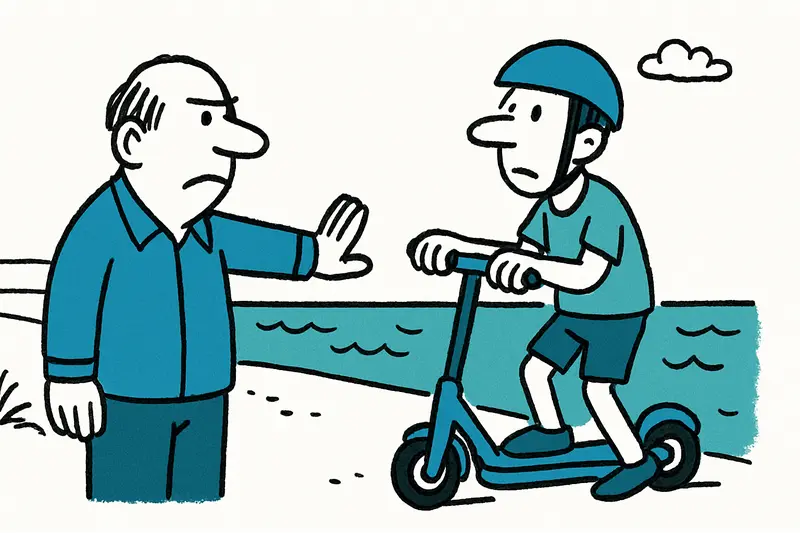
From November, e-scooters will no longer be allowed on the first line by the sea in Son Servera. The municipality cites safety reasons — but how feasible is enforcement in practice and what are the consequences for rental companies, delivery services and residents?
Son Servera Draws a Line: E-Scooters Banned on the Coast
From November a new regulation comes into force in Son Servera that for some residents feels like a long-awaited relief: e-scooters are no longer permitted in the first line by the sea. The justification is familiar and plausible — more accidents, too much mixed traffic on narrow promenades. The news came as a surprise for tourists, rental companies and some delivery services, as reported in Son Servera takes a clear stance: e-scooters to be banned from the promenades. The municipality now faces the task of making the decision visible, fair and enforceable.
The key question: protecting pedestrians — or just shifting the problem?
The central question remains: does the ban really provide noticeable protection for children, older people and dog walkers — or does it merely shift the problem to side streets and cycle paths? On the promenade of Cala Millor, where seagulls screech in the wind and the surf sets the rhythm, retirees with newspapers, parents with strollers and delivery riders meet in tight turns. Many welcome the new rule. But the boundary “first line by the sea” is fuzzy in practice. Where does it begin, where does it end? Maps are planned, as highlighted in Son Servera traza una línea clara: los patinetes eléctricos deben desaparecer de los paseos, but without clear ground markings grey areas will arise where conflicts persist.
The measures are not empty words: mandatory liability insurance, phones and headphones forbidden while riding, a speed limit of 25 km/h and fines of up to 1,000 euros. On paper it looks consistent. Whether it works in everyday life depends on how the municipality organizes markings, signs and controls — and how responsibly rental companies inform their customers.
Aspects that are rarely raised loudly enough
Several sides of the safety debate often remain underexposed. First: the rental companies. Many operate seasonally, with short assignments and high turnover pressure. Without mandatory information obligations at handover, holidaymakers will not automatically understand local rules. Second: the economic side. Sharing providers, kiosks, small landlords and even delivery services are part of the local ecosystem. An abrupt ban without compensatory measures hits livelihoods and creates resentment.
Third: private e-scooters. A ban on the promenade affects not only sharing fleets but also locals and guests with their own devices. Fourth: the technology. Geo-fencing can automatically stop fleet rides, but many older rental vehicles and private scooters lack such software. The result: regulatory gaps and a sense of unequal treatment.
And finally the social component: young people often see electric scooters as freedom, older residents as a nuisance. Without dialogue, frustration threatens on both sides. In practice I have observed a teenager frowning when asked to get off, while an older woman breathed a deep sigh of relief — both voices deserve to be heard.
Concrete opportunities and practical solutions
For the ban to be more than a pretty line in the official gazette, pragmatic measures are needed. First task: clear, visible markings at Cala Millor, Sa Coma and the fishing port. Pictograms on the ground, multilingual signs and information stands during the season help avoid legal uncertainty. Rental companies should be obliged to provide brief information at handover and to record acknowledgement digitally or by signature, as suggested in Son Servera marca un límite: patinetes eléctricos prohibidos en la costa.
Technically more effective would be geo-fencing for sharing fleets — the fastest method to prevent rides in restricted zones. The municipality could consider retrofit subsidies so providers can upgrade older fleets accordingly. Private scooters need different solutions: targeted controls, but also educational campaigns.
For sanctions a graduated approach is advisable: first notices, then warnings, only fines for repeat offenders. That is more socially acceptable and increases acceptance. Additionally, parking zones at the edge of the promenade should be established to prevent random parking. For delivery services, exemptions with clear time windows could be considered — ensuring supply without overloading peak times.
A realistic outlook
The winter trial period gives the municipality a chance to find mistakes and make improvements. If Son Servera now communicates transparently, posts maps, involves rental companies and speaks with residents, the new boundary can become a real improvement for everyday life. If these steps are missing, the rule that looks good on paper risks producing detours, clogged side streets and new trouble in practice.
In the end, it's not just about rules. It's about the sound of the coast: the soft lap of the waves, the distant clatter of the fishing boats, the soothing rustle that many have come to appreciate again. If Son Servera takes this seriously, the promenade can become a place to walk again without constant scooter noise. And that would be a gain not only for locals.
Frequently asked questions
Are e-scooters allowed on the seafront in Son Servera?
Why has Son Servera banned e-scooters along the coast?
What are the main e-scooter rules in Mallorca right now?
Can tourists use rental e-scooters in Cala Millor?
How will the e-scooter ban be enforced in Son Servera?
What happens if you ride an e-scooter where it is banned in Mallorca?
Will the e-scooter ban affect private scooters as well as rentals in Son Servera?
What is the best way to avoid problems with e-scooters on Mallorca’s promenades?
Similar News
Goodbye Megayachts: Why Palma's Port Is Now Focusing on Small Luxury Liners
Four smaller luxury liners berthed in Palma at the same time recently — around 1,600 passengers on board, plus about 2,0...

Fear in the Sa Teulera Forest: Youth Groups Harass Cruising Zone in Palma
In the wooded area of Sa Teulera, those affected report verbal attacks, property damage and intimidation. How safe is th...

Axa opens first health center in Palma: €3 million, 650 m² and more local access for La Vileta
In the heart of La Vileta, Axa has opened its first own health center in Mallorca. On around 650 square meters and with ...

30 Years of Nit de l'Art: What Palma's Art Night Really Shows — and Conceals
Nit de l'Art celebrated its thirtieth anniversary: full galleries, young visitors — and the quiet tensions between the a...

Hunt for Older Holidaymakers: Arrests after Suspected Pickpocketing in Port d'Andratx and Bellver
Five suspects were arrested after investigators accuse them of targeted pickpocketing of elderly tourists in Port d'Andr...
More to explore
Discover more interesting content

Can Cap de Bou

Townhouse Lleo 72
