
Sparkasse removes airport billboard — was that enough?
Sparkasse removes airport billboard — was that enough?
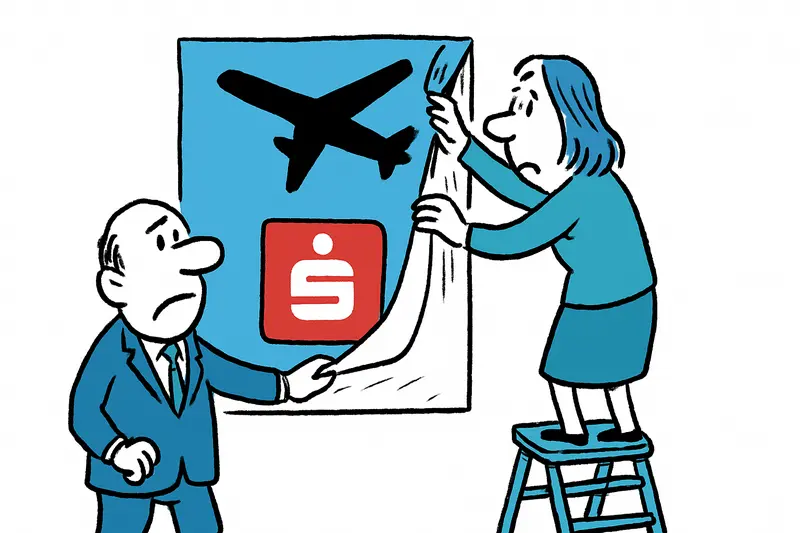
After criticism, the Sparkassen financial group has taken down the controversial advertising billboard at Palma airport. A reality check: symbolic gesture or real change for Mallorca?
Sparkasse removes airport billboard — was that enough?
Main question: Is taking down an advertising billboard at the Palma airport enough to seriously address the anger of many locals about mass tourism and reckless tourist behaviour?
Short version of the facts: The German Sparkassen financial group responded to criticism and announced it will remove a controversial advertising billboard at Palma airport. In a letter to Balearic tourism minister Jaume Bauzà, the company stated that advertising referring to mass tourism will be withdrawn in Mallorca and in Germany. This came as airlines adjust services, as with Condor stops Leipzig/Halle — Marabu takes over Mallorca. At the same time, the Sparkasse acknowledged that the high number of tourists and the behaviour of some guests can be burdensome for locals. The payment platform Wero remains in the advertising mix but will in future appear with different slogans.
Critical analysis
Removing a billboard is, first of all, a visible gesture. In the arrivals terminal, where travellers from Swedish, British and German flights arrive with headaches and luggage queues, such a message quickly stands out — and just as quickly is forgotten, despite recent improvements such as New Signage at Palma Airport: Luggage Drop-Off Made Easier. Such gestures have two faces: they ease outrage in the short term but do not create a new political or economic rule that permanently reduces tourism pressure.
The Sparkasse admits that the situation can be stressful for residents. That is notable because banks are rarely the loudest voices on social consequences, and this links to broader disputes like the residents' discount, discussed in Airlines demand €300 million: Is the residents' discount at risk?. Nevertheless, it remains unclear what exactly is behind the communication change: was the removal a reactive response to pressure, an image check by the marketing department, or part of a deeper strategy of consideration? Without transparency the measure seems like a band-aid on an open wound.
What is missing in the public discourse
Three things are missing: first, clarity about how companies will design their marketing campaigns in future in tensions such as 'promoting tourism vs. quality of life'; second, the perspective of those directly affected — hoteliers, taxi drivers, market stall owners in Son Gotleu or residents in Arenal — who often know pragmatic solutions; third, binding rules that govern advertising in sensitive public spaces. None of this is automatically replaced by a removed billboard.
There is also missing the discussion about how advertising can exacerbate local debates: a slogan on a mega-poster is not a harmless gimmick but shapes expectations. When it romanticizes mass tourism, it normalizes behaviours that later burden residents.
Everyday scene from Palma
A Tuesday morning at the airport: bus 1A departs from the terminal, a group of young female tourists pulls luggage behind them laughing, an older man on his way to work quietly swears about the traffic on Passeig Mallorca, a taxi driver maneuvers between suitcases and rolling bags. It was in exactly this setting that the billboard hung — between duty-free signs and the smell of freshly brewed coffee. The gesture of taking the billboard down is visible here; what is missing is a tangible, lasting change for the people who have to endure this mix every day.
Concrete solutions
1) Advertising guidelines for sensitive places: the Balearic authorities could work with municipalities to develop binding guidelines on what advertising content is allowed at airports, in historic centres or on beaches. This doesn't have to be censorship but orientation: no glorification of mass tourism, clear indications of codes of conduct.
2) Dialogue forum companies — community: a moderated forum in which banks, platforms like Wero and local representatives from hospitality, trade and neighbourhoods regularly align goals and forms of communication. Not a press conference but real participation.
3) Make advertising consumption transparent: obligation to report campaigns, limited run times and feedback loops with local interest groups. Whoever advertises in Palma should also submit a short report on how the campaign was received by locals.
4) Earmark revenues: a small portion of advertising revenues from public spaces could flow into local projects — park maintenance, waste removal or night supervision in particularly burdened districts. This way advertising becomes not just marketing but part of a culture of responsibility.
Concluding remarks
Taking down the billboard is a step in the right direction, but it remains symbolic as long as it stands alone. For Mallorca, it's not just about words on cardboard but about a combination of rules, transparency and real participation formats. Whoever takes the island seriously does not just take down a billboard — they ask the people who live here and change procedures so that such conflicts occur less often. That is uncomfortable, takes time and sometimes costs money. But that's precisely the point: respect is shown not in quick gestures but in lasting agreements.
Frequently asked questions
Why did Sparkasse remove its billboard at Palma airport?
Is removing an airport advertisement enough to address Mallorca's mass tourism debate?
How do Mallorca residents feel about ads that seem to promote mass tourism?
What should companies consider before advertising at Palma airport?
What problems does tourism pressure create for people living in Palma?
What kind of advertising rules could help in sensitive places in Mallorca?
What role do local businesses play in Mallorca's tourism debate?
What would a more responsible tourism message look like for Mallorca?
Similar News
Body in the Basin of Port Adriano: Who Protects People During Crossings?
In the morning, just before noon: employees of a luxury marina discovered a floating body in the basin of Port Adriano. ...
Raised from the Sand: A Late Antique Merchant Ship Tells of the Sea off Can Pastilla
A 1,700-year-old Roman merchant ship was raised off Can Pastilla. Finds such as sail fragments and amphorae provide rare...
After the Storm: Why Many Fish Died at Riuet de s'Illot — and What's Still Missing
After the severe storm, numerous dead fish were found in the Riuet de s'Illot wetland. Who is affected, why it may have ...
Fire in Can Picafort: Family Rescued at the Last Minute – a Safety Check for the Promenade
A fire in a sports shop on the Can Picafort seafront forced the evacuation of a mother with four children. How safe are ...

Nine-year-old rescued after cliff fall at Cala Murada — How safe are Mallorca's coastal paths?
A boy fell roughly five meters down the rocks near Cala Murada. The dusk rescue was elaborate; a helper also had to be r...
More to explore
Discover more interesting content

Boat Tour with BBQ along Es Trenc Beach

Private transfer from Mallorca Airport (PMI) to Pollensa
