
Santa Maria: Anti-tourism graffiti at real estate agencies – who draws the line?
Santa Maria: Anti-tourism graffiti at real estate agencies – who draws the line?
Several real estate agencies in Santa Maria del Camí were daubed with anti-tourist slogans. The Guardia Civil is investigating. A reality check: what's behind it, what's missing from the public debate, and which steps could help locally?
Santa Maria: Anti-tourism graffiti at real estate agencies – who draws the line?
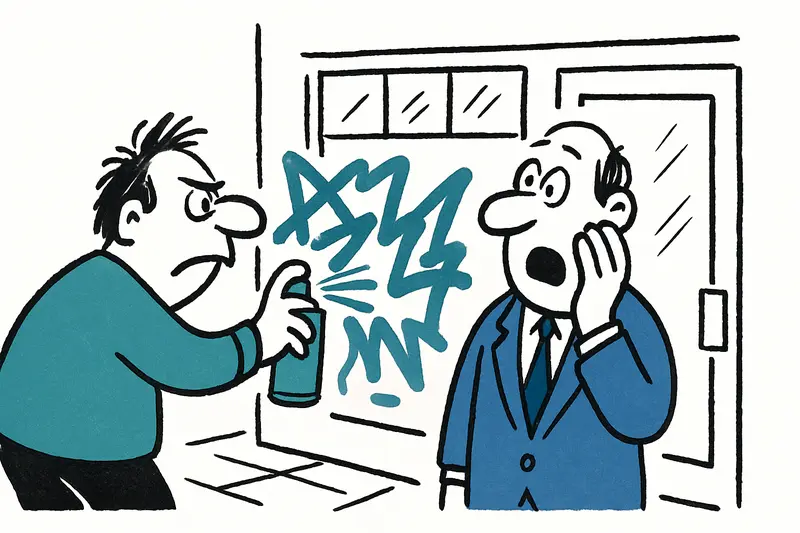
Early on Monday morning residents and business owners in Santa Maria del Camí discovered four real estate offices whose facades and sidewalks had been sprayed with slogans against tourists. The affected agency owner Sabela Concheiro of Olive Island Properties reported that her office was targeted by vandalism for the first time; other agencies in the municipality had already been affected earlier. Similar incidents—insulting slogans have repeatedly appeared on the island—are documented in New xenophobic graffiti at Playa de Palma – How is the island reacting?. The owners called the Guardia Civil, which is documenting the incident. Until the officers have completed their work, the graffiti must not be removed.
Key question
Who is behind the spray actions – isolated provocateurs or a sign of deeper tensions between locals and tourism interests in Santa Maria?
Critical analysis
The visible damage is simple: paint on facades, short-term image damage for the businesses, paperwork with the police. The message of the sprayers, however, cannot be dismissed so easily. On Mallorca there has been a long-running debate about allocation of space, short-term rentals and rising prices; graffiti against tourists are an expression of this, even if they are neither morally nor legally justifiable. Similar pressure on longstanding residents is documented in "They want to drive us out": Longstanding residents in Santa Catalina against alleged investor. The presence of the Guardia Civil shows that the act is being treated as a criminal offense, but a response limited to policing does not address the deeper problems. Palma's efforts to remove graffiti and the public cost of clean-up are discussed in Palma Cleans Up — Who Pays, What Remains?.
What is missing in the public discourse
1) Concrete figures on the housing situation in Santa Maria, which to outsiders often appear only as rumour. 2) A clear communication offer from the municipality that distinguishes between protest and factual problems. 3) Local forums in which restaurateurs, landlords, real estate agents and long-term residents regularly exchange problems and solutions. Without these elements the debate remains superficial: symptom (graffiti) instead of disease (conflict over use and quality of life).
Everyday scene
A morning in Santa Maria: church bells ring for mass, the smell of bakeries mixes with freshly mown boulevards, vendors at the weekly market unpack olives and almond products. Tourists stroll among locals, children cycle across the square. In this setting sprayed slogans feel like a foreign body – loud, but not representative of the place, says a business owner who wishes to remain anonymous.
Concrete approaches
• Immediate measures: The municipality could agree on a standardized procedure in consultation with the Guardia Civil: protocol, photos, a time-limited agreement on the removal of the graffiti (cleaning within X hours after the conclusion of the investigation).
• Prevention: A local sponsorship network for shopping streets – shopkeepers, residents and municipal staff who coordinate rapid reports and act as moderators when visible tensions arise.
• Mediation: Regular meetings with representatives of landlords, real estate firms, the municipality and neighbourhood initiatives. Such dialogues must be low-threshold (market times, evening meetings at the Escuela de Música) and address concrete topics: short-term rentals, parking, noise regulations.
• Long term: Transparency measures by the municipality on rental contracts and vacancies as well as programmes that promote affordable housing. Public communication that acknowledges both the importance of tourism for jobs and the burdens on neighbourhoods can help reduce polarization.
• Make legal consequences visible: If perpetrators are identified, sanctions and restoration measures should be publicly traceable – this curbs vigilantism and strengthens respect for the law.
Pointed conclusion
The graffiti in Santa Maria are an unmistakable alarm signal, not a valid form of protest. The police and municipal administration must clarify the incident, but repression alone is not enough. If politics and civil society do not openly address the causes – housing, noise, short-term rentals – and translate them into concrete steps, such actions will recur. And that remains a nuisance for most here: shopkeepers, bakers and market traders who open in the morning and want to work, regardless of whether tourists are present or not.
Frequently asked questions
Why are real estate agencies in Santa Maria del Camí being vandalised with anti-tourism graffiti?
What should I know if I see anti-tourism graffiti in Mallorca?
Is Mallorca still a safe place to visit despite anti-tourism protests?
When is the best time to visit Mallorca if you want a calmer atmosphere?
What is Santa Maria del Camí like on an ordinary day?
Are housing costs and short-term rentals a problem in Santa Maria del Camí?
What role does the Guardia Civil play in graffiti vandalism cases in Mallorca?
How can Mallorca reduce conflicts between tourism, residents and local businesses?
Similar News

From the Ruhr Area to the Tramuntana: Thorsten Legat and the FC Germania Mallorca Adventure
The former pro has not only taken the coaching role on Mallorca but also moved into a small island shared house, set amb...

Silent Conquest: What Mallorca's Wildlife Can Do Against Introduced Snakes
For years non-native snakes have been appearing on Mallorca. Who monitors the import routes, how effectively do authorit...

Stolen motorcycles in vacant factory: Guardia Civil finds 19 vehicles
In Inca, investigators discovered 19 motorcycles stolen between April and June. In an abandoned factory near Selva, many...
Storm in Majorca: 75 Responses, Uprooted Trees and Beached Boats – Who Will Draw the Lessons?
A sudden thunderstorm swept over the islands on Thursday evening, leaving uprooted trees, damaged boats and disrupted su...

Daily new boats: Mallorca and the Balearic Islands under pressure from rising arrivals from Algeria
For months, arrivals of boat migrants from Algeria have remained at a high level. Places are lacking, unaccompanied mino...
More to explore
Discover more interesting content

Boat Tour with BBQ along Es Trenc Beach

Private transfer from Mallorca Airport (PMI) to Pollensa
