
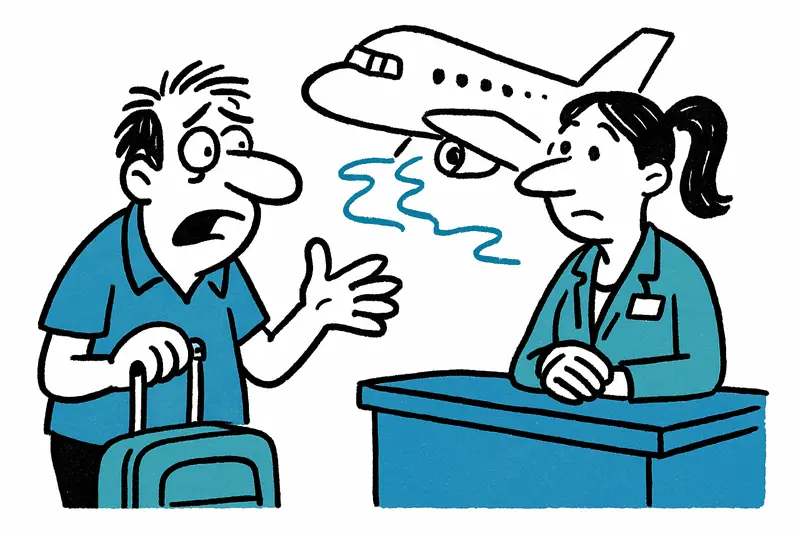
If my Mallorca flight is cancelled due to jet fuel shortage — who pays, who helps, what to do?
If my Mallorca flight is cancelled due to jet fuel shortage — who pays, who helps, what to do?
Jet fuel shortages cause uncertainty: what rights do passengers have in case of cancellation, when do airlines pay compensation, and what steps help travelers at Palma airport?
If my Mallorca flight is cancelled due to jet fuel shortage — who pays, who helps, what to do?
Key question: Am I entitled to money if my airline cancels my flight from Palma due to fuel problems — and how should I act on site?
The situation in brief
Son Sant Joan airport is busy in early summer: suitcases rolling, the smell of coffee from terminal cafés, announcements about gate changes. When a flight is suddenly cancelled, the scenes can be loud: queues at the counters, irritated families, taxi drivers sensing the chaos. Legally, in Europe the so-called EU Air Passenger Rights Regulation (commonly known as EC261) applies. It governs when passengers are entitled to compensation, what care the airline must provide and which exceptions exist.
What passengers can generally expect
In case of a cancellation, travelers normally have three options: refund of the ticket price, rebooking on the next available flight, or carriage at a later time of their choice. While waiting, passengers are entitled to assistance: meals, refreshments and, if an overnight stay is necessary, hotel accommodation including transfers. In addition, cancellations can trigger lump-sum compensation payments between €250 and €600 — depending on distance and length of delay. Recent service shortfalls during industrial actions have underlined these points, for example in coverage of the Ryanair Strike in Mallorca: Who Pays the Price — and What Travelers Should Do Now.
The decisive exception: extraordinary circumstances
However, the regulation includes the concept of "extraordinary circumstances." If such circumstances apply, the airline is released from the obligation to pay financial compensation. Whether a fuel shortage falls under this category cannot be answered uniformly: the European Commission has published clarifications indicating that a general, long-lasting fuel shortage is more likely to be regarded as an ordinary business risk of an airline. A completely unforeseeable, local failure of a refuelling facility, however, can be considered extraordinary. The assessment is made on a case-by-case basis (Jet fuel shortage in Hamburg causes uncertainty for Mallorca travelers provides a recent example of local supply problems).
Differences for package tours and ticket clauses
Different rules may apply for package holidays: tour operators may allow price increases after the contract is concluded if this is contractually provided for and the increase is directly caused by higher fuel costs. Such increases are, however, limited (among other things to a certain percentage of the travel price) and must be announced in good time. Some airlines try to introduce fuel surcharges retroactively — this is legally disputed and is already being challenged by consumer protection organizations.
What is often missing in the public debate
The discussion often focuses on blanket statements — "Extraordinary or not?" — while practical implementation on the spot is frequently overlooked: How quickly does the airline inform those waiting at the gate? How well does provision of food or hotels work late at night? And who assists elderly or mobility-impaired passengers who suddenly find themselves stranded? This everyday perspective deserves more attention.
Concrete steps for those affected — immediately at the airport
1) Stay calm and document everything: boarding pass, emails, screenshots of messages from the airline, receipts for refreshments or accommodation. 2) Request written re-routing or refund and note names and times of communications. 3) Collect proof of expenses — the airline must reimburse reasonable costs if it is responsible. 4) If the airline does not pay, report the case to the national enforcement body (in Spain this is AESA) or to the consumer protection agency in your home country. 5) Check whether your booking was part of a package holiday or paid by credit card — both can open additional avenues for recovery.
What Mallorca could do better
Transparency helps on site: Son Sant Joan could consolidate information channels, set up helpful checkpoints for those affected and have more cabin and ground staff on hand during peak times, as highlighted in reporting about planned disruptions (Palma before the departure chaos: Ground staff strike plans put the island to the test). Airlines should communicate more clearly in their terms and conditions how they will act in fuel crises. And it would be useful for travelers if travel insurance policies explicitly covered fuel-related cancellations.
Conclusion
Whether you receive money depends on the individual case. The legal framework protects passengers well — but only if they meticulously collect evidence and assert their rights. On Mallorca this means in practice: stay calm, document everything, immediately demand re-routing or refund and involve the relevant authorities if necessary. Spanish court decisions have recently strengthened passengers' positions in some disputes (Judges in Palma strengthen passenger rights — a win with open questions), so travelers who arrive prepared — knowing their rights, insurance details and the airline's phone numbers — have the best chance of making a chaotic gate experience at Son Sant Joan more bearable.
Frequently asked questions
What is the weather like in Mallorca in winter?
Can you swim in Mallorca in spring?
What should I pack for a trip to Mallorca?
Is Mallorca good for a beach holiday outside summer?
What is Palma like to visit in the cooler months?
Is Alcúdia warm enough for a holiday in autumn?
When is the best time to visit Mallorca for hiking?
Are Mallorca’s beaches quieter in the low season?
Similar News

Rental Car Theft in El Arenal: What This Incident Reveals About Our Gaps
A teenager steals a running rental car in El Arenal, flees on foot, climbs over walls and is caught by the Guardia Civil...
Red Rope in Palma's Library: What Helps Against Selfie Tourism — and What's Missing
Palma's city library cordoned off an area with a red rope to keep selfie tourism away from reading and working activitie...
Fort San Carlos: Museum, Harbor Dispute — and a Conflict That Demands Answers
The military museum at Fort San Carlos sits right on Palma's harbor, with unexpectedly quiet rooms filled with cannons a...
Old Town Under Pressure: When a Doorway Becomes a Sleeping and Shower Place
For months a woman has been living with a parasol, a clothes rack and personal belongings next to the social welfare off...
When Shopping Weighs Heavier: Mallorca Demands a Tax Pause on Food and Fuel
Rising prices are putting pressure on households and agriculture. The Balearic Islands are calling for temporary tax rel...
More to explore
Discover more interesting content

Can Cap de Bou

Townhouse Lleo 72
