
eForum at Es Baluard: Mallorca Consults on Water, the Sea and a More Sustainable Future
eForum at Es Baluard: Mallorca Consults on Water, the Sea and a More Sustainable Future
On June 10 and 11 the island community gathers at Es Baluard in Palma: experts and practitioners discuss water scarcity, marine protection, energy, the Serra de Tramuntana and the future of tourism.
eForum at Es Baluard: Mallorca Consults on Water, the Sea and a More Sustainable Future
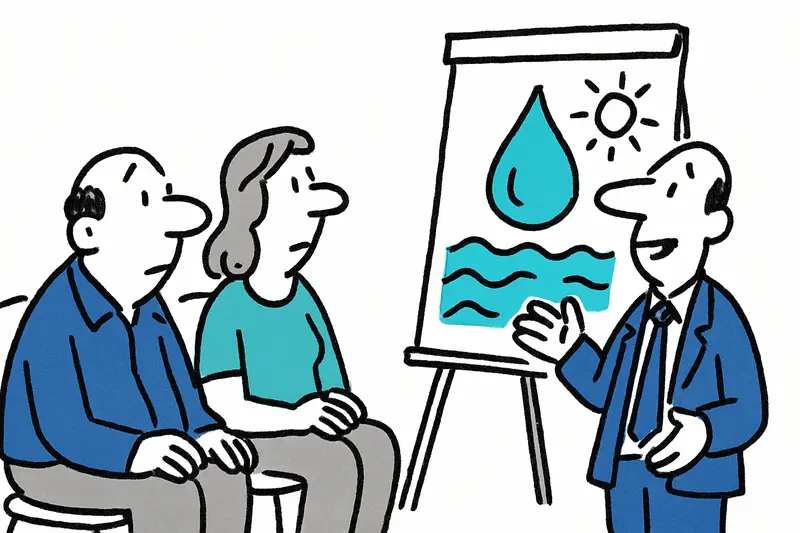
On June 10 and 11 the large hall at Es Baluard in Palma fills with people who want to talk not about buzzwords but about solutions. The regional president opens the event; sessions follow on pressing topics: water under the pressure of climate change, energy and urban nature, the state of the Mediterranean, the future of the Serra de Tramuntana, the reorientation of tourism and how a circular economy could change hospitality in the Balearics.
When you walk down the museum ramp in the morning, the salt in the air mixes with the usual murmur of the city — delivery vans, park visitors, a seagull circling over the harbour. Such small scenes show what it is about: the island is both everyday life and landscape. At the eForum expertise and everyday experience meet; that is rare, and that is good.
The water discussion is at the top of the agenda. On Mallorca water is not abstract; it is land use, an agricultural resource, bathing pleasure and a supply issue all at once, as discussed in When the Tap Runs Scarcer: Mallorca Between a Tourism Boom and a Dwindling Water Source. Proposals are expected for how consumption, storage and distribution can be better aligned — with a smooth transition between technical practice, data analysis, as described in Real-time for Mallorca's Water — a Step, But Is It Enough?, and behaviour change in daily life. Concrete measures such as improved irrigation techniques, incentives for frugal use and more transparent consumption data will be on the agenda.
The sea is not just a pretty backdrop but a topic in its own right. Discussions focus on biodiversity, warmer waters and shrinking habitats. One concrete point of debate is the expansion of strictly protected marine areas: the idea of designating a meaningful percentage of territorial waters for strong protection is mentioned as a possible strategy to support fish stocks, seagrass meadows and coastal ecosystems.
The mountains are also on the agenda: a special protection framework is currently being developed for the Serra de Tramuntana that aims to bring together restoration, landscape management and a different planning logic. Both the need for stronger protection mechanisms and the concerns of users such as hiking associations are being discussed — a balancing act between preservation and accessibility.
The tourism section looks ahead: it is not only about more or fewer visitors but about a different relationship between the economy, technology and the environment. How can circular principles — less waste, longer material lifecycles, regional supply chains — be combined with digital tools so that hoteliers, restaurants and excursion providers operate more resource-consciously, as argued in Water scarcity in Mallorca: Why hotels must now take responsibility? And how can the quality of life and everyday life of island residents remain unaffected?
Urban topics also appear: port areas should be opened up more to the city, not just as logistics spaces but as areas from which residents can benefit. Such projects require courage and good communication so that in the end there are not just plans on paper but tangible benefits for the people of Palma.
Why this is good for Mallorca: such meetings bring together actors from administration, business, science and civil society. They provide not only ideas but often also agreements, pilot projects and contacts. For an island that lives from the sea, the mountains and tourism, it is easy to become active in many directions — if information is shared and decisions are tested locally.
A small, overlooked advantage: when conversations take place on site, small cooperations also emerge — university groups, businesses from the nautical sector, environmental associations and municipalities get to know each other. From experience I know that such encounters often later become concrete projects — a sensor team monitoring seagrass beds, a pilot for networked water meters in a village, or a new protected area co-managed by local fishermen.
Those who cannot be at the museum on the two days can still think along: the conversation about sustainable use begins in everyday life — when watering sparingly in the morning, when choosing local fish from the menu or when talking to a neighbour about waste separation. The eForum provides the framework, the side streets provide the practice. Together they make Mallorca more resilient.
As reassurance: the island has the mix of community, ideas and warmth needed to carry out change. If concrete steps are discussed at the eForum and tested locally, Mallorca can be more than a destination — it can become a place of learning for the entire Mediterranean.
Frequently asked questions
What is the weather usually like in Mallorca in autumn?
Can you still swim in Mallorca in autumn?
What should I pack for Mallorca in autumn?
Is autumn a good time to visit Mallorca?
What can you do in Palma de Mallorca in autumn?
Is Alcúdia still warm in autumn?
What is Sóller like in autumn?
How do temperatures change in Mallorca from late summer into autumn?
Similar News

"Fifth Season" in Port d'Andratx: A glass-bottom pool that makes passersby stop
An unusual superyacht with a dark hull and a partially glazed infinity pool is currently at the Yacht Club of Port d'And...

Newark–Ibiza: What the new direct flights mean for Mallorca
United will operate four weekly direct flights from New York–Newark to Ibiza with the A321XLR from May 2027. For Mallorc...
Body in the Basin of Port Adriano: Who Protects People During Crossings?
In the morning, just before noon: employees of a luxury marina discovered a floating body in the basin of Port Adriano. ...
Raised from the Sand: A Late Antique Merchant Ship Tells of the Sea off Can Pastilla
A 1,700-year-old Roman merchant ship was raised off Can Pastilla. Finds such as sail fragments and amphorae provide rare...
After the Storm: Why Many Fish Died at Riuet de s'Illot — and What's Still Missing
After the severe storm, numerous dead fish were found in the Riuet de s'Illot wetland. Who is affected, why it may have ...
More to explore
Discover more interesting content

Boat Tour with BBQ along Es Trenc Beach

Private transfer from Mallorca Airport (PMI) to Pollensa
