
Stab Wounds in Palma: What's Missing in the Response to Domestic Violence?
Stab Wounds in Palma: What's Missing in the Response to Domestic Violence?
A 57-year-old woman was seriously injured in an apartment on Arxiduc Lluís Salvador. Police arrested her 61-year-old partner. A reality check: Why do conflicts here so often end up in hospital — and what needs to change?
Stab wounds in Palma: What's missing in the response to domestic violence?
Clear key question: How can Palma prevent domestic disputes from escalating to the point that a woman requires emergency surgery?
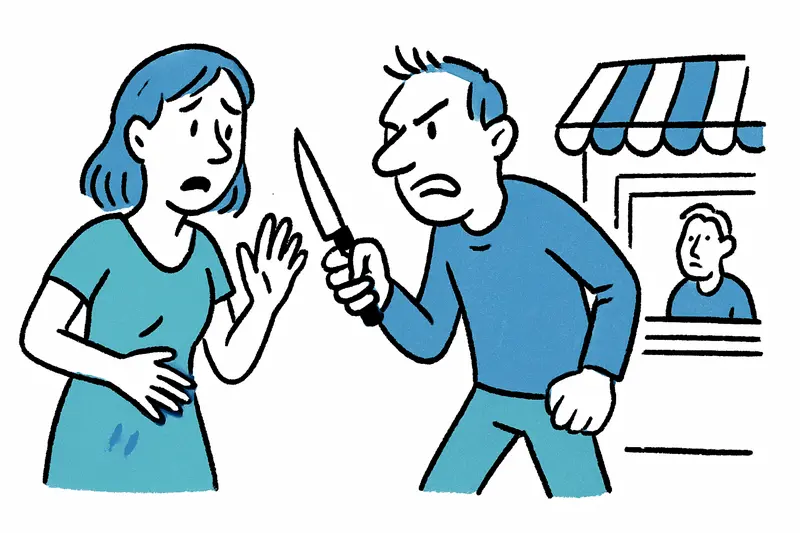
On Friday evening shortly before 10 pm, an apartment on Arxiduc Lluís Salvador, not far from the main station, turned into a crime scene. Emergency services from Samu 061 transported a 57-year-old woman with stab wounds to the abdomen and arms to Son Espases hospital; she underwent emergency surgery there. A 61-year-old man was arrested on the spot by local and national police officers. The unit specialized in violence against women, UFAM, has taken over the investigation. The suspected perpetrator apparently stabbed his partner several times after a violent argument and then himself called the emergency number 092.
Those are the sober facts. Cases elsewhere, such as the Shock in Costitx: Knife Attack on Ex-Partner — What Fails in the Protection System, show similar community traces. Anyone walking Palma's streets sees the sirens, the police tape and the neighbours whispering at doorways. Cafés, small grocery stores and kiosks on Arxiduc Street are not untouched: an incident of violence leaves visible traces in the community.
Critical analysis
First: the rapid presence of Samu 061 and the on-site arrest show that response chains work. But functioning is not the same as sufficient. Several questions remain open: Were there earlier reports to the police or social services that were not followed up adequately? Were neighbours or shopkeepers who repeatedly noticed problems with the man taken seriously? And what role did alcohol play, which residents reportedly complained about more than once?
Current practice has blind spots. UFAM is responsible, but the interfaces between police, health services, the justice system and social support offerings are often not robust enough. A police file does not automatically reach counselling centres; an inpatient treatment at Son Espases does not mean survivors are subsequently offered protection plans. As long as information sits on individual desks, vulnerable people remain exposed. Similar procedural failings are examined in Pre-trial Detention after Knife Attack in Costitx — What Was Missing to Prevent It?.
What's missing in the public discourse
There are gaps on two levels: first, clear public communication on how neighbours should react concretely without putting themselves at risk. Second, transparency about the follow-up to reports. Incidents often disappear into statistics without visible consequences. The question of how alcohol-related disturbances in an urban environment can be addressed preventively also plays hardly any role in the debates. Debates about the effectiveness of protective orders, as raised in After Knife Attack Near Costitx: How Secure Are Protective Orders in Mallorca?, are not prominent enough.
Everyday scene from Palma
Imagine: a late afternoon, the awning of a small snack shop on Arxiduc Street is half retracted, the radio plays soft news, a delivery scooter turns the corner. Customers notice a loud argument, the shop assistant glances out the window, registers a furtive movement, takes a mental note — and decides not to intervene. Such everyday decisions are understandable, but they also show how many chances for prevention remain unused, as other incidents like Severely injured in Port d'Alcúdia: When life explodes behind closed doors illustrate.
Concrete solutions
1) Low-threshold reporting options for neighbours: an anonymous online reporting portal run by the city of Palma, linked to a rapid risk check by UFAM, could prioritise tips faster. 2) Binding information chains between hospitals like Son Espases and social services: everyone who undergoes emergency surgery due to domestic violence should automatically be offered a protection and support plan. 3) Training for local businesses around the station: shopkeepers, pharmacists and delivery workers often see early warning signs; short trainings could give them safe courses of action. 4) Alcohol prevention and streetwork in problem areas: mobile teams present in the evenings can help de-escalate and connect people with support. 5) Better protection for informants: residents report less often if they fear reprisals. Confidential feedback channels and witness protection at the municipal level would be a step forward.
Pointed conclusion
The fast response by police and emergency services was correct and important. Still, this incident must not be treated as a one-off extreme. It is a symptom of a city where domestic violence too often happens behind closed doors and too rarely becomes part of the public's awareness. Palma needs clearly visible bridges between emergency medicine, police and social aftercare — and a low-threshold route for anyone who finds the courage in a moment to speak up.
Important phone numbers: Emergency 112, local police 092, national helpline for violence against women 016 (anonymous, nationwide). If you witness something: ensure your own safety, note time and place, and inform the police.
Frequently asked questions
How can neighbours in Palma safely report concerns about possible domestic violence without putting themselves at risk?
What emergency numbers should I know in Mallorca if someone faces domestic violence?
How are hospital stays linked to protection efforts in Palma after domestic violence?
What training could help shop staff around Palma's main stations spot early warning signs of domestic violence?
What public steps could Palma take to prevent alcohol-related disturbances in urban areas?
Why is it important to connect police, health services, and social support in Mallorca's response to domestic violence?
What should neighbours or passersby do if they witness a conflict in Palma to help safely?
Where can someone seek confidential help or protection in Mallorca if they fear reprisals?
Similar News
O'zapft is on Mallorca: Pinos conjures a Bavarian evening in Sol de Mallorca
Traditional dress, wheat beer and roast pork knuckle: At Pinos in Sol de Mallorca Bavarian warmth met island atmosphere....

Iris Katzenberger: New Love on Mallorca — 28-Year Age Difference and Good Cheer
Iris, 59, appears to be in love again on Mallorca. Her new partner is said to be 31 years old. A small romantic chapter ...
Arrest in Palma: ATM technician with nearly €150,000 in his toolbox
After tips from a bank, the National Police in Mallorca arrested a technician. Investigators found almost €146,000 in a ...
When Buyers Are Missing: Why Foreign Property Purchases in the Balearic Islands Are Shrinking
Despite rising prices per square meter, more and more foreign buyers are withdrawing from Mallorca and the neighboring i...
Kruemel keeps going: From closing to winter opening in Peguera
Peguera's scene experiences a double event: Krümel's traditional closing coincides with the hostess's birthday, and a fe...
More to explore
Discover more interesting content

Can Cap de Bou

Townhouse Lleo 72
