
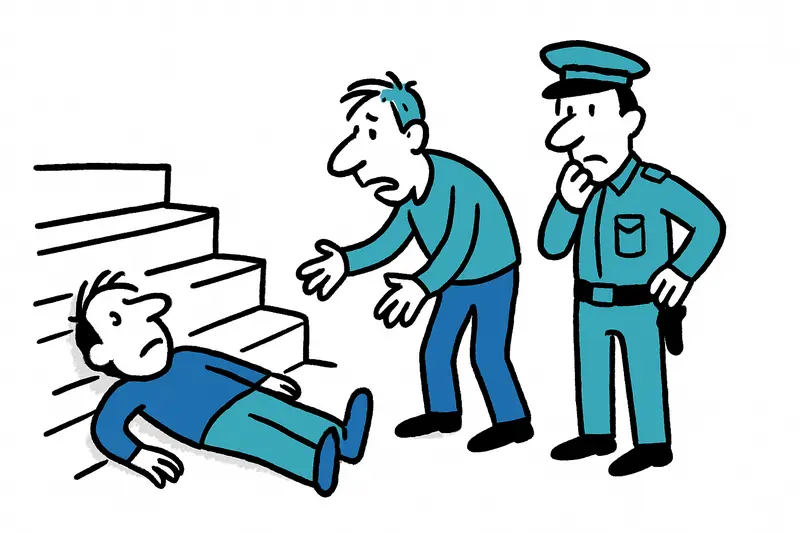
Stair Fall in Peguera: One Dead and the Uncomfortable Questions About Safety in Night Venues
A 69-year-old man died after a fall in a nightclub on the boulevard of Peguera. The Guardia Civil confirmed the death. What does this say about the safety of our night venues?
Stair Fall in Peguera: One Dead and the Uncomfortable Questions About Safety in Night Venues
In the night leading into Tuesday, a man was found dead on the promenade of Peguera after falling down a staircase. The Guardia Civil confirmed that the 69-year-old man died at the scene. Eyewitnesses discovered the unconscious man; rescue teams performed extended resuscitation efforts, to no avail. Around 2:50 a.m., authorities removed the body. It is currently unclear whether he was a visitor from Germany — the police have not released further personal details.
Key question
Key question: How well protected are older guests in the venues along Peguera's boulevard — and what steps could prevent such an accident from happening again?
Critical analysis
The bare facts are short and harsh: a fall, emergency measures, no return. Behind them, however, lie several questions that are not asked loudly enough. Nightclubs and bars on tourist promenades are often housed in narrow buildings with multiple levels. Closely spaced steps, dark stairwells, and slippery tiles after closing—all of this increases the risk, especially for people who are older or have consumed alcohol. In many cases, continuous handrails, high-contrast step edges, or non-slip coverings are missing; similar incidents, such as the Fall at Ballermann: Why a Morning on Playa de Palma Can Turn into an Accident, underline how quickly these defects can have severe consequences.
What is missing from the public discourse
In public, such incidents are quickly dismissed as tragic isolated cases. Rarely do the structural safety of entertainment venues, the responsibility of operators, and the preventive duties of authorities come into focus. Equally seldom is it asked how quickly emergency services arrive on site or whether staff are trained in first aid, as was raised after the Serious Fall in Santa Ponça: How Safe Are Our Stairwells?. The perspective of older holidaymakers is also often missing: they seek social interaction but are not always prepared for the hectic atmosphere of clubs.
A common scene in Peguera
It's a picture everyone here knows: at night the boulevard hums, taxi touts stand by the roadside, somewhere it smells of fried fish and fried potatoes, cleaning staff sweep along the curbs. Nightclubs cast cones of light onto the pavement, speakers pulse. Between this atmosphere and the silent danger of poorly lit stairs lies a gap that often proves too late in the clear, quiet hours of the morning; early-morning incidents like the Early-Morning Fall at Playa de Palma: German Tourist in Critical Condition show how nights can end abruptly.
Concrete solutions
The response must be more than compassion; it must be practical. Suggestions that are sensible and feasible:
- Regular structural safety inspections by the municipality: check handrails, step edges, railing heights, and slip resistance.
- Mandatory, clearly visible and, if necessary, illuminated marking of stairs and changes in level both indoors and outdoors.
- Compulsory first aid and resuscitation training for nightlife staff, supplemented by easily accessible defibrillators near heavily frequented hotspots.
- Better coordination between emergency services and local police to keep emergency routes and access points clear during evening hours, as highlighted by incidents such as the Nighttime Escape on the Camí dels Reis: An Accident, Many Questions.
- Awareness campaigns for older visitors: notices in hotels, tourist information centers and at venues about potential hazards, as well as clear guidance on responsible alcohol consumption.
Why this is realistic
Many of the measures listed cost relatively little but mobilize administrations and operators. A handrail or marking measure requires little effort; training can be completed in a few hours per year. Defibrillators are more expensive, but in tourist centers they quickly pay off if lives are saved.
Pointed conclusion
A single, sad incident must not simply be written off as "an accident." The duty lies with operators, authorities and with us as a society to recognize and mitigate dangers. Peguera is not an isolated place—people live and work here, guests celebrate here. If we want to strengthen the safe side of nightlife, we must tackle the small, concrete deficiencies before they again determine life and death.
Frequently asked questions
What safety steps are recommended for night venues along Mallorca's promenades to prevent falls?
How can older visitors stay safer when enjoying Mallorca's nightlife?
Who is responsible for safety in Mallorca's night venues?
What concrete safety improvements are proposed for Mallorca's stairs and levels in night venues?
How can emergency services and police improve access during Mallorca's busy nightlife hours?
What role do awareness campaigns play in making Mallorca's nightlife safer for visitors?
Are there suggestions for better lighting and floor safety in Mallorca's night venues?
What is the broader takeaway about nightlife safety in Mallorca from recent incidents?
Similar News
"I want to see him dead" — Commission, recording, verdict: a legal case with a Mallorca connection and many unanswered questions
Before the Cologne regional court, a mother and daughter were each sentenced to four and a half years in prison. The pla...
Indictment in Palma: German entrepreneur accused of deceiving court with forged payment receipts
A dispute over around €15,000 for electrical services has triggered an indictment in Palma for forgery and attempted fra...

Why the 'drug grandpa' is not just an isolated case: a Marratxí case and the questions that remain
A 73-year-old man from Manacor was arrested in Marratxí when he attempted to pick up a package containing 12.3 kg of mar...

Sake, Singing Voices and a Maltipoo: An Evening in Port Adriano
Sunset over Port Adriano, a new sake drink, South Indian cuisine from AMMI and a Maltipoo in a helicopter — this week sh...
Too many cars, too little space: Why Sóller must not become a parking wasteland for tourists
New figures from EasyPark and Arrive show: Sóller is Spain's hotspot for foreign drivers. Time for an honest stocktake: ...
More to explore
Discover more interesting content

Boat Tour with BBQ along Es Trenc Beach

Private transfer from Mallorca Airport (PMI) to Pollensa
