
State of emergency in the east: Yacht washed up on Playa de Sa Marjal — what’s still needed
State of emergency in the east: Yacht washed up on Playa de Sa Marjal — what’s still needed
Storm "Harry" left deep marks on the east of the island: a 25-metre yacht on Playa de Sa Marjal, flooded roads and hours of cleanup. A reality check: why port and coastal protection is too often improvised and which concrete steps are needed now.
State of emergency in the east: a yacht on the beach and island life slipping off course
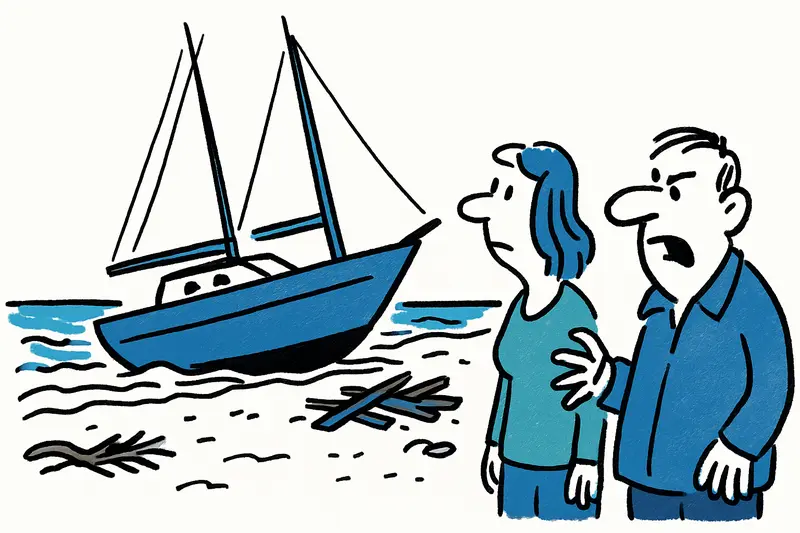
Early on Wednesday morning a sailing yacht longer than 25 metres flying the German flag lay crosswise on the sand of Playa de Sa Marjal in the municipality of Son Servera. The image is unusual, almost surreal: a two-masted vessel, usually on calm waters, stranded among walkers and driftwood. Storm "Harry" battered the east coast, flooding roads and keeping emergency services busy for days; similar scenes were described in Heavy Downpour on the East Coast: Cala Millor, Capdepera and Artà Need More Than Temporary Aid. Fortunately there have been no casualties so far.
Key question
Why do such damages still hit us so hard, even though storms are predictable and harbour infrastructure as well as alert chains could, in principle, be improved?
Critical analysis
The images — a yacht on the beach, waves metres high on the promenades in Cala Rajada, flooded access roads — show a mix of natural force and inadequate preparation. On one side there were gale-like gusts and a sea that overflowed its banks; on the other there were apparently gaps in securing measures for moored ships and in local drainage systems. The Balearic rescue services reported around 81 deployments in one day; that is a heavy workload, but it says little about prevention, as discussed in Over 100 emergency responses after storm in the Balearic Islands – What now matters for Mallorca.
What is missing from public discourse
People talk about spectacular images — the yacht, the promenade — and about the number of deployments. Too rarely, however, is it about: (1) binding mooring standards for yachts above a certain size; (2) regular inspections and reporting cascades between ports, the municipality and Spanish weather service AEMET; (3) the condition of access roads and sewer systems that fail during heavy rain. The role of private boat owners also often remains underexposed: not every yacht is secured according to regulations or has an emergency plan with local contacts.
Everyday scene from Son Servera
In the afternoon the air still smells of damp pine resin; the wind carries salt crystals along the avenue where locals walk their dogs. In the bar on the plaza neighbours talk about uprooted palm trees and blocked side streets. A fisherman from Cala Rajada pulls off wet boots and shakes his head: "We don't see this often — but we must act faster, not just post photos afterwards." This is not a chorus of panic, more a weary determination.
Concrete solutions
1. Tighten harbour and berth requirements: set mandatory securing plans and inspection intervals for yachts above a certain length, an issue examined in Sudden autumn in Mallorca: Are harbors and coasts prepared for short storms?. 2. Coordinated alert chain: AEMET warnings should automatically reach port authorities and municipal protection offices, ideally via SMS to registered boat owners. 3. Strengthen crisis logistics: preposition mobile pumps, tugs and cranes in strategic ports so that a quick decision can be made whether towing or lifting is needed. 4. Keep access routes clear: temporary parking bans along coastal access roads and staging areas for recovery cranes when a warning level is triggered. 5. Infrastructure maintenance: check and clean street gullies and drainage ditches before the rainy season. 6. Public participation and communication: distribute tried evacuation and securing plans in simple checklists to households and boat owners.
Legal and organizational questions
Who bears the cost when a million-euro yacht is washed ashore? That is not only an insurance question but also one of responsibility: municipality, port authority or owner? Quick decisions are necessary so that neither the beach nor public space remain blocked unnecessarily long. Temporary closures must be communicated clearly so residents and tourists do not enter dangerous zones.
Historical context and warning
Son Servera remembers the severe storm of 2001, when many trees fell, numerous boats were thrown ashore and four people died. This memory is not just an anecdote; it shows that certain coastal areas are particularly vulnerable. The current yellow warning from the Spanish weather service AEMET for large parts of the coast — except the southwest — is a reminder to be cautious.
Practical steps in the coming hours
The local police have informed the yacht owner; it is expected that the owner — presumably from Germany — will arrive in the afternoon to decide on the recovery. Firefighters, civil protection and municipal workers are currently securing the area. It is clear: either a towing attempt or a crane will be necessary, depending on how much the substrate material has stressed the hull structure.
Pointed conclusion
The beached yacht is a clear image of how vulnerable coastal areas are — and how little we notice until something spectacular goes wrong. Preparation costs time and money, but it prevents cleanup costs, traffic disruptions and liability disputes from multiplying. Son Servera and the surrounding towns would benefit not only from public sympathy but above all from concrete, legally secured rules for boats, clear reporting channels and better coordination between municipalities, ports and weather services. The next storm will certainly come — and then there should be less improvisation and more action.
Frequently asked questions
Why did a yacht end up on Playa de Sa Marjal in Mallorca?
What kind of storm damage can Mallorca’s east coast see during heavy weather?
Is it safe to swim on Mallorca beaches after a storm?
What should I pack for a Mallorca trip during the stormier months?
How many emergency callouts were needed in Mallorca during the storm?
What is the situation in Son Servera after the yacht washed ashore?
Why are Cala Rajada and nearby beaches so exposed during storms in Mallorca?
What do weather warnings from AEMET mean for Mallorca residents and visitors?
Similar News
Reality check: Palma's "white" torrent — harmless salt or neglected warning sign?
White crusts on the Torrent de Sa Riera are causing a stir. Emaya describes them as salt deposits. Our reality check: wh...
When Ryanair's fleet grows: What Mallorca's travelers should know
Ryanair will soon receive 737 Max 10 jets. The larger aircraft offer potential savings — but also new risks for flight o...
Rising fuel and housing costs: Why Mallorca's overland buses are suddenly overcrowded
More and more people are leaving Palma — and boarding TIB buses: Between January and August 2026, the network recorded o...
Carriages Without Horses: Palma Plans E-Carriages – a Reality Check
Palma plans to switch to electric carriages in 2027. The prototype was shown near the cathedral. What is the technology ...
Record season, empty coffers: Who really benefits from the tourism boom?
Full hotels and more flights: the numbers sound impressive — yet many locals feel no benefit. A reality check with an ev...
More to explore
Discover more interesting content

Can Cap de Bou

Townhouse Lleo 72
