
Storm Alice reveals vulnerabilities: airport flooded, roads washed away
Alice hit parts of the Balearic Islands hard: a terminal on Ibiza flooded, the MA-15 at Porto Cristo under water. A wake-up call for better drainage and emergency plans.
Alice bares its teeth: Why this storm leaves more than wet streets behind
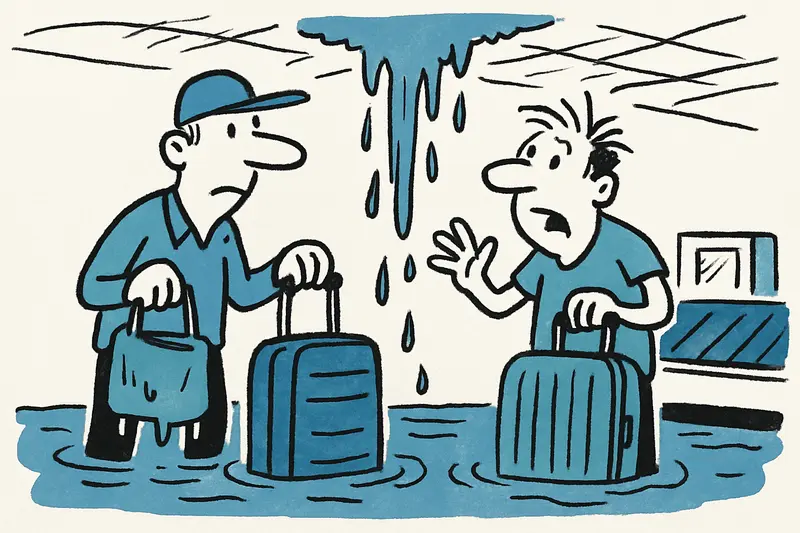
As the first lightning streaked across the evening sky over the Balearics and the emergency services' sirens sounded like distant warnings, it quickly became clear: this was not an ordinary shower. Around 6:30 pm the sky opened its sluices, and in no time village streets turned into rivulets, squares into small lakes. Water dripped from the ceiling of the terminal on Ibiza, and on Mallorca cars stood half in water – particularly dramatic on the MA-15 near Porto Cristo, where the access to Cala Romántica was washed away in several places, as reported in Storm Alice reveals vulnerabilities: airport flooded, roads washed away.
The immediately visible: damage, evacuations, cancelled flights
Eyewitnesses report wet suitcases on conveyor belts, resigned travellers and hastily cordoned-off areas at the airport. Some flights had to be diverted or cancelled. On Mallorca it was primarily narrow coastal roads and hotel access routes that suddenly became impassable. The images: water slamming against house walls, street sweepers pushing muddy, brown streaks aside, tractors hauling sandbags — typically Mallorcan, a bit of improvisation and a lot of effort.
The key question: Were we prepared — and if not, why not?
The simple answer is: partially. This echoes concerns raised in Persistent Rain in Mallorca: Are We Really Prepared? The limiting answer is: infrastructures showed vulnerabilities that raise more questions. How could water penetrate a terminal roof in a modern airport so easily? Why did the MA-15 turn into a rushing torrent within minutes?
A few specific issues that matter now
First: sewers in many older towns are not designed for extreme, short-duration rainfall. They cope with moderate, prolonged rain, but not flash floods caused by downpours on sealed surfaces. Second: torrentos — the natural drainage channels — are often shortened or narrowed by construction, embankments and lack of maintenance. If these channels are not regularly desludged, the landscape loses its natural buffering capacity. Third: building and airport planning often focus on long-term, normal weather cycles rather than suddenly occurring extreme events.
Response and coordination: good, but with room for improvement
Policía Local, Guardia Civil, Protección Civil and the fire brigades worked through the night; their efforts mirrored warnings highlighted in Red Alert on Ibiza: What the Island Must Learn Now. Nevertheless, residents report delayed information in some districts and poorly signed closures on country roads. In practice, quick warnings are often digital — older residents without smartphones do not always receive them. Some neighbourhoods experienced short power outages because water tripped fuses. Evacuations were carried out in an orderly manner, but improvised emergency shelters are no long-term solution.
Concrete opportunities and solutions
The storm is also a wake-up call. In the short term, municipalities should desludge their torrent channels, check drainage shafts and prioritise risk zones like the MA-15. In the medium term, more retention and infiltration areas are needed: stormwater retention basins, permeable surfaces in new construction projects, green roofs on hotels along the east coast and systematic checks of airport terminals for weak points. Important steps would also include:
- Expanding local alarm chains that do not rely solely on smartphones (sirens, SMS, radio announcements).
- Regular emergency exercises with municipalities, hotels and airports so that procedures are well practised.
- Financial incentives for private retention buffers, de-sealing urban areas and funding programmes for water-sensitive urban design.
- Better maintenance of natural torrent channels that once drained the island — without them the intermediate storage is missing.
What to do now — practical and quick
For residents: check basements, take photos of damage, inform your insurer. Avoid flooded roads (the MA-15 towards Porto Cristo remains critical) and follow the instructions of the emergency services. For municipalities: prioritise repair of washed-out access roads and inspection of bridges and dams. For tourism businesses: update emergency plans, inform guests transparently and assess ground-floor rooms for short-term protection.
A slice of everyday life afterwards
The morning after smelled of wet asphalt and damp earth; birds began to chirp again, tractors idled with a low hum, and in some towns people shoveled mud into sacks along the promenade. A neighbour said dryly: "I've never seen anything like this here." The island is showing its rough side. Alice exposed vulnerabilities — and with that opened an opportunity to become smarter and more resilient.
Frequently asked questions
Why can heavy rain in Mallorca cause flash floods so quickly?
Is it safe to drive on Mallorca during a storm like Alice?
What should I do if my Mallorca flight is cancelled or diverted بسبب bad weather?
What are torrent channels in Mallorca, and why do they matter in storms?
Why was the MA-15 near Porto Cristo badly affected by flooding?
Can hotel guests in Mallorca be affected by flooding during a storm?
What should residents in Mallorca do after storm damage to their home or basement?
How can Mallorca prepare better for future extreme rain events?
Similar News

More water than last year: Mallorca's reservoirs breathe easier
September rain refilled the Tramuntana's reserves: overall fill around 35 percent, Cúber at 40.42 percent, Gorg Blau at ...

Three Luxury Hotels in Banyalbufar: Lots of Money, Many Questions
A Danish investor plans three exclusive accommodations in Banyalbufar — including the historic Son Valentí. The announce...
2.1 tonnes of cocaine on sailing yacht off Spain's coast – a reality check for the coastguard
A 14-metre yacht was seized with 2.1 tonnes of cocaine. Who monitors the ports, how does the international hunt succeed ...

Heat Bonus in Mallorca: 100 Euros Extra for Outdoor Staff at MarSenses
MarSenses pays employees who worked outdoors in August an extra €100 as recognition. Lighter uniforms, reduced hours for...
Renovating in Mallorca: What You Really Can Do Without Neighbour Consent
Many think they can do whatever they want in their apartment. That's partly true — but only as long as structural elemen...
More to explore
Discover more interesting content

Can Cap de Bou

Townhouse Lleo 72
