
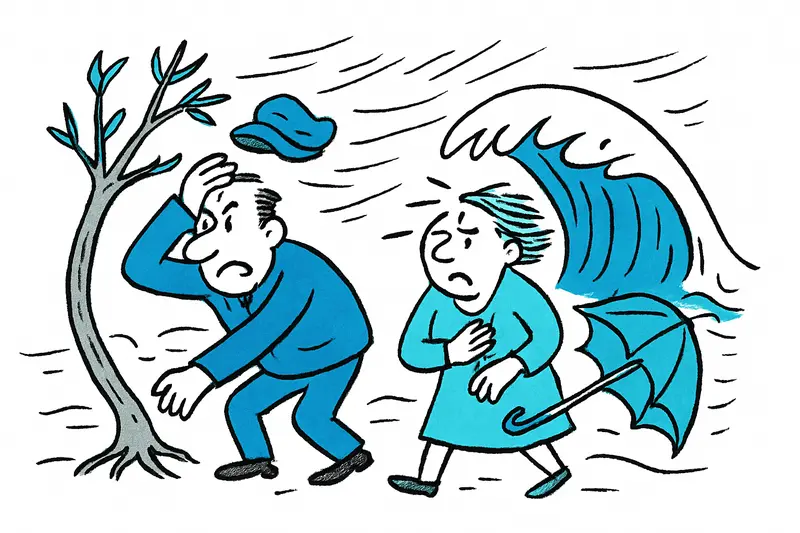
Storm 'Harry': Ferries canceled, islands struggle with wind and waves
Storm 'Harry' has disrupted transport and daily life on Ibiza and Menorca: toppled trees, high waves and several canceled ferry connections. What does this mean for residents and the islands' supplies?
Storm 'Harry': Ferries canceled, islands struggle with wind and waves
Strong gusts, toppled trees and suspended connections — and what's being neglected now
Key question: Are preparations and the information chain sufficient to bring neighboring islands like Ibiza and Menorca quickly and safely through such storm events?
The facts are sparse but clear: the storm 'Harry' toppled numerous trees onto roads in Ibiza this morning. Weather services warn of storm conditions off the coasts with waves of four to five meters, locally up to ten meters. As a direct result, several ferry connections in Ciutadella on Menorca and in ports of Ibiza were canceled for safety reasons, and travel disruption affected other modes of transport as well — Severe storm halts Palma Airport: Why delays hit inter-island services and travelers especially hard. For some this sounds like a usual winter disruption; for others it is a serious cut — especially for commuters, freight operators and tourism services that rely on dependable sea routes.
A sober analysis shows: when waves and gusts are strong, suspending services is often unavoidable. Vessels are vulnerable where lives are at stake, moorings can be damaged, and loading ferries in strong winds is risky. Still, the chain reaction of canceled services, missed supply runs and sudden mobility restrictions hits islands with limited alternatives harder than the mainland.
Public discourse currently lacks more than headlines about fallen trees. There is a lack of transparency about which ferries are canceled, how long outages are expected to last, and which goods — such as food, medical supplies or infrastructure spare parts — are being prioritized. The situation of professional fishermen, who must protect their nets and boats, is hardly discussed. Equally rare are conversations about the strain on emergency services forced to respond when roads are blocked, as recent coverage documented acute responses in Mallorca: Over 100 emergency responses after storm in the Balearic Islands – What now matters for Mallorca.
A mundane scene from Palma makes this tangible: at the Passeig Marítim the wind whistles over the wet paving stones early in the morning, trash bins rattle, a group of garbage collectors pulls their jackets tighter, and only a few people remain at the harbor watching the waves. Phones keep buzzing with messages: friends in Ibiza report trees in front of the supermarket, family on Menorca ask whether an important delivery will arrive. These small, loud disruptions are what upset daily life — not only the big images of overturned trees. Local reporting on the city's measures can be found in Orange storm cripples Palma: parks closed, markets cancelled – Is the city well prepared?.
It is possible to identify what is missing and what could work better: first, a unified, easily accessible real-time information system for all ferries and relevant ports in the Balearics. Citizens should not have to jump between multiple websites and social channels to find out whether a connection is running. Second, a prioritized logistics list for supply runs: it should be clear which deliveries must be enabled even during storm conditions and which can wait. Third, more preventive road maintenance — especially removing old trees along key access routes — to reduce windthrows in advance. Similar local warnings and preparedness questions were raised after a compact storm in the southwest: Night Storm Hits Andratx and Calvià – Are We Really Prepared?.
Concrete measures that can have quick effects include: enhanced cooperation between port authorities and ferry companies to set up alternative berths; mobile info points at ports and bus stations that provide concrete information and alternative routes during outages; a binding emergency plan for critical goods coordinated by the island administration; and regular alert drills between rescue services and harbor authorities. Smaller steps like additional securing measures at berths before the winter months lower the risk of damage and lengthy repairs.
Of course, costs and political priorities are hurdles. Still, some measures are inexpensive and effective: better communication mainly requires organization rather than large sums of money. Tree inspections on main roads avoid costly recovery operations. And a cooperative logistics list can give many shopkeepers and patients on the islands peace of mind if they know that medical deliveries will be given priority during storms.
The conclusion is brief and a little uncomfortable: 'Harry' shows how vulnerable islands are when the sea decides. We don't need dramatic words, but practical agreements and clear information channels. If authorities, ports and ferry companies come together now, the next storm front cannot be prevented — but panic and some avoidable shortages can be.
Anyone sitting on the streets of Palma or in cafes by the sea today feels the wind, hears the news and replans. A bit of local pragmatic willingness to act would help: check stock levels, monitor timetables and check on neighbors by phone. That way the island community remains capable of acting, even when the sea refuses to follow our plans.
Frequently asked questions
Why are ferries in Mallorca and the Balearic Islands canceled during a storm?
How strong can waves get around Mallorca during a major storm?
What should I do if I have a ferry booking from Mallorca during bad weather?
Is it safe to walk along the Palma seafront during a storm?
Why do storms in Mallorca cause problems beyond the weather itself?
Which parts of Mallorca are most exposed to strong wind and storm damage?
How can Mallorca improve its storm warnings and ferry information?
What practical preparations help Mallorca cope better with severe storms?
Similar News
Magaluf: Watchtower Alarm – Lifeguards Pull Unconscious Beachgoer from the Water
After a drama in the late afternoon, two lifeguards at Magaluf beach rescued an unconscious 44-year-old man. He was stab...
Turquoise in the City: How dangerous is the color play of the Sa Riera?
The Sa Riera in Palma suddenly turned turquoise — a pretty motif, but behind the effect lies a discharge of saline waste...

Jeckliner at Sunnesching: Cologne spirit sets sail from Palma
In September 2027 the Mein Schiff 2 briefly becomes a floating carnival stage: four days with Cologne bands, comedy and ...
Finally Home: Mike and Leyla Heiter Buy Villa with Sea View in Mallorca
The reality TV couple Mike and Leyla Heiter have bought a house in Mallorca with a roof terrace and sea view. An Instagr...
Arrest after series in Palma: Who protects apartments from repeat offenders?
The National Police arrested a man in Palma who investigators say may have broken into several apartments. In one incide...
More to explore
Discover more interesting content

Can Cap de Bou

Townhouse Lleo 72
