
Storm 'Joseph': Reality Check — What the Storm Showed Us
Storm 'Joseph': Reality Check — What the Storm Showed Us
Storm 'Joseph' swept over Mallorca: gusts up to 177.6 km/h, roads in the Tramuntana closed, airport disruptions. A look at missing precautions and concrete solutions.
Storm 'Joseph': Reality Check — What the Storm Showed Us
Guiding question: Were our precautionary measures strong enough — and what is missing so we are not surprised by the next storm?
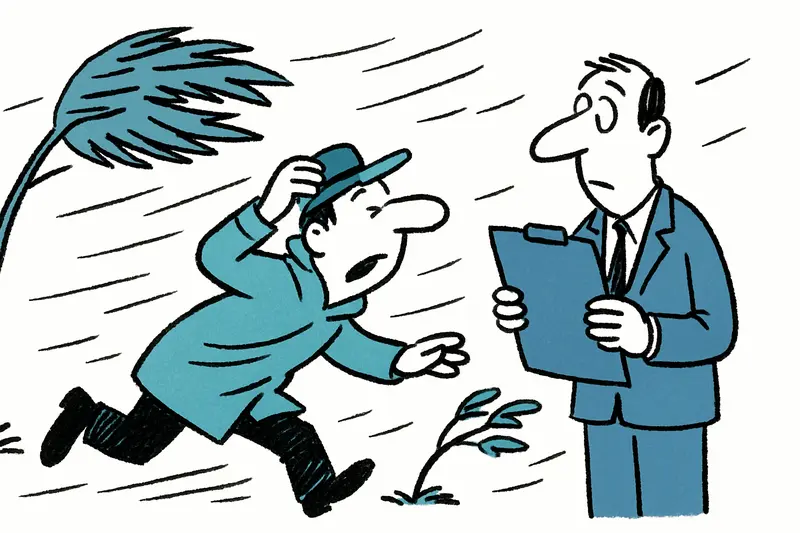
On Friday and Saturday much on the island felt like a reminder of tougher times: shutters banged in Palma, palms bent on the Passeig Marítim, and the roar of the surf was louder than usual in the La Lonja quarter, as captured in the Morning storm over Palma and Calvià report. Meteorological stations recorded violent peaks: 177.6 km/h at the Serra d'Alfabia near Bunyola, 125.5 km/h at the Sa Tudossa station in Artà, with similar hurricane gusts at Puig Major. Roads in the Tramuntana had to be closed, trees snapped, flights at Palma airport suffered delays and diversions, and sleet fell in the mountains.
Those are hard numbers. But they only tell what was measured. The more important question remains the one posed at the start: Have we, as a society, authorities and municipalities, prepared sufficiently to better protect people, traffic and infrastructure, a debate also raised in Why Mallorca's Weather Isn't What It Used To Be: A Reality Check?
Critical analysis: At first glance the warning chains worked — AEMET and local services issued warnings and many people stayed at home. Nevertheless, gaps became apparent. In the Tramuntana the vulnerability of our transport routes was exposed: a single fallen tree is enough to cut off an entire valley connection. That not only causes travel chaos but also problems for rescue operations and the supply of remote households.
At the airport it became clear that short-term diversions and delays severely disrupt flight operations. An inconvenience for holidaymakers, potentially more serious for medical transports or time-critical shipments. Mountain measurements are extremely local — one valley can be storm-free while the next is full of debris. Our sensor and camera coverage is not extensive enough to make such micro-hazards visible and communicable in time and in a targeted manner.
What is often underestimated in public discussion: the consequences for green infrastructure and private businesses. Broken trees are not only a picture of devastation; they mean years of regrowth, maintenance costs and reduced protective effect against erosion. Small coastal businesses suffer direct damage to terraces or stock — the economic aftershock of half a night of storm is rarely tallied.
An everyday scene: on Saturday evening I stood on the Panoramaweg in Sóller. The wind drove a fine spray over the bay, fishermen secured boats with extra lines, street sweepers cleared branches from the road, and an old woman at the market pulled her scarf demonstratively tighter over her face. Such images stay in the mind. They show how much is already done locally — and how thin resources can be in places.
Concrete solutions: First, expand measurement and communication infrastructure. More automatic wind and precipitation sensors in valleys and on coasts, linked to local SMS/WhatsApp alert groups, would make micro-hazards visible faster. Second, targeted tree and green maintenance along key roads: preventive pruning reduces unplanned road closures. Third, a tiered emergency concept for the airport — prioritizing medical flights, clear diversion routes for cargo and a decentralized passenger transfer system for stranded travelers. Fourth, funding programs for small businesses to quickly repair outdoor terraces and replenish supplies after storm damage. Fifth, local neighborhood teams: trained volunteers with chainsaws, first aid kits and radios who provide initial assistance until state services arrive.
Another often neglected area: coordination between municipalities. The Tramuntana is a good example — municipalities must jointly prioritize routes so that rescue and supply do not fail at municipal borders, as similar issues were reported after the Night Storm Hits Andratx and Calvià – Are We Really Prepared?. Technical investments are important, but without regular joint exercises response capability remains patchy.
Pointed conclusion: The measurements — 177.6 km/h in Bunyola are not an isolated case but a wake-up call. We have good foundations: weather services, committed municipalities and volunteers. What is missing are more local data, better cross-border coordination and financial resources for preventive maintenance and rapid restoration. If we learn nothing from 'Joseph', the next stormy night will again be a surprise that we could easily avoid.
For Sunday the situation relaxes: more sun, only isolated strong gusts, temperatures around 16–17°C. Nevertheless: the work starts now — not after the next storm, but today.
Frequently asked questions
What did Storm Joseph show about Mallorca’s storm preparedness?
How strong were the winds in Mallorca during Storm Joseph?
Did the Tramuntana roads close during the storm in Mallorca?
Were flights at Palma airport affected by Storm Joseph?
What damage can a storm like Joseph cause to Mallorca’s trees and green areas?
What were the conditions in Sóller after Storm Joseph?
Why are local weather sensors important in Mallorca during storms?
What can Mallorca do better before the next severe storm?
Similar News

When the Wallet Becomes a Danger: Attack in Peguera and Lessons for Mallorca
In Peguera, two women are said to have stolen the wallet from a 75-year-old German couple. When the victim intervened, t...
Plata stays Plata: Young people take over, Llonguets remain
A small bar on Carrer de l'Argenteria will continue: Tolo Serra hands the place over to young Mallorcans at the end of t...
Unnoticed in the Luggage Compartment: How a Boy Traveled More Than 100 Kilometers in a Team Bus
A minor traveled in the undercarriage of a team bus for more than 100 kilometers until his cries for help were heard. A ...

Cap Vermell Grand: Second Michelin Key – a Gift for the East
The Cap Vermell Grand in Capdepera has been awarded its second Michelin key. For the region this elevates the luxury off...
Eurowings lets four aircraft carry names – a friendly idea that also reaches Mallorca
Eurowings is launching a campaign: four Airbus A320s are to carry the first names of people who help others in everyday ...
More to explore
Discover more interesting content

Can Cap de Bou

Townhouse Lleo 72
