
Why Mallorca's Weather Isn't What It Used To Be: A Reality Check
Why Mallorca's Weather Isn't What It Used To Be: A Reality Check
Eleven severe storms in 2025, records for hail and tornadoes: a look at the numbers, what is missing in the discussion, and how the island can respond in practice.
Why Mallorca's Weather Isn't What It Used To Be: A Reality Check
Key question: Are the Balearic Islands prepared for this new series of severe storms?
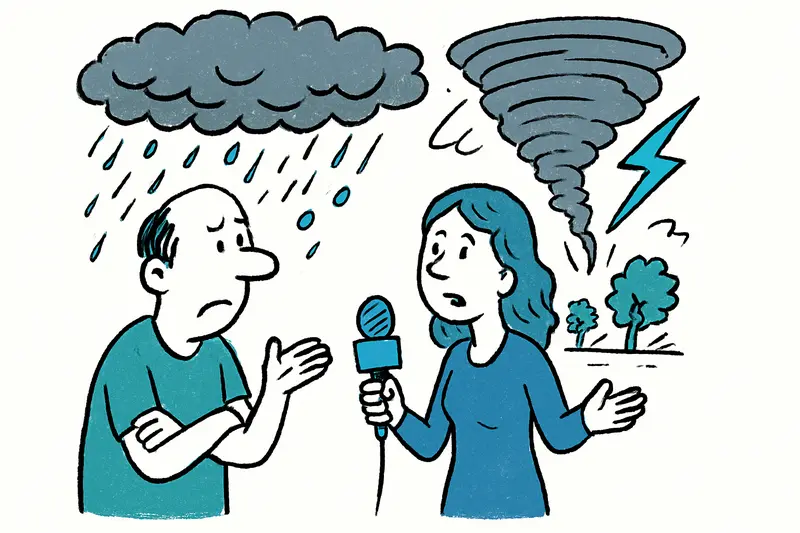
The facts are sparse but uncomfortable: in 2025 the small island group in the Mediterranean recorded an unusually high number of severe thunderstorm events — eleven in total. By comparison, in previous years the annual figures were usually around four events; the study by Duncan Wingen and Agustí Jansà counted a total of 43 severe storms between 2010 and 2023. In Mallorca in 2025 there were six days with large hail and three days with tornadoes on land, two of them in Palma, accompanied by measured wind gusts of more than 140 km/h on one September day. These are no longer anecdotes; this is a pattern.
You now often hear the word "climate change" in conversations at the market or in a café on the Passeig del Born, but the technical connection is concrete: very warm sea surface temperatures, with phases in which the Mediterranean surface already becomes unusually warm in early summer, increase the energy that thunderstorm systems can draw on. Meteorologically speaking: warm sea + dynamic atmosphere = more potential for severe storms. This is not guesswork, this is physics (see Mud Rain and Saharan Dust: Why the Weather Change Is Stirring Mallorca).
Critical analysis: What the numbers really say
First, the statistics: a record year raises the question of whether it is an outlier or a new normal. Available figures show a tendency toward an increase in strong events and an extension of the season — what used to be a short window in late summer/autumn now often feels like a four-month phase. Spatially, it stands out that northern Mallorca is affected more often than the south; this has implications for infrastructure planning in municipalities like Alcúdia and Pollença (see Two Mallorcas in One Day: Why Heavy Rain Affects Us More Than We Think). Locally recorded peak gusts above 140 km/h are not just numbers — they ripped off roof tiles, knocked down traffic lights and altered street trees. That is expensive and dangerous.
What is missing from the public discourse
We talk a lot about warnings and images on social media. Rarely does the conversation address three practical points: first, insurance and access to financial aid for private households and small businesses. Many enterprises here depend on short-term tourist revenue and have become more vulnerable to recurring storms. Second, connected sensors: weather stations, gauges and local warning apps could alert earlier but are unevenly distributed. Third, preventive urban planning: drainage systems, retention areas and maintenance of stream beds (torrents) are too rarely prioritized until water is already in an underground garage.
Everyday scene from the island
Imagine a November evening in Palma: rain drums on the metal shutters on Carrer de la Missió, delivery vans hurry along the Passeig del Born, a café owner pulls in the awning and mutters under his breath as puddles already reach the steps of his shop (see Mallorca Switches to Summer Mode: Calm After the Weather Drama). In the port of Port de Pollença fishermen have drawn their nets tighter. Such scenes are happening more often and are no longer marginal occurrences.
Concrete solutions — from pragmatic to structural
It is not just about more warnings. Concrete measures that municipalities and the island government can implement immediately include: 1) Systematic expansion of local measurement networks (wind, rain, water levels) and linking them with island warning apps and AEMET (see Storms are over, island remains moody: What Mallorca's weather will be like in the coming days). 2) Regular clearing and larger culverts in the torrents; simple investments that are often cheaper than later repairs. 3) Temporary parking bans in known flood zones and clear signage so cars do not become obstructive blockages. 4) Subsidy programs for homeowners to make roofs and gutters storm-resistant. 5) Green infrastructure: reforestation in the mountains, renaturation of wetlands and urban infiltration areas reduce surface runoff. 6) Insurance and emergency aid concepts for small businesses that need to resume operations quickly after an event. 7) Demand for better forecast products from regional and national agencies: observation density is decisive — the more data, the more precise the warnings.
Who pays for all this?
Costs can be shared: local households, municipalities, the Balearic government and European funding programs. It is no secret that adaptation costs money, but the bill is usually cheaper than repairing flooded infrastructure or compensating for crop losses and destroyed livelihoods.
Conclusion: The numbers for 2025 are not a one-off event but a warning sign. Mallorca must move from short-term reaction to sustainable preparedness: better data, feasible urban measures and support mechanisms for people and businesses. Otherwise the scenes that still appear exceptional today will soon become a normal weekend situation. And no one on this island can afford that.
Frequently asked questions
Has Mallorca been getting more severe storms in recent years?
Why does warm Mediterranean water matter for Mallorca's weather?
What kind of weather should I expect in Mallorca during storm season?
Is the north of Mallorca more affected by heavy rain and storms?
What happened in Palma during the 2025 storms?
What should homeowners in Mallorca do to prepare for stronger storms?
How can small businesses in Mallorca deal with storm damage more quickly?
What can Mallorca municipalities do to reduce flood risk?
Similar News
Cafetería San Siro: A Meeting Place on Schinken Street Since 1966
In the middle of Schinken Street, Cafetería San Siro has been offering Mallorcan hospitality for more than six decades —...

From Ballermann to Prison: What the Verdict Against the Femina Operator Means for Palma
The Munich Regional Court convicted a German operator for subsidy fraud. What does the verdict mean for the Femina Club,...
Underpass Verge de Lluc: 19-year-old fights her way out of flooded car – a warning sign for Palma
A 19-year-old recently escaped swimming from her car after the Verge de Lluc underpass held up to one and a half meters ...

When the Floodgates Open Again: Why Palma's Floods Aren't a Coincidence
A sudden heavy downpour around 5 p.m. brought Palma to a standstill: flooded streets, full basements, panicked commuters...
Playa de Palma: Life-saving at Balneario 11 – Lifeguards Act Quickly
A German holidaymaker suffered cardiac arrest at Playa de Palma. Lifeguards resuscitated her on the beach; emergency ser...
More to explore
Discover more interesting content

Can Cap de Bou

Townhouse Lleo 72
