
Two Mallorcas in One Day: Why Heavy Rain Affects Us More Than We Think
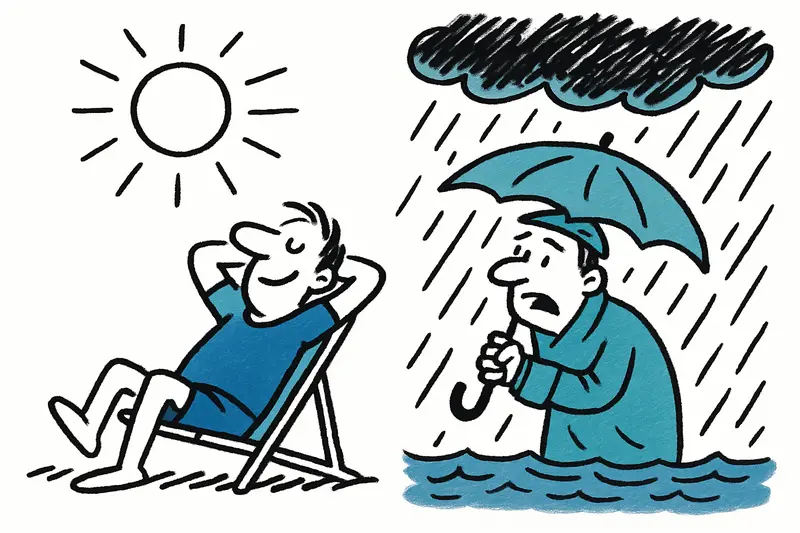
While sunbathers stroll in the west, the east battles hail and flash floods. The key question: Is Mallorca truly prepared for these locally extreme events?
Between sun dips and deluge buckets — one day, two Mallorcas
The island showed today once again that split reality we've too often experienced here. I sat around 11:30 a.m. with a hot coffee on the Paseo Marítimo, listening to the clack of the seagulls and the distant rattle of the tram. At the same time friends from the east called in panic: hail, cellars full of water, cars stuck in the mud. The central question that crossed my mind with the second sip was: How well is Mallorca actually prepared for such locally extreme events?
What happened: places, damage, mood
The worst hit today were Son Servera, Artà and Capdepera. In Artà about 40 liters per square meter fell in half an hour — enough to turn asphalt into a riverbed. Hail fell in Son Servera; eyewitnesses report slippery streets and blocked driveways. Capdepera reported flooded low-lying roads, cars standing up to their midsections in water. Neighbors shoveled sandbags, children with flushed cheeks watched as the rain pushed manhole covers up.
And yet: at the same time Palma seemed almost paradisiacal. Around 30 degrees, parasols, joggers by the sea. But even here there were consequences: trees snapped under strong gusts on the Paseo, uprooted trees and mud blocked a country road in Calvià. At the entrance to Port Adriano a green slope gave way — a soft crack, then stones rolled down and drivers passed cautiously. Two Mallorcas in one day, and both leave traces.
The little-noticed side: topography, sewers and time windows
Such locally limited flash floods expose weaknesses that go unnoticed in everyday life. The combination of steep slopes, sealed surfaces and old sewer networks means that water falling in a short time simply cannot infiltrate. Then weather warnings no longer help — the street becomes a stream, the cellar a swimming pool. What is often missing are retention areas, sufficiently large drainage capacities and targeted green spaces where the water runs down.
Another little-discussed point is the time window. Such showers arrive quickly — a sign of abrupt weather shifts, are locally limited and intense. That makes planning difficult: an entire town can be affected in fifteen minutes while five kilometers away the sun is shining. Infrastructure is rarely designed for this parceling of extreme weather events.
Concrete steps — immediate and long-term
Pragmatic measures that show immediate effect are possible:
For residents: Check drains and gutters, have sandbags ready, store electrical appliances off the ground. When driving: avoid standing water — already 30 to 40 centimeters can disable a car. Keep important documents in waterproof boxes, secure cellars with temporary seals.
For municipalities: Before autumn and winter urgently clean street drains and grates, set up temporary retention areas on critical slopes, place flood-warning signs at known bottlenecks. Mobile barriers and sandbag depots at key points are simple, low-cost immediate measures.
Long-term: Create more infiltration areas, promote terrace and green roofs, construct stormwater retention ponds and renaturalize banks. Require permeable surfaces in new development areas. An improved early-warning system with local SMS alerts, clearly communicated evacuation routes and regular drills for municipalities would significantly reduce reaction times.
Who bears responsibility — and who should do it more often?
Warning levels are a good first step; AEMET activated an island-wide yellow warning in time today. But warnings alone do not protect a cellar. Far more decisive is who puts on the gloves locally: Who clears blocked drains? Who organizes sandbags? Who informs older, less mobile neighbors? A clearer distribution of roles between the municipality, the island council and volunteer organizations would make assistance faster and more targeted. In addition: regular inventories of sewer networks instead of only sporadic clean-ups.
Missing responsibilities become apparent quickly in the days after a storm — as seen in recent reports of flooded streets and mudslides: emergency aid applications, unresolved road repairs, uncoordinated volunteer work. Such friction losses cost time — and that can already be too much in an emergency.
A practical look ahead
Sunnier days are forecast again for Thursday. Good for the mood, yes. But no reason for complacency. Trends indicate that such “split days” will become more frequent. Those living in low-lying areas should use the dry window to check drains and consider stockpiling sandbags or temporary seals. For municipalities a small emergency manual with clear responsibilities — printed, distributed, practiced — is worthwhile.
In short: The west enjoys the sun, the east scrubs cellars. Mallorca is resilient, but not invulnerable. A bit of preparedness, clear task allocation and pragmatic infrastructure measures would prevent many of today's scenes. Not witchcraft — rather feasible, tangible magic.
Frequently asked questions
Why can Mallorca have sunshine in one area and flooding in another on the same day?
What should I do if there is flash flooding in Mallorca?
Which areas of Mallorca are especially vulnerable to heavy rain and flooding?
How prepared is Mallorca for sudden flash floods?
When is the best time to check drains and gutters in Mallorca?
Is it safe to drive in flooded roads in Mallorca?
What happened in Artà during the heavy rain in Mallorca?
What kind of preparations help homes in Mallorca before a storm?
Similar News

Palma Gets a Welcoming Park: Tirador Goes Greener — and a Café Is Coming
A new green project in Es Fortí/Camí de Jesús will transform the old Voltadora into a city park with an experience fores...
Why the End of "Los Últimos Mohicanos" Is More Than the Closing of a Bar
With squealing tires and one last glass, an icon on the Palma–Manacor expressway closes. Why the demise of this German b...
Protest camp on Plaza España: Who asks for solutions to the right to housing?
Around 30 activists set up a tent camp on Palma's Plaza España to push for stronger tenant rights. Our analysis asks: Ar...

In the Name of a Gang: Alleged Extortion in El Molinar and What It Reveals About the Protection of Sex Workers
A man is accused of posing as a member of the Hells Angels and extorting two women at accommodation in El Molinar. The s...

When Chile Meets the Mediterranean: A New Flavor at Can Bordoy
At Can Bordoy in Palma's old town, Chilean chef Jhonatan Maldonado combines Patagonian seafood with Mediterranean island...
More to explore
Discover more interesting content

Can Cap de Bou

Townhouse Lleo 72
