
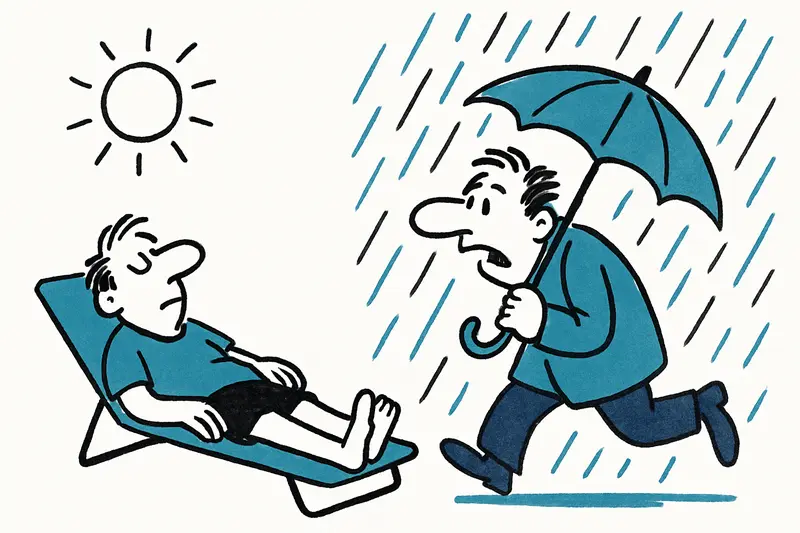
Yellow Storm Warning: How Well Is Mallorca Prepared for Heavy Rain?
Aemet has issued an island-wide yellow warning for Tuesday. Heavy rain and local thunderstorms are possible — we analyze which parts of Mallorca are at risk, what is often overlooked, and how residents and tourists can prepare practically.
Island-wide Yellow: Short-term Weather Change Brings a Wet Tuesday
The forecast is clear: AEMET has issued a yellow warning for all of Mallorca for Tuesday. After a warm, relatively calm weekend, moister air is moving in — bringing showers, some of them heavy. The central question is: how dangerous will this heavy rain be for life and daily life on the island — and Storm Alert: Is Mallorca Prepared for the Deluge?
A brief look back and ahead
Sunday still feels relaxed. In valleys like the Pla de Mallorca there is morning haze, while the coasts briefly keep sparkling heat. But the calm is deceptive: an increase in cloud cover is expected Monday evening, with the first local showers possible. The real change comes on Tuesday with locally very intense precipitation — in peak values up to 30 liters per square meter can fall within an hour. For many commuters, families with children starting school and small businesses, this means: plan instead of improvise.
Who is affected most — the underestimated hotspots
Thunderstorms and heavy rain are not distributed evenly. The Tramuntana often creates sharp local differences: in Sóller, Valldemossa and mountain valleys showers can fall more vertically, while in coastal towns like Alcúdia or Playa de Palma surface runoff accumulates. Cities with many paved surfaces and narrow streets — think of old town quarters in Palma — react quickly with puddles and overflowing storm drains. What rarely appears in weather bulletins: clogged gutters and mangrove estuaries — small blockages are enough to make a road impassable within half an hour. See recent coverage on local wind and rain impacts in Storm warning in Mallorca: Is the island prepared for wind and rain?
What is often neglected — infrastructure, agriculture, tourism
Public debates usually focus on Orange Alert: Torrential Rains — Is Mallorca Prepared?, less on the consequences in detail. Briefly: Mallorca's sewer networks are not ideally adapted to many heavy-rain events, and older buildings often lack modern downpipes. For agriculture, the precipitation brings much-needed water for olive and almond trees — but it also temporarily increases the risk of erosion on harvested fields. For tourism it means caution for bus and car travel, excursion boats are more likely to stay in port, and popular promenades like the Passeig de Born can seem surprisingly empty on such days — rain drives away sunbathers but creates space for locals who head to cafes earlier to warm up.
Practical tips — what you can do now
A few pragmatic measures help avoid trouble: check the gutters on your house, secure garden furniture and parasols, check children's routes to school (rain jacket, non-slip shoes, possibly leave earlier). Drivers: do not sit on top of water on the road — avoid large puddles, because standing water can damage engines or extend braking distances. Organisers of small events or markets should have an alternative tent or postponement plans ready. Fishermen and water sports enthusiasts: pay attention to harbour information — even with moderate swell, currents and outflow channels in the bays can be dangerous.
Opportunities in the rain — reservoirs, clean air and quiet walks
There are also positive sides to little drama: the rain fills reservoirs and gives vegetable beds new strength. The air is cleansed of Saharan dust traces; after the precipitation the island smells again of wet stone and pine resin. For locals and visitors this means: a good opportunity for quiet beach walks with sturdy shoes — promenades will then be full of puddles but unusually quiet. Small cafes in Palma offer dry corners and hot coffee, and market squares briefly empty, allowing stress-free shopping.
What authorities should do — and what neighbours can do
At the municipal level, intensified checks and cleaning of storm drains would be useful in the short term, as well as notices to parents and businesses. In the medium term, an inventory of the sewer system is worthwhile, especially in old towns and tourist hotspots. At neighbourhood level: keep gutters clear if possible, remove branches, support elderly people — a small push for the hinges on a house gate can make a big difference during heavy rain.
Conclusion: the yellow warning is no reason to panic, but it is a signal to be cautious. Pack an umbrella on Tuesday, allow a little extra time — and listen to the rain: on the tiled roofs of Palma, in the lanes of Sóller, on the fields of the Pla de Mallorca. It brings work for the drainage system, water for agriculture and a temporary calm to the otherwise busy island world.
Frequently asked questions
What does a yellow weather warning in Mallorca usually mean?
Is heavy rain in Mallorca dangerous for driving and commuting?
Can you still go to the beach in Mallorca during rainy weather?
What should I pack for rainy weather in Mallorca?
Which parts of Mallorca are most affected by heavy rain?
Why does Palma’s old town flood so quickly in heavy rain?
Does heavy rain help Mallorca’s reservoirs and farmland?
What should families and schools in Mallorca do before heavy rain?
Similar News

Palma Gets a Welcoming Park: Tirador Goes Greener — and a Café Is Coming
A new green project in Es Fortí/Camí de Jesús will transform the old Voltadora into a city park with an experience fores...
Why the End of "Los Últimos Mohicanos" Is More Than the Closing of a Bar
With squealing tires and one last glass, an icon on the Palma–Manacor expressway closes. Why the demise of this German b...
Protest camp on Plaza España: Who asks for solutions to the right to housing?
Around 30 activists set up a tent camp on Palma's Plaza España to push for stronger tenant rights. Our analysis asks: Ar...

In the Name of a Gang: Alleged Extortion in El Molinar and What It Reveals About the Protection of Sex Workers
A man is accused of posing as a member of the Hells Angels and extorting two women at accommodation in El Molinar. The s...
When Chile Meets the Mediterranean: A New Flavor at Can Bordoy
At Can Bordoy in Palma's old town, Chilean chef Jhonatan Maldonado combines Patagonian seafood with Mediterranean island...
More to explore
Discover more interesting content

Can Cap de Bou

Townhouse Lleo 72
