
How well is Mallorca prepared when the sea rages? Storm 'Leonardo' and the giant waves
How well is Mallorca prepared when the sea rages? Storm 'Leonardo' and the giant waves
Storm 'Leonardo' brought meter-high waves to Mallorca's coasts. A reality check: what do we know, what's missing from the discourse, and what should happen now?
How well is Mallorca prepared when the sea rages? Storm 'Leonardo' and the giant waves
Guiding question: Are warnings and footage from Cala Santanyí, Colònia de Sant Jordi and Palma Bay enough to protect people and homes?
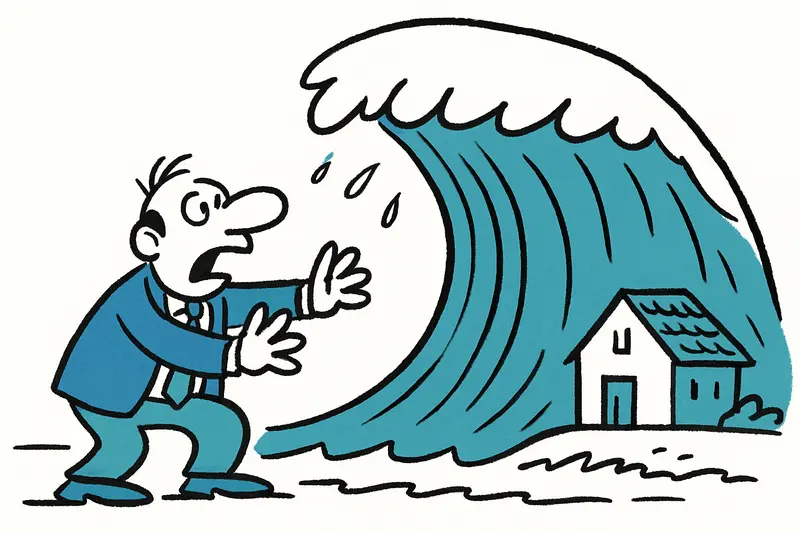
Thursday brought the storm low, commonly called 'Leonardo' in many places, and heavy wave action to Mallorca's coasts. Witnesses and amateur meteorologists documented meter-high breakers, for example in Palma Bay and on southern coastal sections like Cala Santanyí, Colònia de Sant Jordi and Cala Llamp. AEMET had previously issued warnings – on Thursday orange, and for Friday the coasts were still marked yellow until midnight. This was noted in First storm warning, then sun: How well is Mallorca prepared for this changeable weather?.
Critical assessment: warning color and reality often diverge. A severe weather warning indicates that wind and waves can be risky; it does not automatically specify exactly where promenades will be overrun, which access roads become impassable, or which small coves are particularly vulnerable. Videos provide impressive images, but they do not replace a systematic risk analysis, as reported in Storm Alert: Is Mallorca Prepared for the Deluge?.
What's missing in the public discourse: first, a clear declaration of who takes responsibility on site when coastal sections become impassable during a storm. Second, concrete guidance for residents and businesses: which parking areas should be avoided? Where are safe assembly points? Third, information for boaters and port operators on the question: when will berths be evacuated or secured? These questions are rarely addressed when a new video goes viral.
A small scene from Palma on Thursday: salt spray lashes the streetlights along the Passeig Marítim, the seagulls scream, a delivery van idles with the engine running and an elderly man walks along the harbor with his hat pulled down. The sound of the sea lays a deep, persistent voice over the city – impressive to watch on video, but uncomfortably close for those who live by the water or earn their living there.
Concrete solutions that can be implemented quickly:
1. More precise, localized warnings: Link AEMET data with local port and municipal databases so users can be notified by app or SMS whether their specific beach or harbor is affected.
2. Uniform closure procedures: Define clear thresholds for promenades, beach parking and temporary closures – wind speed, wave height, tidal thresholds. Authorities and the Port Authority should agree on these together.
3. Visible markings and information boards: Install signs at beach accesses and parking areas with guidance on behavior during storms, evacuation routes and emergency contacts.
4. Securing boats and infrastructure: Harbors should have standardized checklists: double up mooring lines, elevate sensitive equipment, inspect vacant berths, as discussed in Sudden autumn in Mallorca: Are harbors and coasts prepared for short storms?.
5. Local drills and information campaigns: Municipalities could run short tests each year before the windy season and train neighborhood groups, similar to fire drills.
6. Infrastructure maintenance: Regularly inspect seawalls, breakwaters and drainage channels – small cracks and clogged outlets become evident immediately during heavy wave action.
What money alone does not solve: communication. If the harbor master, municipality, police and meteorological services do not inform in a coordinated way, uncertainty arises. People in Mallorca know how capricious the sea can be; what they need is reliability and simple, actionable instructions.
A look to the south: in parts of Andalusia the same weather system caused flooding and landslides, as detailed in After the Thunderstorm: Flooded Streets, Mudslides and the Big Question About Mallorca's Preparedness. That reminds us that the effects of storms are not just striking images, but real dangers to infrastructure and life.
Conclusion: The footage from Palma Bay and the southern coves is impressive and inspires respect for the sea. But respect alone does not protect anyone. Mallorca needs more localized warning chains, clear responsibilities and practical rules that take effect quickly when the sea rises. Otherwise the spectacular videos remain mostly something for phones – and not a basis for preventing damage.
Frequently asked questions
How dangerous are storm waves on the Mallorca coast when AEMET issues a warning?
When is it too risky to go near the sea in Mallorca during rough weather?
What should people in Mallorca do during a coastal storm warning?
Is it safe to walk along the Passeig Marítim in Palma during strong waves?
Are Cala Santanyí and other small coves in Mallorca more exposed in storms?
What happens in Mallorca harbours when a storm brings big waves?
What should boat owners in Mallorca do before rough seas arrive?
How can Mallorca improve coastal safety during storms?
Similar News
Car on MA-13 near Inca in flames – a safety check for the island
A vehicle caught fire on the MA-13 towards Alcúdia on Tuesday afternoon. The driver was uninjured, the car was destroyed...

Real Estate in Mallorca: Fewer Buyers, Higher Prices — What's Behind It?
Sales on Mallorca are falling, yet prices continue to climb. Why fewer transactions do not equal relief — and what shoul...
Just Bought — Already Trouble: Water Damage in the Heiters' Villa and What Owners in Mallorca Should Know Now
A newly purchased sea-view property — and within days a water damage. What risks lurk in new properties in Mallorca, and...

Rich, Richer, Mallorca? A critical look at the growing super-rich bubble
Numbers: Around 3,600 millionaires in the Balearic Islands hold a combined €27.6 billion. What this concentration of wea...
Chain reaction on the MA-1: Eight injured in rear-end collision near Portopí
On Tuesday morning there was a crash at the Andratx exit to the MA-1 towards Palma: a rear-end collision between a car a...
More to explore
Discover more interesting content

Can Cap de Bou

Townhouse Lleo 72
