
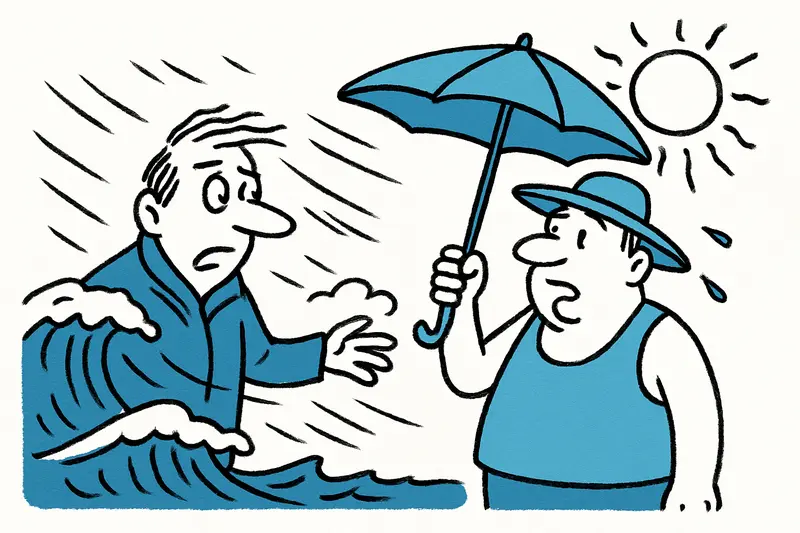
First storm and metre-high waves, then 34 °C: How Mallorca's weather flips the days
First storm and metre-high waves, then 34 °C: How Mallorca's weather flips the days
A cold front brings storms Friday morning and waves up to three metres high. From Sunday temperatures climb again toward 30–34 °C. What to watch out for now.
First storm and metre-high waves, then 34 °C: How Mallorca's weather flips the days
Key question: How do you prepare for the rapid weather shift between storm and summer heat?
The island is experiencing a classic weather turnaround these days: first a cold front brings fresh winds and heavy seas, then warm air rolls in and pushes temperatures up again. Anyone on the beach, at the harbour or inland should be ready to change plans at short notice – not out of panic, but out of common sense.
Brief chronology: Thursday will often be pleasant with a mild breeze and daytime values largely between about 26 and 31 °C. Night temperatures vary widely: in the Tramuntana mountains readings fell in the early hours to near 8 °C, while in Palma and the east they stayed around 19 °C – isolated tropical nights above 20 °C have already occurred. From Thursday to Friday a cold front will move through; AEMET has therefore issued a yellow storm warning for all coastal sections of the island for the period from midnight until noon. Expected gusts can locally reach around 50 km/h and waves up to three metres are possible. Conditions calm down again from midday; for background on similar episodes see Last Heatwave – then the Turnaround: Changeable Weather on Mallorca.
What is often overlooked in public debate: the double burden for daily life and tourism. On the one hand there is the danger in the water during high seas, on the other the rapid switch to heat as soon as the sky clears. With heavy surf many beaches will change their flag status and lifeguards will often be on duty. Harbour operators and small-boat skippers must expect restricted operations and increased mooring work on Friday morning. Walking along the Passeig Marítim you will see beach bars and rental companies securing or dismantling sunshades.
Practical tips for the next 48 hours: 1) Anyone wanting to swim on Friday morning should observe the flags and instructions of the lifeguards and, if in doubt, refrain from swimming. Children, older people and those with health problems need special protection. 2) Boat operators and sport sailors should avoid longer trips; small craft are sensitive to gusts and surf. 3) Secure loose items in the harbour and on terraces; objects picked up by the wind can cause injuries. 4) Follow short-term AEMET warnings for the Balearic Islands and notices from your municipality or harbour master – they often give more local information than a general weather forecast.
And for next week: From Saturday the sun will appear more often. Sunday will again see around 30 °C, and from Monday it can locally reach up to 34 °C. That means: plan hydration, ensure shade times for children and pets, keep shutters closed during the day, and schedule coastal activities in the early morning or late evening. Those working in the fields or on construction sites should adjust working hours and plan breaks in cool rooms.
What authorities and operators could communicate better: more precise information about affected beach sections, earlier warnings to marinas and campsites, and more visible information for tourists in several languages. Simple measures such as additional warning signs at access roads to popular beaches or temporary parking bans during strong winds often prevent dangerous situations; see coverage on preparedness in First storm warning, then sun: How well is Mallorca prepared for this changeable weather? and the analysis Sudden weather change in Mallorca: heat, storms — is the island prepared?.
An everyday scene: On Friday morning lines clatter in Port d'Andratx, small boats rock more strongly in the harbour basin than usual, and on the Paseo Marítimo a server hurriedly folds up the pergola fabrics. Later, when the sun is stronger on Saturday, the same places will be filled again with towels and ice-cream sellers. That is the island: rapid mood changes on a small scale that you can balance with a little caution.
Concrete recommendations, briefly: inform yourself (AEMET, local town hall warnings), observe (flags, lifeguard instructions), secure (boats, sunshades, balcony furniture) and prepare for the heat (water, shade, cooling breaks). Anyone who follows this will get safely through the short but noticeable weather change.
Conclusion: Only days lie between possible metre-high waves on Friday and up to 34 °C on Monday. Those who plan flexibly, watch for signs and heed local advice will stay dry, safe and soon enjoy plenty of sunshine again.
Frequently asked questions
What should I do in Mallorca when a storm warning is issued for the coast?
Is it safe to swim in Mallorca when the sea is rough?
How quickly can the weather change in Mallorca?
What should I pack for Mallorca when stormy weather turns hot again?
What is the weather usually like in Mallorca after a storm front passes?
Is Port d'Andratx affected when there is strong wind and high surf in Mallorca?
What should I do on the Passeig Marítim in Palma during strong wind?
How hot can Mallorca get after the weather clears?
Similar News

Arrest at the Port: Three Suspected Pickpockets Left Mallorca After Series of Thefts
The National Police stopped three men at Palma harbour who are accused of several thefts at the airport. How could the g...

Palma's Rental Bike Boom: More Bikes, More People, More City Life
Since Bicipalma was opened to non-residents, the system has noticeably grown. Students, residents and tourists bring lif...

Palma–Lyon in Winter: Two Weekly Flights Bring Fresh Momentum
From October Transavia France will connect Palma and Lyon in winter as well: Wednesdays and Saturdays, around 17,000 sea...

Budget holidays in Mallorca: What thriftier tourists really mean
Visitors are spending less: shorter stays, fewer restaurant visits, fewer excursions. A reality check for Mallorca's eco...

Mallorca gets winter link to Lyon: Transavia France flies from October
Transavia France will launch a winter direct connection Palma–Lyon from late October: twice weekly, around 17,000 seats ...
More to explore
Discover more interesting content

Boat Tour with BBQ along Es Trenc Beach
Private transfer from Mallorca Airport (PMI) to Pollensa
