
Storm "Pedro" approaches: Are Mallorca's municipalities and people ready?
Storm "Pedro" approaches: Are Mallorca's municipalities and people ready?
Aemet has issued a yellow alert for all of Mallorca. Gusts up to 80 km/h and three to four meter high waves are forecast. A reality check: what is missing in local preparedness?
Storm "Pedro" approaches: Are Mallorca's municipalities and people ready?
Yellow warning for the entire island – and many open questions
The national weather service Aemet has issued a yellow alert for next Thursday for the whole of Mallorca; Yellow Warning: When the west wind sweeps across Mallorca — how prepared is the island?.
Wind gusts are expected to locally reach at least 80 km/h, and coastal waves of three to four meters are forecast. The most intense phase is scheduled for the period from 6 a.m. to midnight; the southeast will largely be spared. On Friday the warnings should be lifted again and the weekend is forecast to bring sunshine and milder temperatures.
Key question: Are we sufficiently prepared for short but strong storm events like the one Aemet expects under the name "Pedro"?
Brief analysis: The warning message is clear and accurately reflects the weather situation, but warning alone is not enough. Many weaknesses remain exposed in Mallorca. Along the coast, bars, promenades and parking areas are often located very close to vulnerable stretches. On Palma's boulevards there are already large numbers of visitors in spring; many are tourists who do not follow all official warning channels. Fishing boats and pleasure yachts in small harbors need reliable notices so that moorings can be secured. And on rural roads, fallen trees or sand-covered lanes can quickly become dangerous.
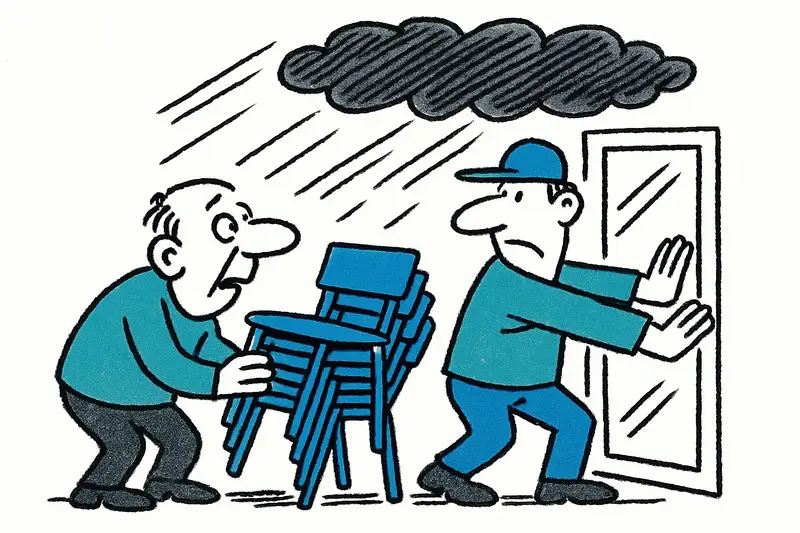
In everyday life: This morning on the Passeig Marítim, café staff are stacking empty chairs in corners, and the sound of breaking waves can already be heard from the sea. At the fishing harbor in Port de Sóller, a boat owner checks his mooring lines while delivery vans stop repeatedly on the Rambla in Palma. In Campos, a farmer's wife discusses on the village square whether to trim trees along the field roads before the storm. Such scenes show: preparations are underway, but they are often individual and fragmented.
What is missing from the public discourse: multilingual, locally targeted information for tourists is scarce. Many warnings come via Aemet, radio and local channels, but practical implementation – for example harbor instructions, temporary closures of beach sections or short-term changes to bus timetables – often remains uncoordinated, as noted in Storm warning in Mallorca: Is the island prepared for wind and rain?. The question of how municipalities can speed up the removal of storm damage and who bears the costs is barely addressed. Also less visible are preventive tree maintenance along roadsides and securing freestanding advertising signs that can become dangerous in strong winds.
Concrete, simple measures that would help: First, clear, multilingual warning notices at beach access points and in tourist centers, both digital and on signs. Second, harbor authorities should order short-term mooring checks and inform boat owners by SMS or notice whether the harbor remains open. Third, municipal readiness teams to inspect trees and secure loose objects in public spaces. Fourth, cooperation with taxi and bus companies on emergency timetables so commuters have alternatives in serious situations. Fifth, targeted information for farmers and construction companies that can be easily distributed via municipal websites and local notices.
Another everyday example: In Llucmajor, Pollença, Sineu and Campos, daytime temperatures of 20 degrees or more were recorded in recent days; Palma Airport even registered 22 degrees, and Portopí 21. Such mild days encourage people to be active outdoors. This increases the risk that people will be unprepared when the storm reaches its strongest phase. Thursday's temperatures are forecast to be lower – nationwide around 18 to 21 degrees, in the north up to 18, and in the south and southwest only around 16 – which means a noticeable drop in temperature.
What authorities and people should do immediately: Secure balcony furniture, bring plants and lightweight decorations to safety, check the secure storage of vehicles parked near the coast. Parents and schools should be prepared for short-notice cancellations of outdoor activities. Boat owners: have additional lines ready and, if necessary, avoid berths when harbor operators issue warnings. Those helping elderly neighbors should especially consider securing windows and emergency supplies.
In the long term more is needed: a graded alarm and information system that not only names weather levels but also issues practical action recommendations for different target groups. Regular cooperation between municipalities, harbor operators and tourism organizations to rehearse procedures for storm phases would shorten response times. And: public practice days in the form of small evacuation or securing drills could raise awareness.
Conclusion: "Pedro" will pass: Aemet already expects a relaxation by Friday and sunshine for the weekend, with rising temperatures around 18 degrees from Saturday; see Storm Alert: Is Mallorca Prepared for the Deluge?. Nevertheless, the island should use the warning to establish routines for preparation and response. A storm of this strength is a good reminder that while weather events are temporary, their consequences are less painful if municipalities and people do not wait to react. And: a bit of thought and action on Wednesday can spare a lot of trouble on Thursday.
Frequently asked questions
What weather should Mallorca expect when Storm Pedro arrives?
Is it safe to go to the beach in Mallorca during a yellow wind warning?
What should people in Mallorca do before a strong storm?
How does Storm Pedro affect Mallorca's harbours and boats?
Will Mallorca's weather improve after the storm?
What should tourists in Mallorca do when storm warnings are issued?
Are rural roads in Mallorca dangerous during strong wind?
What kind of warning system would help Mallorca better during storms?
Similar News

More water than last year: Mallorca's reservoirs breathe easier
September rain refilled the Tramuntana's reserves: overall fill around 35 percent, Cúber at 40.42 percent, Gorg Blau at ...

Three Luxury Hotels in Banyalbufar: Lots of Money, Many Questions
A Danish investor plans three exclusive accommodations in Banyalbufar — including the historic Son Valentí. The announce...
2.1 tonnes of cocaine on sailing yacht off Spain's coast – a reality check for the coastguard
A 14-metre yacht was seized with 2.1 tonnes of cocaine. Who monitors the ports, how does the international hunt succeed ...

Heat Bonus in Mallorca: 100 Euros Extra for Outdoor Staff at MarSenses
MarSenses pays employees who worked outdoors in August an extra €100 as recognition. Lighter uniforms, reduced hours for...

Renovating in Mallorca: What You Really Can Do Without Neighbour Consent
Many think they can do whatever they want in their apartment. That's partly true — but only as long as structural elemen...
More to explore
Discover more interesting content

Can Cap de Bou

Townhouse Lleo 72
