
Stuck in the Sand: Why Cars on Mallorca's Beaches Keep Getting Stuck
Stuck in the Sand: Why Cars on Mallorca's Beaches Keep Getting Stuck
Sometimes a rental car next to the trash containers, sometimes two SUVs half in the sea: why do so many vehicles end up on the beach? A reality check with causes, everyday scenes and clear proposals for Mallorca and the neighboring islands.
Stuck in the Sand: Why Cars on Mallorca's Beaches Keep Getting Stuck
Key question
Key question: Why do people drive cars, rental vehicles and SUVs into places that are only meant for sand, water and pedestrians — and then get stuck?
Critical analysis
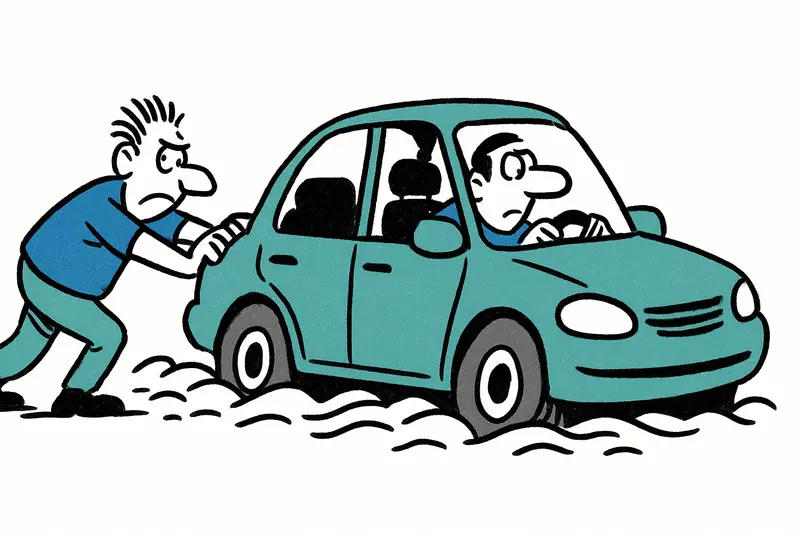
First the scene: a Hyundai, finely polished, stands next to a trash container on the beach of Platja d'en Bossa (What Lies Beneath Mallorca's Coast: Trash Slipping Out of Sight). Then the repeat: an off‑roader that had to be freed in spring; in summer a Jeep that sank half into the sea; on another day two cars and a jet ski became an involuntary performance in Son Serra de Marina ( Beach drama in Son Serra de Marina: Two vehicles stuck in the sand – costly and risky) for the local “scene”. These incidents share common roots. First: ignorance and blind trust in navigation. Many drivers follow the blue line on the display, see a footpath and assume it is an access road. Second: lack of restraint. Some think a short dash across the sand is a “smart” shortcut — until the wheels spin and the vehicle sinks. Third: cost pressure and DIY solutions. Examples show people prefer to take the risk of avoiding a launch fee rather than pay a few euros for the official access. Fourth: gaps in deterrence. Where signage, physical barriers and consistent enforcement are lacking, space opens up for misconduct.
What is missing from the public debate
People often talk about “stupid tourists” — that is not enough. What is missing is a sober debate about structural causes: poor signage at access routes, unclear markings in major navigation apps, inconsistent law enforcement between municipalities and the lack of mandatory information from rental companies. And: the costs for recovery and environmental damage are rarely disclosed transparently (6.5 Tons of Waste in July: Why Mallorca's Coasts Keep Struggling). The result is a wrong calculation by the driver: small perceived risk, seemingly large benefit.
Everyday scene from Mallorca
A Monday morning on the coast: seagulls scream, a fisherman pulls his boat over the ramp, the sun is still low. A tourist parks at the edge of an access lane, rummages through a beach bag, then closes the hood — as if the car belonged in the picture. A few meters away a tow truck roars, its phone never quiet during the summer months. Passersby stop and take out their phones. The neighbor from the kiosk shakes her head and says, “Same every year.”
Concrete solutions
1) Better physical barriers at sensitive access points — bollards, low walls or gravel ramps — to prevent cars from having an easy way in. 2) Uniform, highly visible prohibition signs in several languages plus pictograms at all relevant access routes. 3) Obligations for rental companies: information at check‑in, a short notice in the contract and a sticker in the vehicle that points out local bans. 4) Make towing costs and fines fully transparent: when recovery costs plus fines really hit the offenders, that is more deterrent than half‑hearted penalties. 5) Cooperation with map providers: municipalities should report problematic routes as “not passable” so that route planners avoid these access ways. 6) A local reporting portal or phone number for incidents so municipality, Guardia Civil and environmental services can react faster.
What can be done immediately — and what takes longer
Quick measures include better signs, temporary bollards during the season and mandatory notices from rental companies. In the long term, coordination between municipalities, uniform sanctions and technical solutions such as geofencing to log trips into sensitive beach areas are needed. A cultural change does not come from bans alone; it needs visible consequences.
Pointed conclusion
The images of cars stuck in the sand are not just comedy for phone videos. They are a symptom: people miscalculate, systems fail and nature pays the price. With clear signage, consistent enforcement and a bit of common sense, many scenes could be avoided. Until then the promenades will keep hearing the same sound: the revving of engines — and eventually the heavy strain of a tow rope.
Frequently asked questions
Why do cars keep getting stuck on Mallorca beaches?
Is it safe to drive on Mallorca beaches or sandy access roads?
What should I do if my car gets stuck in the sand in Mallorca?
When are Mallorca beaches most crowded with cars and tow trucks?
Why are rental cars in Mallorca more likely to end up on the sand?
What is wrong with using navigation apps near Mallorca beaches?
Where in Mallorca do cars most often get stuck on the coast?
What would help prevent cars from driving onto Mallorca beaches?
Similar News
High heel slips, car accelerates: accident on Camí de Son Hugo
A woman lost a high-heeled shoe on the forecourt of the sports facility at Camí de Son Hugo. The car accelerated, mounte...

Phone Scam: How Two Hotel Employees at Playa de Palma Lost Thousands of Euros
One morning in September, two reception employees at Playa de Palma were pressured by alleged alarm-company staff — in t...

When the Wallet Becomes a Danger: Attack in Peguera and Lessons for Mallorca
In Peguera, two women are said to have stolen the wallet from a 75-year-old German couple. When the victim intervened, t...
Plata stays Plata: Young people take over, Llonguets remain
A small bar on Carrer de l'Argenteria will continue: Tolo Serra hands the place over to young Mallorcans at the end of t...
Unnoticed in the Luggage Compartment: How a Boy Traveled More Than 100 Kilometers in a Team Bus
A minor traveled in the undercarriage of a team bus for more than 100 kilometers until his cries for help were heard. A ...
More to explore
Discover more interesting content

Can Cap de Bou

Townhouse Lleo 72
