
Students pedal for clean energy: Energy Challenge visits Sa Coma
Students pedal for clean energy: Energy Challenge visits Sa Coma
In Sa Coma more than a hundred fifth- and sixth-graders tested how muscle power can become electricity. Workshop, recycling relay and a cabbage to take home shaped the day.
Students pedal for clean energy: Energy Challenge visits Sa Coma
With pedals, paper and plants, primary school students from Sant Llorenç learned what sustainability looks like in practice
In the late morning a cool December breeze blew across the green area opposite the Punta de n'Amer school. Children's voices, the clatter of bicycle pedals and occasional laughter filled the square — this was what the Energy Challenge in Sa Coma looked like, which brought together more than a hundred primary school pupils from the municipality.
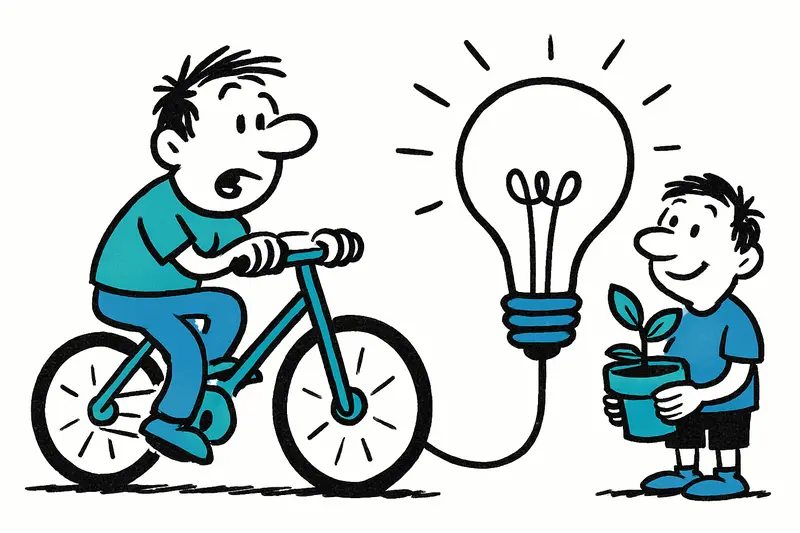
113 children from the 5th and 6th grades of Punta de n'Amer and Escola Mestre Guillem Galmés tried out at six stations how to generate electricity with muscle power. Stationary bicycles were ready to plug in, and whoever pedaled hard could see directly how energy is produced — a simple but impressive experiment to make abstract concepts like "electricity" and "generation" tangible. This hands-on approach echoes coverage such as Pedal Power Above the Runway: A Mallorca Record That Raises Questions.
At the same time, demonstrations of modern, emission-free mobility were on the program. A three-wheeled cargo vehicle for the so-called last mile was presented, and the children were allowed to ask questions: How far can it go? Does it need a lot of power? Such practical insights sparked curiosity without overwhelming them with technical details.
A small team led a recycling relay race: in groups the children sorted waste into the correct bins, ran, laughed and in the process learned the principles of waste separation in a playful way. At another station, girls and boys could design a new mascot for the Energy Challenge using paper and paints — creativity as part of environmental education.
The organizers also provided refreshments: a snack with regional fruit gave the children energy after the activities. And every participant took a plant home — a cabbage head from the so-called Espai Verd — with the invitation to plant it and watch it grow. Such small gestures connect theory with everyday responsibility.
Representatives of the municipality, including Mayor Jaume Soler and the councilors for Environment, Coast and General Services, followed the activities on site. The event was supported by the Sant Llorenç town hall and the Balearic Ministry of Economy, Employment and Energy. In conversation it became clear: projects like this complement practical measures on the ground — recently about 400 junipers were planted on the beach of Sa Coma, an example of local reforestation work.
What made this day special was its closeness to the children's everyday lives. Instead of long presentations there were things to touch, try out and take home: a picture, a cabbage, the reminder that saving energy and clean mobility need not remain abstract concepts. In a municipality that is currently switching its street lighting to energy-saving LED operation, the topic fits well; similar local examples of electric conversions have been described in A man from Bremen, his boat and the new heartbeat: how a sailboat in Mallorca quietly went electric.
For Mallorca, such education has a double benefit: in the short term it sparks interest and understanding. In the long term it can trigger behavior changes — habits that later mean energy savings and fewer emissions. Such actions are quiet, everyday building blocks of a larger transition; they also sit alongside debates about safety and approvals in high-profile pedal-powered stunts, as explored in Starting a Glider with Pedal Power: What the Bora Stunt at Son Bonet Really Means.
At the exit of the tent, children proudly held their small cabbage plants — a scene that gave a warm note to the cold air and the rustle of the pines. If a fourth grader later on the way home proudly tells how he "made electricity", it is more than a one-day experience: it is a beginning.
Outlook: In the coming months, anyone walking in Sant Llorenç may come across similar projects more often. Schools, the municipality and initiatives can repeat and link such offers — for example excursions to reforestation projects or workshops on saving energy in everyday life. Small steps, many pedal strokes — that is how awareness grows.
Frequently asked questions
What did the Energy Challenge in Sa Coma teach local schoolchildren?
How do children learn about electricity in Mallorca in a practical way?
What is the best time of year for outdoor school activities in Mallorca?
What should children bring or expect at a sustainability workshop in Mallorca?
Where is Sa Coma in Mallorca?
What is Punta de n'Amer used for in Mallorca?
Why are schools in Mallorca teaching recycling and waste separation?
What kind of clean mobility projects are being shown to children in Mallorca?
Similar News
By Boat Instead of the Road: Palma's Water Bus — a Reality Check
The 'Bus Nàutic' launches in two stages — but questions remain over interim operations, fares and environmental requirem...
Several Days of Rain Approaching: How Well Is Mallorca Prepared?
Aemet says: rain from Thursday until at least Tuesday, especially heavy on Monday. Temperatures remain mild. A reality c...
Nervous Reaction at a Traffic Stop: Why Campos Is Not Just a Sniffer-Dog Problem
At a traffic stop in Campos a 37-year-old German was arrested with a bag full of drugs. Our reality check explains why s...
Cameras Against Illegal Dumping: Porto Cristo Monitors Problem Areas – a Reality Check
Manacor has installed four surveillance cameras at particularly problematic waste spots in Porto Cristo. A local check a...
Reality check: Palma's "white" torrent — harmless salt or neglected warning sign?
White crusts on the Torrent de Sa Riera are causing a stir. Emaya describes them as salt deposits. Our reality check: wh...
More to explore
Discover more interesting content

Can Cap de Bou

Townhouse Lleo 72
