
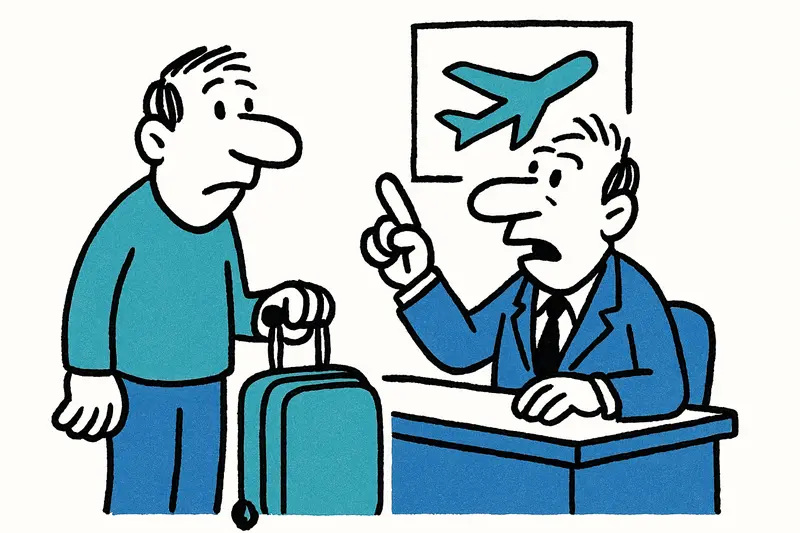
Why the tax cut won't automatically bring cheaper Mallorca flights
Why the tax cut won't automatically bring cheaper Mallorca flights
The government's reduction of the air traffic tax from July 2026 will not automatically lead to cheaper tickets to Mallorca. A look at supply, demand and the real bottlenecks.
Why the tax cut won't automatically bring cheaper Mallorca flights
Key question: Why does the holidaymaker hardly feel the relief?
The government announced a reduced air traffic tax effective July 1, 2026. Many hope this will push down prices for flights to Mallorca. The simple question is: if the state charges less, why don't ticket prices immediately fall for passengers?
Critical analysis: Who really sets the price?
Prices in air travel are not created like in a supermarket, where a discount is passed directly to the customer. Airlines price tickets based on load factors, available aircraft, fuel costs, ground and air navigation charges, and what the market is willing to pay. A relief on one tax item is only a small component in this calculation. When scarce aircraft meet strong demand, prices stay high — especially during holiday periods.
What is missing from the debate
Public discussion often focuses only on the tax reduction. Rarely mentioned are the roles of available fleet capacity, delivery delays at aircraft manufacturers and the distribution of seats throughout the year (see Fewer Seats in Winter: What the 2025/26 Flight Schedule Really Means for Mallorca). Also seldom discussed: where airlines station capacity and the influence of airport fees, slots and staff availability. Without this perspective the debate remains one-sided.
Concrete everyday scene in Mallorca
Early in the morning outside the café at Passeig Mallorca 9A I hear suitcases rolling on the pavement, the hum of buses to Plaça d'Espanya and guests telling each other disappointedly that the return flight cost more than the stay. At the baggage claim in Son Sant Joan it becomes clear: many arrive, few seats are available on the popular dates. This is not an abstract problem — you feel it in the queues and the price tags for extra luggage.
The technical and economic bottleneck
Airbus and other manufacturers have downgraded delivery schedules, and supply chains and production bottlenecks are adding pressure. An industry can report profit forecasts even if it cannot quickly expand its capacity (see Ryanair pulls back – what threatens Mallorca's tourism summer). When aircraft are lacking, the remaining seats automatically become more expensive. That is why a tax cut cannot be translated one-to-one into lower ticket prices.
Why airlines hold or raise prices
With tight capacity, airlines optimize for maximum revenue. They allocate available seats to times with high willingness to pay — for example during school holidays. Government relief mainly helps support the profitability of bases or routes; it does not guarantee an immediate discount on every ticket price (see discussions about the residents' discount).
Concrete approaches — what could help now
1) Promote flexible pricing policies: governmental or regulatory incentives could reward airlines that subsidize empty seat capacity in unpopular periods more strongly or consider price caps for holiday contingents.
2) Address infrastructure and fee structures: if airport and air navigation charges are reduced or tiered, this creates long-term room for price adjustments.
3) Tackle fleet bottlenecks directly: tax incentives for purchases or leasing facilitation would put more aircraft on international routes.
4) More transparency for travelers: clearer price development and temporal alternatives help spread demand — flexible travel dates save money.
What tour operators and consumers can do
For travelers this means: stay flexible. Those who avoid the usual holiday windows can still find good deals. Those willing to take connecting flights or different travel days can save significantly. Tour operators and airports should stagger their capacities over time, for example with targeted offers in the off-season.
Concise conclusion
The tax cut is not a magic solution. It is one lever among many that can mainly improve the competitive position of German airports. Those hoping for cheap Mallorca flights should understand: the central problem is supply versus demand — and that cannot be solved by a lower tax alone.
Frequently asked questions
Will lower air traffic taxes make Mallorca flights cheaper right away?
Why do Mallorca flight prices stay high even when airlines face lower taxes?
What affects the price of a flight to Mallorca the most?
Are cheaper Mallorca flights more likely outside the school holidays?
Why is it hard for airlines to add more Mallorca seats quickly?
What can Mallorca travelers do to save money on flights?
Why does Son Sant Joan Airport feel so crowded during peak travel times?
What would actually help bring Mallorca flight prices down in the long term?
Similar News
Released with Conditions: The Plus Ultra Suspicion and a Mallorcan Finca as Residence
A Dutch entrepreneur, sought in connection with the Plus Ultra case, was extradited to Spain after his arrest in Germany...

Haute Nuit in Puerto Portals: Fashion, Art and Indulgence by the Water
On October 2 the Lobster Club in Puerto Portals will be transformed into a stage for curated fashion, art and culinary e...

Magaluf: Watchtower Alarm – Lifeguards Pull Unconscious Beachgoer from the Water
After a drama in the late afternoon, two lifeguards at Magaluf beach rescued an unconscious 44-year-old man. He was stab...

Turquoise in the City: How dangerous is the color play of the Sa Riera?
The Sa Riera in Palma suddenly turned turquoise — a pretty motif, but behind the effect lies a discharge of saline waste...

Jeckliner at Sunnesching: Cologne spirit sets sail from Palma
In September 2027 the Mein Schiff 2 briefly becomes a floating carnival stage: four days with Cologne bands, comedy and ...
More to explore
Discover more interesting content

Can Cap de Bou

Townhouse Lleo 72
