
When the postcard crumbles: Tents at Can Pere Antoni and Palma's housing crisis
When the postcard crumbles: Tents at Can Pere Antoni and Palma's housing crisis
Tents on the city beach Can Pere Antoni show that Palma's housing shortage is no longer just a statistic. One clear question remains: how long will we tolerate people living outdoors in the middle of the city?
When the postcard crumbles: Tents at Can Pere Antoni and Palma's housing crisis
Why do people end up on the street in the middle of the city beach — and which answers are missing?
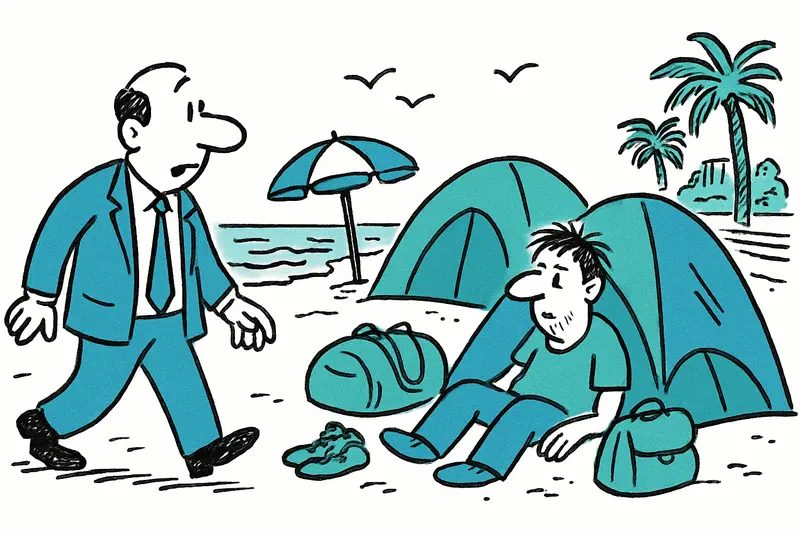
In the early morning, when the first joggers circle along the bike path at Can Pere Antoni, an unusual sight lies between sun umbrellas and the sound of the promenade: two tents close to the water's edge, personal belongings beside them, a few shoes in the sand. According to people from the area, three people have settled there — two men and a woman. It's a scene that not only confuses tourists; it raises a sharper question: how far is Palma willing to go to ensure people do not have to sleep outdoors?
The central question is simple and harsh: why do we see tents on one of the city's most central beaches, even though aid services and municipal services exist? To find the answer, you have to look — not only at the tents themselves but at a web of housing shortages, temporary employment, high rents and bureaucratic obstacles.
Critically viewed, a deficit becomes openly visible: existing support structures function, but not everywhere at the same time and not for every life situation. Emergency shelters are often overcrowded or require that people have certain papers, appointments or abstinence rules. Those who have a job or appointments during the day easily fail under rigid admission conditions. Added to this are Sky-high prices, tents, empty promises: Why Mallorca's housing crisis is no longer a marginal issue, which push many households to the edge of subsistence. The result: people choose maximum visibility — on the beach — because otherwise they cannot find a place to leave their belongings during the day.
What is often missing in public discourse is the perspective of everyday life: the small routine that people develop outdoors, the improvised camps, the shopping bags, the thermos, the hope for good weather. Also missing are the voices of neighbors, beach vendors, cyclists who pass the spot daily and perceive a normalization. These scenes are not isolated cases; makeshift settlements repeatedly appear in parks, on highway edges towards Llucmajor and in some neighborhoods such as Tents Next to Villas: Nou Llevant Exposes the Gap Between Rich and Poor.
Concrete signs of escalation become apparent in the authorities' reactions: police operations have been observed, talks about possible evictions are in the air When Caravans Become the Last Address: How the Housing Crisis Is Changing Mallorca. A forced measure may create order in the short term, but it does not solve the underlying problem. Removing tents often disperses people across the city and exposes them to new dangers — cold, theft, lack of medical care.
An everyday scenario on Homelessness on Paseo Mallorca: When the Park Bench Becomes the Final Address illustrates the dilemma: a kiosk vendor on the promenade waves to joggers in the morning, then refills the coffee machine and watches a woman come from the coast carrying two plastic bags and sit down on a bench. She has no fixed accommodation, scrapes together money for a night shelter or stays until the sun goes down. The vendor knows her only casually and often offers water. Such small social networks are important — but they are not a substitute for planned assistance.
Which solutions work in the short term and which are sustainable? In the short term, low-threshold, flexible offers are needed: day facilities where people can store their belongings safely and shower; extended opening hours in emergency shelters; mobile social teams that are available on site. It helps to place distribution points for clean clothes, first-aid checks and clear information about rights and accommodation options visibly on the beach and in nearby neighborhoods.
In the long term, structural measures are decisive: affordable housing, more subsidized apartments with fast allocation mechanisms, rent controls in strained neighborhoods, support programs for precarious employment relationships and streamlined administration for immediate assistance. Also important would be a coordination center that brings together police, social services, health services and NGOs — so that eviction is not the end but the beginning of an accompanied solution.
Politically, the discussion must move away from mere visibility management. It's not just about order on the promenade, but about prevention: how do we prevent people from reaching the point of losing their homes in the first place? This includes identifying precarious rents early, providing rent assistance and making sensible use of vacant housing.
What Palma often lacks is a public image that can tolerate ambivalence: people are not just problems; they have stories, networks, skills. Volunteer initiatives and neighbors do valuable work, but municipal responsibility is needed that goes beyond short-term actions.
Conclusion: The tents at Can Pere Antoni are symptomatic of a city that is growing but does not let the same social infrastructure grow everywhere. An eviction would be a visible but morally questionable band-aid. More urgently needed are flexible immediate aids at the beach, coupled with long-term investments in affordable housing and better coordination among actors. Only then will a postcard become a place again where a few people do not have to fight the wind and the waves.
Frequently asked questions
Why do tents sometimes appear on Can Pere Antoni beach in Palma?
How bad is the housing crisis in Mallorca right now?
Can homeless people in Palma get help from emergency shelters?
What happens if tents on a Palma beach are removed by the authorities?
Is Can Pere Antoni a common place for homelessness in Palma?
What kind of short-term support would help people sleeping outdoors in Palma?
What long-term solutions could reduce homelessness in Mallorca?
Why do some people choose to sleep on the beach in Palma instead of somewhere else?
Similar News
Warning to Bathers: Nipping Fish in Cala Major and Other Coves — a Reality Check
In Cala Major and several beaches around Mallorca, bathers report painful “nips”. Who are the animals, why are they gett...
Rental Car Theft in El Arenal: What This Incident Reveals About Our Gaps
A teenager steals a running rental car in El Arenal, flees on foot, climbs over walls and is caught by the Guardia Civil...
Red Rope in Palma's Library: What Helps Against Selfie Tourism — and What's Missing
Palma's city library cordoned off an area with a red rope to keep selfie tourism away from reading and working activitie...
Fort San Carlos: Museum, Harbor Dispute — and a Conflict That Demands Answers
The military museum at Fort San Carlos sits right on Palma's harbor, with unexpectedly quiet rooms filled with cannons a...
Old Town Under Pressure: When a Doorway Becomes a Sleeping and Shower Place
For months a woman has been living with a parasol, a clothes rack and personal belongings next to the social welfare off...
More to explore
Discover more interesting content

Can Cap de Bou

Townhouse Lleo 72
