
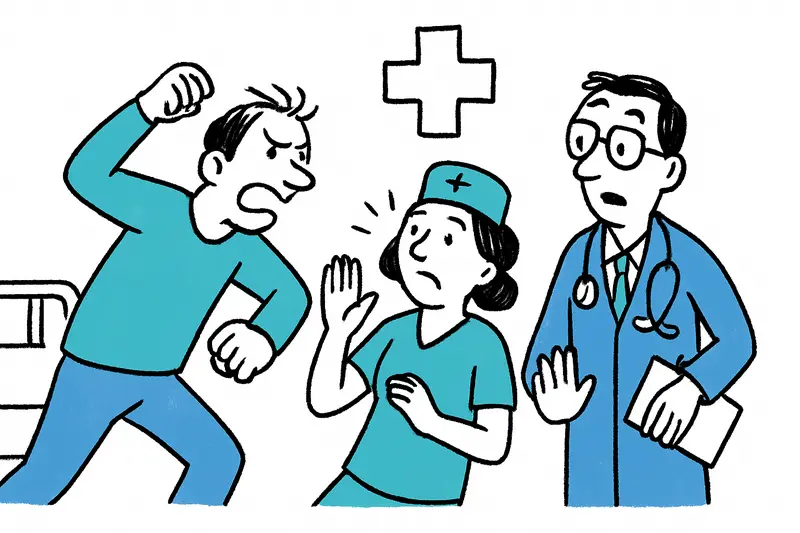
Threats and Violence in Hospitals: What's Going Wrong — and How Can Mallorca Respond?
Within 24 hours there were two attacks on hospital staff in Mallorca. We ask: Are hospitals sufficiently protected — and what is missing from the public discourse?
Threats and Violence in Hospitals: What's Going Wrong — and How Can Mallorca Respond?
Two arrests within 24 hours, two locations: Son Llàtzer and another clinic in Palma
The recent incidents in Mallorca's hospitals are more than isolated outbursts: Within a short time, two people were arrested in Palma after staff were attacked or threatened during hospital operations. In one case, a patient allegedly repeatedly smoked and used drugs and massively threatened staff; in another case, an angry man attacked an emergency department worker and used his removed belt with a metal buckle as a weapon. According to the police, investigations are underway for dangerous bodily harm and assault on public officials — which also includes medical staff.
Key question: Are our hospitals in Palma and on the island structurally sufficiently protected, or are social problems simply shifting into everyday hospital life without politicians and administrators responding?
This is not a purely theoretical question. Hospitals are public spaces that admit people in crisis at any time of day and night. On a winter afternoon in Son Llàtzer, on the way from the entrance to the emergency department you hear the monotone beeping of monitors, the coffee machine in the canteen, and sometimes loud chatter from waiting rooms. Nurses hurry across wet tiles, colleagues' jackets hang in the cloakroom — nobody comes to work to experience violence.
The incidents reveal several problem areas that often occur together: acute mental health crises, substance abuse, frustration over long waiting times, and staffing shortages — an issue compounded by staff health concerns reported in Alarming Vaccination Rate in the Balearic Islands: Why Only 27% of Hospital Staff Are Protected — and What Could Really Help.
The public discourse currently lacks a clear separation between symptoms and causes; debates about staffing and recent industrial action underscore systemic problems, as described in Day Two of the Doctors' Strike: Why Healthcare in Mallorca Is Faltering. People often talk only about individual incidents — not about how staffing ratios, architecture, security concepts, and aftercare interact. Nor is enough being said about the burden on staff: after an attack there are often psychological consequences, sick leave, and a climate of mistrust.
What is also too rarely addressed: the interfaces with psychosocial care, as explored in When Mental Health Crises Disrupt Air Travel: Lessons for Mallorca After the Nuremberg Incident. Many acts of violence in hospitals occur because people with untreated addiction disorders or untreated psychosis come to the emergency department. A hospital is medically prepared, but it is no substitute for functioning outpatient psychiatry or withdrawal support.
Concrete proposals that can be implemented in Mallorca:
1. Immediate measures for more safety: Standardized alarm and reporting chains in all hospitals, regulated presence of trained security staff in emergency departments, easily accessible panic buttons for staff rooms, and informational posters for visitors about permitted items.
2. De-escalation and training: Short-term mandatory courses for doctors, nurses and reception staff in verbal de-escalation, dealing with drug users and safe restraint techniques — connected with regular refreshers.
3. Structured visiting and smoking bans with enforcement: Clear rules that are consistently communicated; smoking in clinical areas must be controlled, and standardized measures must be applied in cases of repeated violations.
4. Better integration with social and addiction services: Emergency fast lanes for people with addiction problems as well as fixed handover points to outpatient services or crisis intervention teams so that the hospital does not become a long-term station for social deficits.
5. Legal clarity and psychosocial aftercare: Faster investigation of attacks, transparent information for staff about legal steps and binding aftercare programs (supervision, trauma services) for affected employees.
An everyday scene from Palma that makes the problem tangible: On Avinguda Jaume III, between the early rush hour and the bakery displays, an ambulance pulls up outside the emergency department. Outside the cold wind blows from the sea, inside a young nurse sits on a chair with shaking hands and quickly drinks her third coffee of the day. She has just experienced an incident involving colleagues. She tells no one how much she still thinks: "That could have ended differently." This silence is dangerous — it conceals the structural problem.
Relying solely on police operations overlooks prevention. Police and justice are response mechanisms; prevention must begin on site: with sensible duty rosters, safe rooms, psychosocial services, and the political willingness to provide staff and resources. Otherwise the clinic remains a place where the island's social problems are merely passed through — with growing strain on the people who help us most.
Conclusion: The arrests make headlines but do not solve the causes. Mallorca needs an integrated concept for safety in hospitals — combining prevention, staff strengthening, targeted training and better networking with psychosocial care. Otherwise emergency departments will remain mere emergency scenes for police and the press.
Frequently asked questions
Why are there more threats and assaults in Mallorca hospitals?
How can hospitals in Mallorca better protect doctors and nurses from aggression?
What should families know before visiting someone in a Mallorca hospital?
Can smoking and drug use in hospital areas lead to serious trouble in Mallorca?
What kind of support do hospital staff in Palma need after an attack?
Why are emergency departments in Mallorca especially vulnerable to violence?
What role do mental health and addiction services play in preventing hospital violence in Mallorca?
What can Mallorca do to make hospitals safer without relying only on police?
Similar News
Rats in Llucmajor: How Uncollected Garbage Became a Health Problem
In Llucmajor, uncollected trash bags, overflowing containers and rain are leading to increased rat sightings. An assessm...
Sly Distraction Scam at Ballermann: How Tourists Became Targets — and What Must Be Done Now
Five suspected pickpockets were arrested. Their method: distract, secure the loot, return the wallet — without the cash....
Eviction in El Arenal: Who protects neighbors — and who protects the homeless?
A vacant hotel on Carrer Girona was cleared and secured. The neighborhood breathes a sigh of relief. But the action trea...
'La Tapita' loses its home: Who will protect Palma's last affordable meeting places?
The bar 'La Tapita' on Simó-Ballester Street will close at the end of December. For neighbors, police officers and small...
Million Heist at Bulgari: Who Is Responsible for Palma's Security Gaps?
Three men stole jewelry worth around one million euros – the crime series began at the end of September and was likely c...
More to explore
Discover more interesting content

Can Cap de Bou

Townhouse Lleo 72
