
Why tourists must tap their card again on TIB buses — and how to avoid the penalty fee
Why tourists must tap their card again on TIB buses — and how to avoid the penalty fee
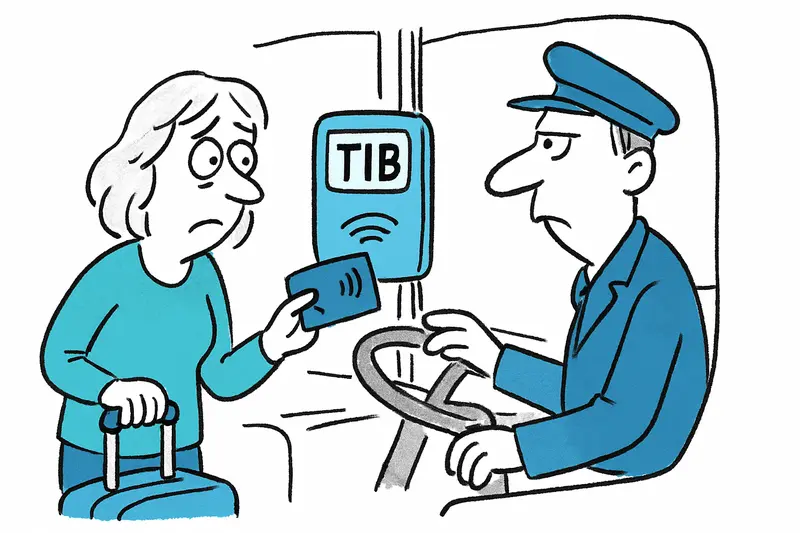
If you board an intercity bus (TIB) in Mallorca with a card, you must 'check out' again when you get off. If you omit this, an automatic fee may be charged. We explain why this is necessary, what many holidaymakers overlook and how to avoid the €0.30 penalty charge.
Why tourists must tap their card again on TIB buses — and how to avoid the penalty fee
Key question
Why do the red‑and‑yellow intercity buses (TIB) in Mallorca require passengers to hold their bank card to the terminal again when leaving — and how can travellers avoid the automatically debited charge?
Critical analysis
At first glance the procedure seems inconvenient: tap your card when boarding, then repeat it at your destination. For locals this is routine; for visitors it is a stumbling block. The reason is technical and tariff‑related: TIB charges by distance and needs both the entry and exit points to calculate the correct fare. If you forget to check out, an automatic recalculation applies — in the current case an additional fee of €0.30 per person. The system thus protects against undercharging for short trips, but it is unforgiving toward missed actions. For recent operational context see When Breaks Shape Timetables: TIB Changes and What They Mean for Mallorca.
What is missing from public discussion
People often talk about higher ticket prices in Palma or new timetables, but rarely about how poorly the situation is communicated to short‑term visitors: notices near the airport, in holiday apartments or in hotel welcome packs are usually missing. The on‑board terminal does beep, but that signal does not mean to everyone: "Please tap again when exiting." Much remains an unspoken expectation — and that is not good customer information.
Everyday scene from Palma
Early morning at Plaça d'Espanya: taxis honk, bakery coffee smells waft by, and families with suitcases cram into the bus to the airport. A woman from Germany looks confused at her phone, a young man takes a selfie with the bus in the background — nobody taps their card again when leaving. The driver turns on the heater and says nothing; the machine later automatically deducts the small surcharge. Small money, big surprise.
Common mistakes tourists make
1. Only staring at the terminal when boarding and then walking off — the system requires two taps.
2. Leaving the bus at intermediate stops without checking out, because one thinks "city buses are different". (Palma's EMT does not require a second tap on exit — mix‑ups happen often; background on fare changes can be found in One Ticket for Everything: Can Mallorca's New Fare Really Simplify Everyday Life?.)
3. No notice at the hotel or from the landlord, because many hosts assume guests already know.
Concrete solutions
1. Before the trip: provide a short info sheet for guests — a small insert reading "TIB: hold your card when boarding and exiting" often suffices. This can complement initiatives such as One card for all of Mallorca: From October less paper clutter in your wallet.
2. On the bus: larger, multilingual stickers on the door and terminal with a clear explanation and an icon for check‑in/check‑out.
3. At the airport and tourist spots: staff or info machines that demonstrate the procedure; a short notice when buying the ticket online would be ideal.
4. For tech fans: a push notification in the TIB app reminding the user to check out when approaching their stop (geofencing).
5. If the fee was wrongly charged: keep the receipt and contact customer service — most transport companies will review individual cases.
Why this matters for Mallorca
It is not just about €0.30. For an island that sees many first‑time visitors, such a small annoyance leaves a poor impression: visitors encounter a complicated system and go home with the feeling that even small issues are settled by automatic deductions. Better user guidance would be a minor service upgrade with major impact. The broader move toward a unified system is discussed in Tarjeta Única in Mallorca: Relief with Pitfalls.
Conclusion
The requirement to tap your card again when exiting TIB intercity buses is not arbitrary, but follows tariff and technical logic. Still, the expectation placed on tourists is too high as long as notices are missing. My tip: when boarding, note roughly where you will get off, and deliberately hold your card to the reader again when leaving the bus. It only takes a moment — and saves you the automatic €0.30 charge and a small irritation at the end of your holiday.
Frequently asked questions
When is the best time to visit Mallorca for sunny weather and pleasant activities?
Is it safe to swim in Mallorca’s beaches year-round?
What should I pack for a trip to Mallorca?
What are good ways to get around Mallorca without a car?
Which beaches around Mallorca are good for families with kids?
What makes Sóller and the Serra de Tramuntana area worth a day trip from Mallorca?
Are there good snorkeling spots in Mallorca?
How does Mallorca's weather differ between the coast and inland?
Similar News
Iris Berben opens the Evolution Film Festival in Palma – 15 years of cinema on the island
At the 15th Evolution Mallorca Film Festival Iris Berben was honored for her life's work. The evening at the Palau de Co...
Which Tent Suits Me? A Mallorcan Guide to Sleeping Outdoors
Short and practical: How to choose the right tent for camping, trekking or beach days in Mallorca — with local observati...
Ryanair pushes the time limit forward: Those who are late lose their suitcase — and possibly the flight
From 10 November, travelers checking baggage with Ryanair must be at the counter 60 minutes before departure. What this ...
Train accident near Urda: Missing ex-minister and open questions
Fátima Báñez, a former Minister of Labour, was reported by party sources to have been on one of the colliding high-speed...
Return of former hotel squatters in El Arenal: Why the eviction is only the beginning
After the eviction of a squatted hotel at the Ballermann, residents again report sightings of former occupants in the ar...
More to explore
Discover more interesting content

Can Cap de Bou

Townhouse Lleo 72
