
Too Little Pay, Too High Rent: How Mallorca's Households Have to Scrape Every Euro
Too Little Pay, Too High Rent: How Mallorca's Households Have to Scrape Every Euro
The math doesn't add up: average salaries in the Balearic Islands do not cover rising living costs. A critical assessment with proposals for what needs to change locally.
Too Little Pay, Too High Rent: How Mallorca's Households Have to Scrape Every Euro
An assessment — and the question of who will close the gap
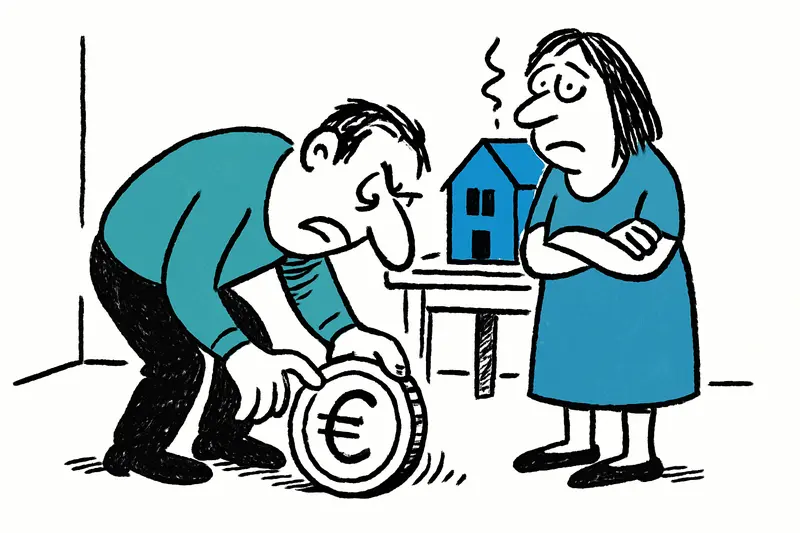
Key question: How are people in Mallorca supposed to keep a roof over their heads and a minimum standard of living when incomes and basic costs are diverging so widely?
The raw numbers are harsh: on the Balearic Islands the average gross annual income is about €23,100, while calculations show a household needs at least around €31,646 per year to cover basic needs. Housing costs in particular stand out: rental expenses of more than €18,000 annually now consume a large part of the budget. Added to that are significantly higher expenses within a year for food, transport and unexpected repairs — almost €4,000 more, local surveys report, as documented in Why Food Is Noticeably More Expensive in Mallorca — and What We Can Do About It.
What this means for everyday life on the island can be seen in the morning at Palma's Olivar Market: market vendors arrive early to reach the few tourists with fresh oranges; craftsmen make noise renovating the scarce cheap flats on Passeig Mallorca; parents worry whether the next rise in electricity or food prices matters more than the school trip. The daily trade-offs are no longer abstract statistics — they are the sound of the city.
The burden is not the same everywhere: on Menorca a reference figure of about €1,947 per month is cited, on Ibiza the benchmark is roughly €2,996 per month, and on Formentera about €2,976. Especially on the smaller islands, rent eats up the largest share of income and employment alone no longer automatically guarantees security, a pattern highlighted in Balearic Islands in the Price Squeeze: Who Can Still Afford Mallorca?.
Critical analysis: the discrepancy between wage and price developments is structural. Wage increases are being demanded in some sectors — about 15 percent in the metal sector over three years, 17 percent for many employees according to union proposals — but wages alone are not enough if housing and basic costs continue to rise in parallel. A mechanism to decouple rents from market-driven prices is still missing.
What is often missing from public debate: the issue of seasonality and the precariousness of many jobs. Many workers have unpredictable schedules, temporary contracts or work in sectors with seasonal demand. In addition, reliable, locally differentiated data on vacancies, second homes and the actual number of affordable rental units is lacking — without this data policy remains piecemeal.
Concrete proposals — not silver bullets, but practical steps:
1) Link real income indexes: Collective bargaining should tie wage increases to local price indexes, not only to general inflation; this ensures purchasing power reaches places where prices are particularly high.
2) Rent regulation with enforcement: Time-limited rent caps in strained areas, backed by clear control mechanisms and sanctions against circumvention, could provide short-term relief.
3) Expand public housing: Accelerate municipal housing programs, review vacant inventories and use them specifically for allocation models — for people with local jobs, as outlined in Buying and Renting in Mallorca: Why Prices Are Pushing Locals to the Edge — and What Could Help Now.
4) Curb living costs: Measures such as special programs for staple foods, regional purchasing collectives and better fare offers in public transport would noticeably ease household budgets.
5) Stabilize seasonal employment: Supplements, shorter contracts with transition protection and qualification programs reduce income gaps across the seasons.
Practicality matters: a single parent in Son Gotleu, a waiter in Cala d'Or, a mechanic in Inca — they need short-term relief (rent, food assistance) and medium-term reliable prospects (affordable housing, stable work). Measures that work only on paper do not reach these groups.
What is lacking in political courage? Often the combination of fiscal willingness, administrative capacity and local data knowledge. Rent caps without clear enforcement remain a declaration of intent. Public housing without land or a financing model remains a promise. Wage increases without sectoral rules create imbalances between businesses.
Conclusion: the situation in Mallorca is not a temporary slip but the result of linked problems: incomes that are too low, an overheated housing market and rising basic costs. Anyone who wants to create breathing room in the short term must reduce pressure on several fronts at once — wages, rents, supply costs and working conditions. If island society insists that people should live and work here, then honestly funded concepts and local implementation capacity are needed. Otherwise, in the end all that will remain is the sound of contracts, construction sites and empty wallets — and that is not a future anyone here wants.
Frequently asked questions
Why is it so hard to live in Mallorca on an average salary?
How much do rents affect household budgets in Mallorca?
What are the main extra costs households in Mallorca are dealing with?
What makes wages in Mallorca insufficient for many workers?
Is Palma one of the places where Mallorca residents feel the cost of living most?
Why are places like Son Gotleu especially affected by Mallorca’s housing problem?
What could help reduce the cost of living in Mallorca?
How can Mallorca workers get through the winter if their income is seasonal?
Similar News
When Ryanair's fleet grows: What Mallorca's travelers should know
Ryanair will soon receive 737 Max 10 jets. The larger aircraft offer potential savings — but also new risks for flight o...
Rising fuel and housing costs: Why Mallorca's overland buses are suddenly overcrowded
More and more people are leaving Palma — and boarding TIB buses: Between January and August 2026, the network recorded o...

Carriages Without Horses: Palma Plans E-Carriages – a Reality Check
Palma plans to switch to electric carriages in 2027. The prototype was shown near the cathedral. What is the technology ...

Record season, empty coffers: Who really benefits from the tourism boom?
Full hotels and more flights: the numbers sound impressive — yet many locals feel no benefit. A reality check with an ev...

Pool ordered for €46,000 – €23,000 paid, no work carried out: A fraud case in Palma
A homeowner in Palma transferred €23,000 for the construction of a pool. Weeks later it emerged that no building applica...
More to explore
Discover more interesting content

Can Cap de Bou

Townhouse Lleo 72
