
4.5 percent now, 14 percent by 2029: What the new retail collective agreement for the Balearic Islands really means
4.5 percent now, 14 percent by 2029: What the new retail collective agreement for the Balearic Islands really means
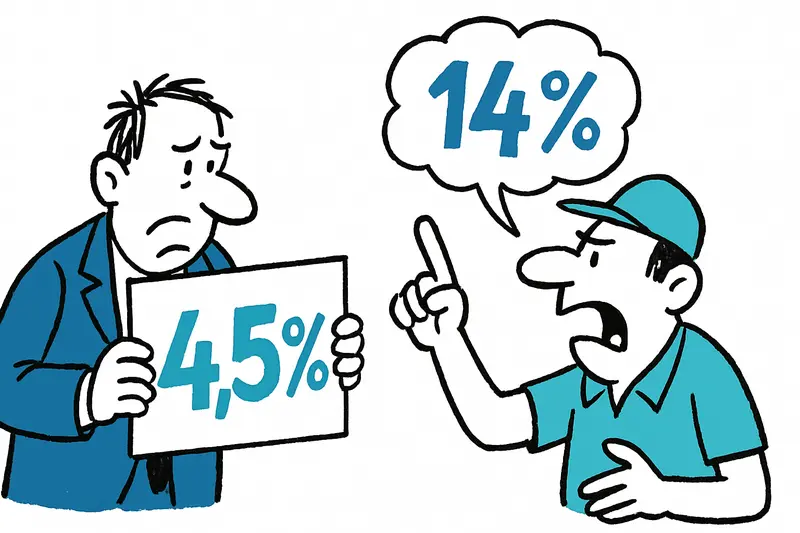
Employers and unions agreed on a new collective agreement: 4.5% wage increase this year, 14% in four years. A reality check from Palma — what is good, what is missing and which steps are needed now.
4.5 percent now, 14 percent by 2029: What the new retail collective agreement for the Balearic Islands really means
Key question: Is the increase enough for retail employees in Mallorca to actually fare better at the end of the month?
The news is brief and practical: employers and trade unions in the Balearic Islands have agreed on a collective agreement that raises wages in the retail sector by a total of 14 percent over the next four years, with an increase of 4.5 percent for this year alone. This follows recent reporting in Retail on the Balearic Islands grows — but for whom? On the streets of Palma, between the bustle of traders on Carrer de Sant Miquel and the stalls at Mercat de l'Olivar, you can hear that many employees react with relief — but relief does not mean that all problems disappear.
Critical view: 4.5 percent sounds better than nothing, but the real effect depends on more than a mere percentage. On Mallorca, living costs are particularly volatile because of rents, energy and tourist-driven price pressure. If rents rise more sharply in the same period or special payments for seasonal workers remain unclear, the real gain will be modest, as noted in Balearic Islands: Rents to rise by an average of €400 in 2026 — who will pay the bill? This applies especially to part-time workers, temporary staff and employees on fixed-term contracts, who are numerous in retail.
What is often overlooked in the ongoing debate: a wage increase alone does not solve problems with precarious schedules, uncertain working hours or lack of control over overtime. It is also unclear how the increases will be applied to hourly wages, premiums for night and Sunday work and to marginal employment. A flat percentage figure says little about concrete improvements to the wallet of a cashier at a supermarket in Cala Major.
Everyday scene from Mallorca: On a Friday morning in front of a small boutique in Palma's old town, a saleswoman adjusts her jacket while tourists with cameras stand in front of the display window. She says she has wanted more hours for years, but does not regularly get them. A plus on paper does not change the lack of predictability and fixed working hours — and predictability is often more important for the household budget than a one-off percentage increase.
Concrete approaches to make the increase more effective: First, link wage increases to the regional inflation rate and rent developments. This creates automatic adjustment and prevents real wages from being eaten away by rising costs. Second, enshrine transparency rules in the collective agreement — who gets how much, how allowances are calculated and how part-time workers are taken into account. Third, strengthen controls and sanction mechanisms against violations; an agreement without enforcement is just a document in a drawer. Fourth, support programmes for small shops so that wage costs do not lead to staff cuts or unpaid overtime. Fifth, measures for seasonal workers — binding minimum hours and better access to social benefits.
What is missing in public discourse: the perspective of small shop owners and seasonal workers is often equated with that of large chains. On Mallorca many people work in family-run businesses or tourist-oriented units with tight margins. There is also the question of qualification: better wages should be paired with training offers so that employees not only earn more, but also gain better chances of securing more stable positions.
Political and practical interim steps are possible: the Balearic government can create framework conditions, for example tax relief for companies that guarantee fair working hours, or subsidies for non-wage labour costs in structurally weak areas. Municipalities could promote affordable housing for employees — that would be a direct lever against the biggest cost trap for many households, and comes as broader pay negotiations continue, for example Balearic Islands: Pay talks with civil servants stall — negotiations to continue tomorrow.
Bottom-line summary: The new collective agreement is not a cure-all, but neither is it empty rhetoric. It is a step forward that must be implemented in practice. Without improvements in enforcement, transparency and in the treatment of part-time and seasonal workers, the increase will remain for some just a number on paper. For people working in shops from Palma to Manacor it is now crucial how the agreement is translated into concrete, predictable improvements in their work and living conditions.
Frequently asked questions
What is the weather like in Mallorca in summer and spring?
Can you swim in Mallorca all year round?
What should I pack for a trip to Mallorca?
When is the best time to visit Mallorca for good weather?
Is Palma de Mallorca good for a short city break?
What is Sóller like for visitors in Mallorca?
Is Alcúdia a good base for a family holiday in Mallorca?
What is the Tramuntana area of Mallorca known for?
Similar News

Mueller continues expanding in Mallorca: Artà in 2026, Can Picafort in early summer 2027
The drugstore chain Mueller is opening two new stores in Mallorca: a 1,400 m² shop in Artà on 5 November 2026 and a bran...

The Painter Who Lived Mallorca: Franz Taussig and His Century-Old Secret
A hundred years ago a young Viennese arrived in El Terreno, sketched the island and called himself Francis Caron. Today ...

Airport dispute: Bridge, forecasts and the question of responsibility
A video by the Spanish transport minister has ignited the dispute over DORA figures, capacities and local governance pow...

The Painter Who Invented Himself: How a Young Viennese Drew Mallorca
A hundred years ago a 19-year-old draftsman arrived in El Terreno. His diary and sheets, long known under the pseudonym ...

Released with Conditions: The Plus Ultra Suspicion and a Mallorcan Finca as Residence
A Dutch entrepreneur, sought in connection with the Plus Ultra case, was extradited to Spain after his arrest in Germany...
More to explore
Discover more interesting content

Can Cap de Bou

Townhouse Lleo 72
