
Formentor gridlock: Why the peninsula explodes early and what must be done now
Formentor gridlock: Why the peninsula explodes early and what must be done now
As early as April, cars and racing bikes queue on the access road to the Formentor lighthouse. Those who only want to visit the viewpoint often face long lines. Why the problems are arriving earlier and which measures could actually help.
Formentor gridlock: Why the peninsula explodes early and what must be done now
A guiding question: Is the current mix of bans and public information enough to protect people, cars and bicycles on the narrow northern roads?
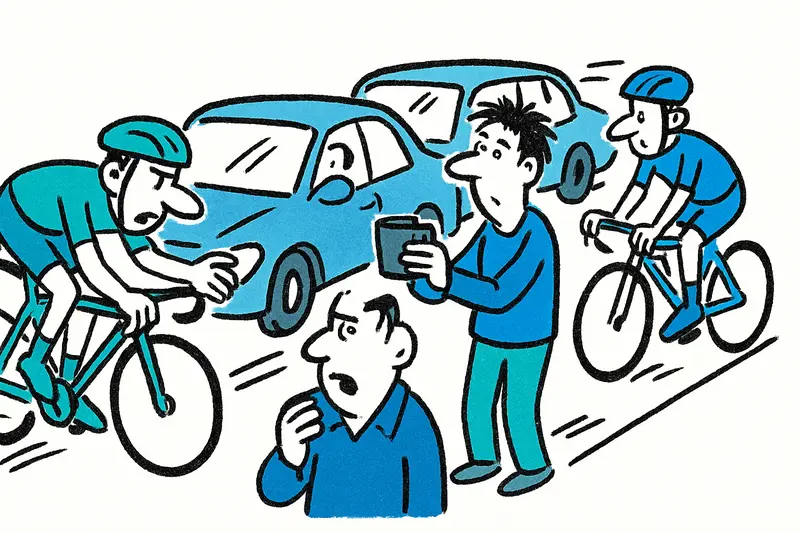
At the Mirador des Colomer you can hear engines, the clatter of racing bike chains and occasional loud swearing on warm afternoons when a car can’t squeeze past a crest. One April Monday looked like this: kilometre-long queues, fast Lycra-clad cyclists who risk overtaking despite oncoming traffic, and pedestrians trying to get through between parked cars and guardrails. The narrow, winding road to the peninsula is already being used as heavily as it usually is in summer.
Fact: The island administration has moved the access restrictions for the peninsula forward this year, as explained in Formentor 2026: Car-free two weeks earlier — what travelers and residents need to know. From May 15 to October 15 there will be two restricted zones where, between 10:00 and 22:00, only authorized vehicles are allowed to drive. Exceptions include residents, buses, emergency services and — surprising to some — cyclists. The reason is a changed visitor pattern: demand rises already in spring, among other things because of major cycling events such as the Mallorca 312.
The statistics speak clearly: Last year the Spanish traffic authority DGT issued around 2,300 fines; penalties ranged between €100 and €200, as reported in More Cars, More Buses: Formentor's Traffic After the Lifting of Access Restrictions. The number of violations is increasing, residents’ patience is wearing thin and safety on the route is suffering.
Critical analysis: The combination of a narrow carriageway, limited parking and mixed traffic is toxic. Cyclists are officially allowed to ride in the restricted zones but are often at the centre of the problem: their speed and overtaking manoeuvres make mutual avoidance difficult. Drivers respond with tiny gaps, horn blasts or risky manoeuvres. Introducing restricted zones is a necessary step, but it does not solve the underlying problem: there are simply too many people trying to be in the same places at the same time.
What is missing from the public debate is the question of management rather than mere restriction. Information and personnel on site are important — the island council plans that — but without alternatives for mobility and genuine management instruments much remains piecemeal. The same applies to the role of race organisers: big events attract crowds, but coordinated time windows or alternative routes have been rare so far, as discussed in Road to Cap Formentor: New Closure Times and Open Questions for 2026.
An everyday scene illustrates the dilemma: a father with two children parks at the roadside to take a photo. A racing cyclist approaches at high speed, overtakes on a short straight and pulls back in — the car must swerve, another car follows. Shortly after, two cyclists argue heatedly because a bus from Port de Pollença had only centimetres of space. Such situations are not only annoying, they are dangerous.
Concrete solutions that could work here and now: 1) set up shuttle systems from the Port de Pollença harbour or larger car parks and communicate them early; 2) test a reservation system for the limited parking spaces at the lighthouse; 3) temporary one-way regulations during peak times to eliminate opposing traffic; 4) increased, targeted enforcement with photographic documentation and clear sanctions against illegal parkers; 5) coordination with event organisers (e.g. Mallorca 312) so that routes and times do not collide with visitor waves; 6) visible, multilingual information already in Palma, at car rental stations and hotels so visitors choose alternative ways to travel.
Technical solutions should be combined thoughtfully: radar or cameras at bottlenecks can document violations; small waiting areas with information staff reduce confrontations; temporary barriers can prevent dangerous overtaking manoeuvres. It is important that measures are tested before the season — a trial run in the second week of May would show what works and what doesn’t.
One point remains largely untouched in many debates: the residents’ perspective. For them, noise, blocked driveways and safety risks are everyday problems. Measures must take their needs seriously, for example through resident parking permits and controllable access authorisations.
Conclusion: The restricted zones from May 15 to October 15 are correct but incomplete. Without a pragmatic package of traffic management, attractive alternatives and strict enforcement the same scenes as that April Monday are likely to repeat. Formentor is not a place for spontaneous mass tourism on a narrow road. Whoever wants to get the peninsula under control must manage flows instead of just banning them. Otherwise the result will be the same: long queues, frayed nerves and the question of whether we want every viewpoint to become a bottleneck.
Frequently asked questions
Why does traffic at Cap de Formentor get bad so early in the season?
What are the current driving restrictions for Cap de Formentor in Mallorca?
Can cyclists ride through the restricted area at Cap de Formentor?
What happens if you park illegally at Cap de Formentor?
Is Cap de Formentor safe for families and pedestrians?
What are the best alternatives to driving to Cap de Formentor?
Why is Port de Pollença part of the traffic discussion around Formentor?
How can Mallorca manage the Formentor road better in peak periods?
Similar News

More Electric Cars in the Balearic Islands: Sales Rise Sharply
Between January and August, 14,185 vehicles without petrol or diesel propulsion were sold — an increase of more than 40 ...
Autumn in Mallorca: What Truly Remains of Summer
The days grow shorter, the evenings cool — and yet more of summer lingers than you might think: sounds, recipes, people,...
Rescue operation at Tolleric: Why nighttime cliff parties become dangerous
A British holidaymaker fell about ten meters at the cliffs of Tolleric during the night, later climbed back up and was r...
Car accident on the MA-1: Mother and daughter on a bicycle struck by a fellow countryman – Who protects cyclists here?
On the MA-1 between Portopí and the Cala Major exit, a mother and her daughter on a bicycle were struck by a car. A para...
Smoke over the UIB: Who is responsible for the fire on the roof?
On Saturday afternoon a fire broke out on the roof of the Arxiduc Lluís Salvador building at the University of the Balea...
More to explore
Discover more interesting content

Can Cap de Bou

Townhouse Lleo 72
