
Why traffic jams in Mallorca stress us more than elsewhere
Why traffic jams in Mallorca stress us more than elsewhere
A study shows: 40 percent of Balearic residents name traffic jams as a major source of stress. We ask: why is that — and what really helps? A local check with clear proposals.
Why traffic jams in Mallorca stress us more than elsewhere
Guiding question
Why do motorists in Mallorca find traffic jams particularly stressful — and what levers exist so that commuting does not become daily wear and tear?
Critical analysis
A recent investigation by the car portal coches.net in cooperation with the market research firm Appinio shows that on the Balearic Islands 40 percent of respondents count traffic jams among the biggest sources of stress in road traffic. Remarkably: on the islands the car seems even more central than elsewhere — in the survey all participants stated that they use the car as their main mode of transport. This exception mirrors findings in Balearic Islands quieter — Mallorca stays crowded: Why the island bucks the trend. Added to that, 70 percent spend between half an hour and an hour on the road daily and many regularly drive ten to 29 kilometres. The package of duration, distance and the dominance of the car creates a situation in which delays cost not only time but psychological strain.
What the numbers conceal
The study provides good overviews but says little about causes: how much of it is tourist traffic, how much commuting by locals? How are the burdens distributed spatially — Palma, motorways such as the Ma-20, or narrow country roads into the interior? Also rarely discussed: the role of searching for parking, parking management and the lack of reliable alternatives outside the main corridors. Without these details, debates about solutions remain superficial, as argued in pieces such as Mallorca at the Limit: Will This Weekend Break the Visitor Maximum?.
Everyday scene from Palma
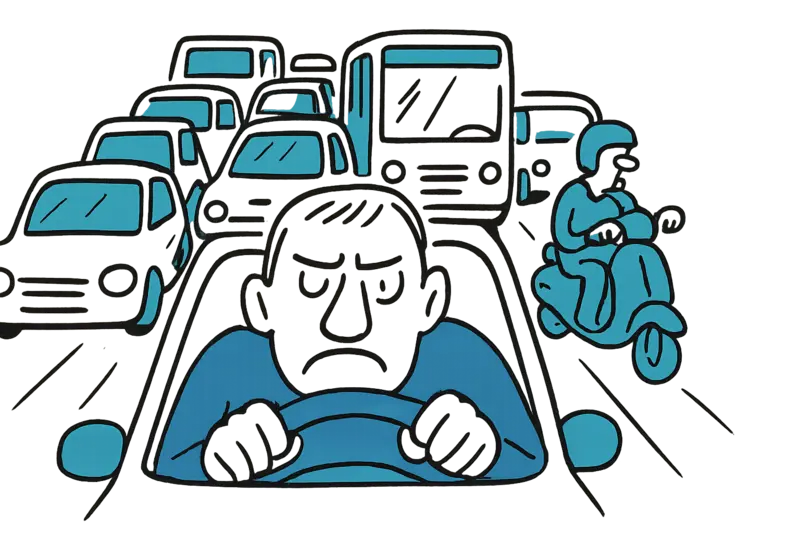
Anyone driving along the Paseo Marítimo on a weekday knows it: there are queues before the entrance to the port, buses edge past in the second lane with hazard lights on, scooters dart between cars, and in cafés on the Moll de la Riba you can hear engines revving. On the Ma-20 during rush hour it is a constant chain of braking and accelerating — a carpet of noise that strains the nerves. For many night-shift hotel workers, for teachers and craftsmen, this is not a marginal phenomenon but daily routine.
What is missing from public discourse
The discussion too often stays at platitudes: “We need more buses” or “fewer cars”. Concrete figures are missing, as are timetables and responsibilities. Also rarely on the table: demand management — how working hours, delivery windows and tourist flows can be staggered. And: there is a lack of an honest debate about parking management in city centres. As long as parking remains cheap, the car remains attractive — and traffic jams remain a constant guest. The limits of simply increasing bus capacity are discussed in More buses, same jams: Palma's traffic stuck in a dilemma.
Concrete solution approaches
A few pragmatic, directly implementable measures that could have an effect in combination:
1) Park-and-ride at hubs: Small, affordable car parks on arterial roads (for example near the airport or at main access points to Palma) with direct buses to the city centre can relieve inner-city commuters.
2) Bus lanes and prioritization: Buses should be given priority on the Ma-20 and on access roads. A one-hour time gain on heavily used axes makes public transport attractive for commuters.
3) Flexible working hours: Authorities and larger employers should be encouraged to promote shift and flex-time models to break up peaks in the morning and evening hours.
4) Delivery windows and logistics scheduling: Retail and gastronomy should use mandatory delivery windows outside peak hours. Less delivery traffic during rush hour reduces blockages on narrow streets.
5) Improved cycling and micromobility infrastructure: Safe cycle paths in the suburbs and parking facilities in the city make short trips without a car possible — especially useful in the flat areas around Palma.
6) Transparent pricing policy: Parking management, fairer fees for long-term parkers and incentives for carsharing are instruments that should be used.
Why this all belongs together
Mobility is a system. Individual measures rarely bring lasting relief. A well-coordinated combination of infrastructure, pricing policy, operating times and behavioural incentives can, however, create a noticeable easing — and thus less honking, fewer sharp noise peaks and less stress behind the wheel.
Concise conclusion
The figures are clear: on the Balearic Islands the car is both an everyday tool and a stress factor. Those who want to reduce traffic jams must not only order buses or draw bike lanes, but also consider policy debates such as Rental Car Cap: Between Traffic Calming and Holiday Stress – What Mallorca Must Consider Now. What is needed is decisive planning, honest cost transparency and small, immediately implementable rules — park-and-ride, delivery windows, bus priority and more flexible working hours. Otherwise the island remains a place where commuting is a daily nuisance — with growling engines and irritated people in the front row.
Frequently asked questions
When is the best time to visit Mallorca for beach days?
Is it safe to swim in Mallorca's waters year-round?
What should I pack for a trip to Mallorca?
What outdoor activities are popular in Mallorca?
How does the weather change across Mallorca through the year?
Are there family-friendly beaches and towns to visit in Mallorca?
What are the practical transport options for getting around Mallorca?
What should visitors know about Mallorca's culture and local etiquette?
Similar News
Residents First at Palma's Stops? A Reality Check on Negueruela's Bus Idea
The proposal to prioritize residents with TIB or Tarjeta Única cards when boarding strikes a nerve. But what would a pri...

Residents first: Why Palma's city buses should give priority to residents
A proposal is causing debate: residents in Palma should be given boarding priority. Why the idea grows out of everyday l...

When the Artist Sits at the Table: Icon Zar and the Fine-Dining Experiment in Mallorca
A dinner becomes a small cultural event: Icon Zar brings artists, chefs and collectors to the same table. In Palma it so...
Golf, Tapas, Terrace Evening: The MM Autumn Trophy on October 4
On October 4, Mallorca Magazin combines sporting competition with sociability: a get-together at Schwaiger's Xino on the...

Nighttime Thunderstorms over Mallorca: Uncomfortable Questions for Infrastructure and Warning Systems
A severe line of thunderstorms brought locally more than 70 l/m² during the night. Aemet warned, but images of flooded s...
More to explore
Discover more interesting content

Can Cap de Bou

Townhouse Lleo 72
