
Trash Alert in La Vileta: Who Cleans Up When Asbestos and Chaos Are on the Doorstep?
Trash Alert in La Vileta: Who Cleans Up When Asbestos and Chaos Are on the Doorstep?
A fenced-off plot in La Vileta has become a flashpoint: mountains of trash, potentially asbestos-containing items and long-broken promises from the authorities are worrying residents. A reality check from the neighborhood.
Trash Alert in La Vileta: Who Cleans Up When Asbestos and Chaos Are on the Doorstep?
A site near homes and an educational facility is falling into disrepair, residents complain about health and fire risks – the responsible parties are doing little.
Key question: Why does a fenced-off, neglected plot in La Vileta remain for months full of bulky waste and possible hazardous materials, even though residents have repeatedly raised the alarm?
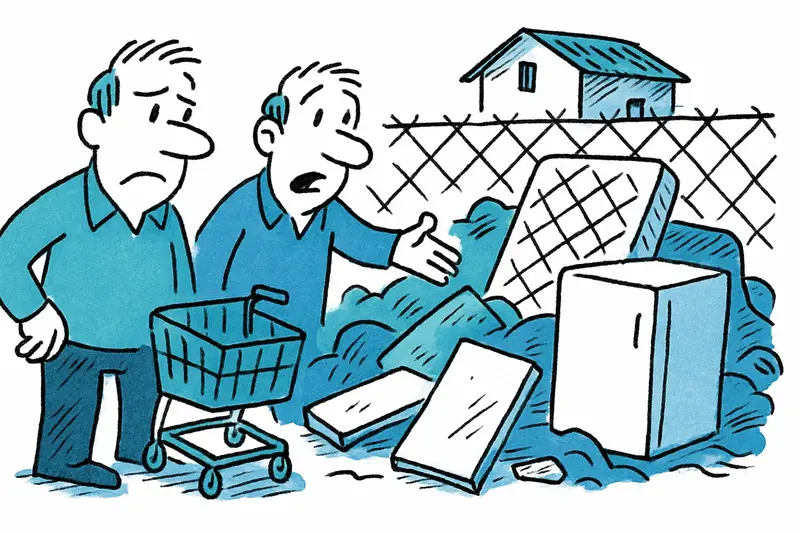
It is an image seen here far too often now: behind a temporary barrier an old finca, in front of it shopping carts, mattresses and refrigerators, and between them pieces that look like asbestos-containing material. The smell of damp cardboard mixes with the clack of passing wheels from nearby Carrer de la Vileta. Children on their way to school glance as they pass, adults stop and count possible risks.
Critical analysis: The situation is the result of several failures. First: unclear responsibilities. Questions of ownership, ongoing administrative procedures and possible occupations slow down action. Second: capacity and prioritization problems at the city cleaning service – if something is not classified as an immediate danger, it stays. Third: information gaps towards residents; without transparent steps, mistrust grows and frustration leads to carelessness on the site.
What is missing from the public debate: concrete information on who is legally liable for removal and what deadlines apply. There is little official information on whether a hazardous-material analysis exists, who pays for it and whether there is a concrete plan for the safe removal of asbestos-containing material. Equally rarely discussed is how re-occupation can be prevented without violating human rights.
Everyday scene from La Vileta: on a sunny morning the Tramontana whistles lightly through the narrow streets; the bakery on the corner fills bread baskets, an older woman feeds pigeons on the Plaça, yet a man stops at the fence of the finca and photographs it with his phone. He says he called the city cleaning service months ago. At the sound of the garbage truck driving along the main street, people briefly hope – and then return to their errands. It is this everyday resignation that is dangerous.
Concrete approaches:
1. Immediate measures (within 7 days): visible fencing with warning signs, independent asbestos risk assessment by certified experts, temporary fire watch in hot months, secure access for emergency services.
2. Short term (4–6 weeks): removal of dangerous materials by licensed waste contractors at the owner's expense or, if the owner is unknown, through a municipal fund procedure; fines for lack of securing; coordinated cleanup with EMAYA support for the remaining waste.
3. Medium term (2–6 months): legal clarification of responsibility, binding remediation plan and a prevention concept against re-occupation (e.g., structural securing, social support); regular inspections and public monitoring so that residents can see that something is being done.
4. Accompanying measures: health information for residents, a hotline for reports, mapping of similar hazard sites in the city and a rapid intervention mechanism for the summer (high fire and health risk).
City administration, environmental office, health authority and EMAYA should work more closely together. If owners are unknown or insolvent, the city must establish clear rules for advance payment and recourse. Costs must no longer be used as an excuse to tolerate hazards.
What is needed now is political pressure and a public timeline: simple statements like “analysis by date X, removal by date Y” would already help the neighborhood. Transparency has a de-escalating effect; silence feeds rumors and the urge to take matters into one's own hands, which can quickly lead to unsafe disposal.
Conclusion: La Vileta needs more than well-meaning phone calls. It needs clear responsibilities, fast hazard analyses and visible actions – otherwise a patch of trash will turn into a health problem, and the neighborhood will pay with quality of life and safety. The city must show that it can act; residents deserve a clear answer and clean streets before the summer increases the risks.
Frequently asked questions
What is the weather usually like in Mallorca in March?
Can you swim in Mallorca in March?
What should I pack for Mallorca in spring?
Is March a good time to visit Mallorca?
What can you do in Palma de Mallorca when the weather is cool?
Is Alcúdia worth visiting outside the summer season?
What is Valldemossa like in spring?
What kind of clothes do you need for Mallorca in March evenings?
Similar News

Mueller continues expanding in Mallorca: Artà in 2026, Can Picafort in early summer 2027
The drugstore chain Mueller is opening two new stores in Mallorca: a 1,400 m² shop in Artà on 5 November 2026 and a bran...

The Painter Who Lived Mallorca: Franz Taussig and His Century-Old Secret
A hundred years ago a young Viennese arrived in El Terreno, sketched the island and called himself Francis Caron. Today ...

Airport dispute: Bridge, forecasts and the question of responsibility
A video by the Spanish transport minister has ignited the dispute over DORA figures, capacities and local governance pow...

The Painter Who Invented Himself: How a Young Viennese Drew Mallorca
A hundred years ago a 19-year-old draftsman arrived in El Terreno. His diary and sheets, long known under the pseudonym ...
Released with Conditions: The Plus Ultra Suspicion and a Mallorcan Finca as Residence
A Dutch entrepreneur, sought in connection with the Plus Ultra case, was extradited to Spain after his arrest in Germany...
More to explore
Discover more interesting content

Can Cap de Bou

Townhouse Lleo 72
