
Trial over tortoise breeding in Llucmajor: Who benefits from the illegal trade?
Trial over tortoise breeding in Llucmajor: Who benefits from the illegal trade?
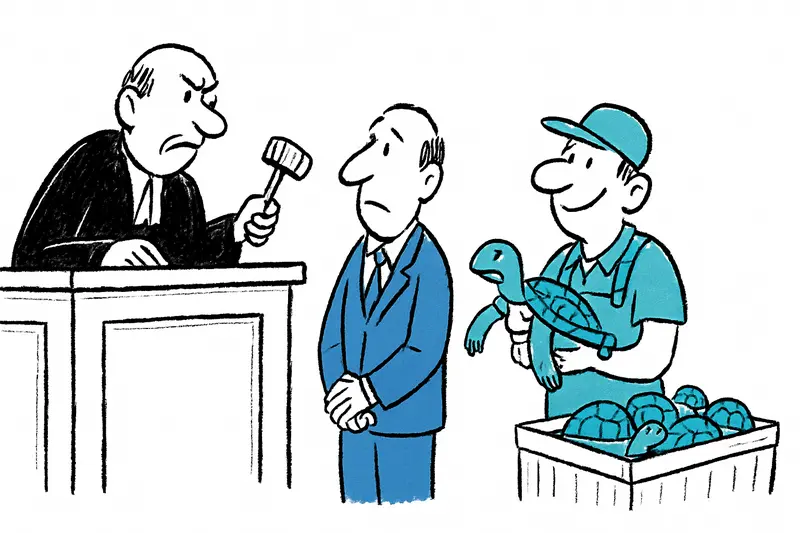
A case begins at the Palma court that is more than a routine animal crime: on a finca in Llucmajor, over 1,000 protected tortoises are said to have been bred and sold. What does this say about controls, trade and our island?
Trial over tortoise breeding in Llucmajor: Who benefits from the illegal trade?
Key question: How could a breeding operation of more than a thousand protected tortoises run for years on a finca near Llucmajor — and what can we learn from it?
On 19 January a case opens at the Palma court that sounds like more than a typical animal-crime trial. Two Germans and a reptile dealer from near Barcelona are accused. Investigators trace the allegations to activities between 2012 and 2018: on a finca in the surroundings of Llucmajor protected tortoises were allegedly bred and sold commercially — apparently also with income that was not declared for tax purposes. In 2018 the Guardia Civil seized several animals and eggs; some hatchlings later hatched at Natura Parc. 62 Turtle Hatchlings in Palma – Night Watches, Protection and Uncomfortable Questions
In total the indictment names 1,063 specimens and an asset value of more than €545,000. The public prosecutor is demanding five and a half years in prison for each of the three defendants.
In short: very many animals, a lot of money — and a long time without public attention. That is troubling when one thinks of nature and species protection work on the Balearic Islands.
Critical analysis: Gaps in the system
When more than six thousand euros per animal are at stake, this is no longer a hobby project. The question is how this could operate without existing controls triggering an intervention. That the Guardia Civil only stepped in in 2018 shows that illegal breeding does not only take place in backyards but on agricultural properties that are hardly inspected. The problem has several levels: inadequate registration requirements for exotic species, unclear responsibilities for controls between municipalities, regional authorities and the state, and economic incentives for selling abroad.
The case also shows the interplay of species-protection violations and tax offences. Anyone who sells animals for profit must be recorded for tax purposes. If revenues are concealed, not only is the treasury deprived of money — an investigative trail that would make enquiries easier is also missing. Authorities therefore often see only the tip of the iceberg.
What is often missing from the public debate
We often talk about spectacular seizures, but too rarely about the structures behind them. Public debate lacks discussion about incentives: why is the risk worth it for traders? Which gaps allow trade to flow across borders and via online platforms? And: how well are local veterinarians, owners' associations and tenants sensitised to recognising protected species? Rescue on the Passeig: The Turtle and the Question of Abandoned Pets These questions are easily overlooked when the focus is only on individual trials.
The perspective of the animals also remains unclear: where do seized specimens end up, how are they medically treated, and what chances do they have of reintroduction? Natura Parc played a role in the hatching of young animals — but not all seizures automatically become rehabilitation cases; sometimes capacity and funding are lacking.
A scene from the island: Llucmajor in the morning
Anyone who has driven through Llucmajor knows the mix of dry earth, pine trees and the smell of ripe figs. On the way to a finca you hear church bells, see agricultural machinery and occasionally pairs of walkers with dogs. Such estates appear harmless — whitewashed walls, cypresses, an old well. Yet precisely where the neighbours recognise the dog, closed breeding systems can hide, unobtrusive behind a hedge. That makes the case so disconcerting: the illegal economy mixes into everyday rural life.
Concrete solutions
1. Transparent registration: A mandatory, publicly accessible register of all breeding of protected reptiles in the Balearics would make controls easier. Municipalities, veterinary offices and customs must have access to it.
2. Connected controls: A shared reporting system between the Guardia Civil, port and airport controls and local authorities can trace trade routes more quickly. Cooperation with EU authorities is also necessary — illegal goods do not respect island borders.
3. Financial oversight: Tax audits for suspicious income from the animal trade and tougher fines for tax evasion would reduce the profitability of illegal breeding operations.
4. Strengthen reception facilities: More support for places like Natura Parc: financial resources, veterinary staff and reintroduction programmes so that seized animals can be cared for long-term.
5. Local education: Farmers, veterinarians, market operators and residents need easily accessible guidance on how to recognise trade and where to report suspicions — a hotline, online information and local info events could help.
Conclusion
The trial in Palma is important because it sheds light on a larger problem: illegal trade in protected animals that touches on ecology, law and taxation. For Mallorca this means: we must look more closely, not only at individual cases but at the structures that make such trade profitable. When you drive through Llucmajor on a Sunday and feel the calm, remember that behind a finca there may be not only olive trees but also a business that damages our island and its wildlife. The court will decide on guilt and punishment. The real task begins afterwards — with better controls, more transparency and the will not to let nature be turned into a commodity; similar examinations of Palma court cases are discussed in Palma on Trial: The Major Real Estate Fraud and the Question of Justice.
Frequently asked questions
What is the tortoise breeding case in Llucmajor about?
Why is illegal tortoise trade a problem in Mallorca?
How are protected animals usually discovered in illegal breeding cases on Mallorca?
What happens to confiscated tortoises in Mallorca?
Why do illegal animal breeding operations on Mallorca go unnoticed for so long?
Are there tax issues linked to illegal animal sales in Mallorca?
What can Mallorca residents do if they suspect illegal wildlife trade?
What does the Llucmajor case reveal about species protection in Mallorca?
Similar News

Car on MA-13 near Inca in flames – a safety check for the island
A vehicle caught fire on the MA-13 towards Alcúdia on Tuesday afternoon. The driver was uninjured, the car was destroyed...

Real Estate in Mallorca: Fewer Buyers, Higher Prices — What's Behind It?
Sales on Mallorca are falling, yet prices continue to climb. Why fewer transactions do not equal relief — and what shoul...
Just Bought — Already Trouble: Water Damage in the Heiters' Villa and What Owners in Mallorca Should Know Now
A newly purchased sea-view property — and within days a water damage. What risks lurk in new properties in Mallorca, and...

Rich, Richer, Mallorca? A critical look at the growing super-rich bubble
Numbers: Around 3,600 millionaires in the Balearic Islands hold a combined €27.6 billion. What this concentration of wea...
Chain reaction on the MA-1: Eight injured in rear-end collision near Portopí
On Tuesday morning there was a crash at the Andratx exit to the MA-1 towards Palma: a rear-end collision between a car a...
More to explore
Discover more interesting content

Can Cap de Bou

Townhouse Lleo 72
