
Drunk at the wheel of a tractor-trailer: Why the ring road is more than just a construction site
Drunk at the wheel of a tractor-trailer: Why the ring road is more than just a construction site
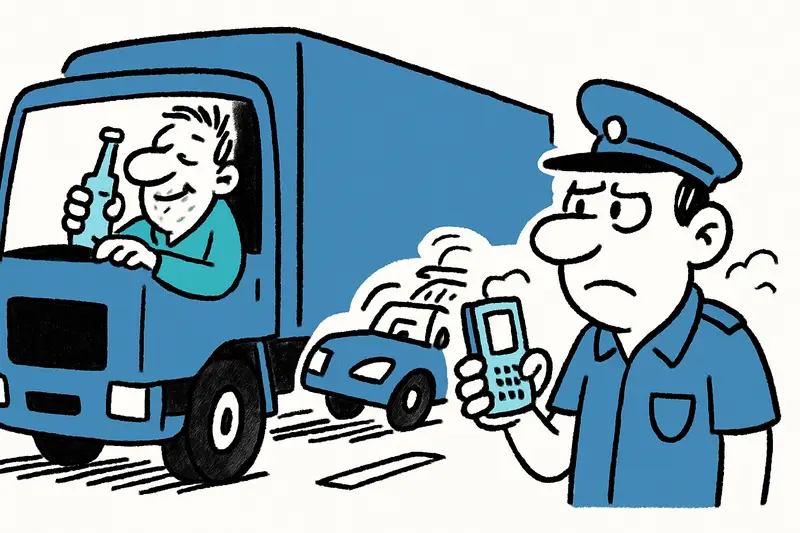
A tractor-trailer lost control on the ring road near Gènova. The driver had more than eight times the permitted blood alcohol level. Six hours of clearance, fortunately no injuries — but one question remains: How can we better protect ourselves from such situations?
Drunk at the wheel of a tractor-trailer: Why the ring road is more than just a construction site
Accident at kilometre 9.5 near Gènova — six-hour closure, no injuries, but many unanswered questions
In the morning a tractor-trailer ran into trouble on the Palma bypass at kilometre 9.5 and came to rest sideways on the central reservation. The driver left the vehicle uninjured. A breathalyzer test showed 1.25 mg/L — more than eight times the legal limit of 0.15 mg/L for professional drivers. Because of the vehicle's weight and position, the truck blocked both lanes; special equipment and roadworks delayed the recovery, and traffic only reopened around 4 p.m.
Key question: How can the island administration, companies and inspectors prevent intoxicated professional drivers from endangering our roads and nerves?
The scene yesterday: honking cars stretching far into the Carrer de Gènova, city buses inching slowly past the bus stop in front of Picadilly, and curious regulars in the café at the exit watching the wet road. The Guardia Civil arrived quickly, Palma's fire brigade brought heavy equipment, and workers from the Island Council cleared debris from the carriageway. Many people who normally pay little attention to a truck suddenly found themselves in the middle of a real logistics problem — and this on a day when the sky over Palma was pleasantly cloudy and the temperature was around 17 °C.
Of course the great luck is that no one was physically injured. But that should not hide how close we came to a catastrophe: a tractor-trailer is not a car. When such vehicles enter oncoming traffic or endanger pedestrians, the consequences can be dramatic.
Several problem areas come together in the analysis of the incident: the human factor (alcohol at the wheel), the question of checks and prevention (Driving test on the Arenal motorway halted: instructor tested positive for alcohol — who protects the test-takers?), infrastructure (guardrails, hard shoulders) and the logistics of recovery.
Public debate often focuses on the sensational part — "drunk driving" — and forgets the systemic gaps.
Employer responsibility: How strictly do haulage companies check their drivers before they begin work? Are there mandatory tests at depots or clear alcohol policies in contracts? Many companies rely on personal responsibility rather than regular checks (see Alcúdia: Who Was Really at the Wheel? A Reality Check on Alcohol, Responsibility and Investigations).
Available technology: Ignition interlocks are technically possible but are rarely used extensively. Equally uncommon are company alcohol and drug tests before departure on demanding routes.
Rapid recovery routes: On a narrow bypass like the Via de Cintura even coordinated operations can take hours (compare Sparks on the Autopista: 14 Kilometres Without Tires – Suspected Alcohol Use Shakes Commuters). In some places on Mallorca there are no detour areas for heavy recovery vehicles.
Concrete proposals that could be tackled immediately:
- Agree on cooperation between the Island Council, Guardia Civil and hauliers so that a standardized recovery protocol applies in serious accidents (predefined crane logistics, prioritized lanes for emergency vehicles).
- Regular, unannounced alcohol and drug tests for drivers of heavy vehicles, not only spot checks at weekends. Mobile testing teams could be stationed in the mornings at traffic hubs or industrial areas.
- Promote ignition interlocks in fleets, at least for vehicles that carry hazardous goods or heavy loads. Government grants or tax incentives could ease the initial investment.
- Mandatory training for professional drivers that covers not only vehicle technology but also risk competence and self-control. Employers would have to make this part of compulsory continuing education.
- Better marking and protection of the central reservation at critical points on the bypass; where a stranded truck immediately affects both directions, additional safety measures should be considered.
A sober observation from everyday life: Many regular drivers in Palma know the bottlenecks of the ring road by heart. They can quickly assess where a broken-down vehicle will paralyse traffic. So why not involve local logisticians more in an early warning system? If hauliers could automatically request a free crane and clearance service an hour before a planned entry, blockage time could be reduced.
The question of sanctions remains a hot topic (see Head-on crash near Andratx: Three injured on the MA-1 — alcohol test positive). Harsher penalties alone do not solve the problem if checks remain infrequent and employers do not cooperate. A bundle of deterrence, technical prevention and corporate responsibility seems more effective.
Conclusion: The incident at Gènova was a warning signal. We were lucky that no one was injured. Luck, however, is not a strategy. On an island with few alternative routes and heavy vehicles passing through Palma daily, authorities, companies and road users must work more closely together. Otherwise the next traffic jam on the ring road could turn into a real disaster.
Anyone travelling on Mallorca should heed two things: keep distance from large vehicles and take not only your own sobriety but also the safety of fellow travellers seriously. And to hauliers: check your crews before the road has to do it for you.
Frequently asked questions
Why can an accident on Palma’s ring road cause such a long traffic jam?
What happens when a tractor-trailer blocks the Palma bypass near Gènova?
How strict is the alcohol limit for professional drivers in Mallorca?
What can hauliers in Mallorca do to prevent drunk driving by truck drivers?
What safety measures could improve the Palma bypass?
How long can it take to clear a serious truck accident on Mallorca’s ring road?
Is driving on Mallorca’s ring road difficult for buses and local traffic during an accident?
What should drivers in Mallorca do when they are near a heavy truck on the road?
Similar News

Who Bears the Burden? Mallorca Between Tenant Protection and Landlord Fears
Madrid's new housing decrees strengthen tenant rights — but on Mallorca concern is growing: will the law drive small lan...
On the Edge: What Mallorca's Airport Loses If a Major Low-Cost Carrier Falters
The company that operates numerous connections from Palma to France and domestically is negotiating with creditors to re...
Ballermann star Frenzy wins 'Villa of Temptation' and donates prize money to Mallorca animal rescue
Ballermann singer Frenzy won the German reality show and donated the remaining prize money — around €14,080 — to an anim...
70 Trees Removed on Avenida Jaume I: What's Happening in Santa Ponça?
On October 1 the final redevelopment phase on Avenida Jaume I in Santa Ponça begins: 70 trees and old streetlights are t...

When a Boundary Is Crossed: The Case of Isi Glück and the Responsibility of Venue Operators
The singer from Mallorca reports an assault backstage in Halle. A clear guiding question, analysis of missing protective...
More to explore
Discover more interesting content

Can Cap de Bou

Townhouse Lleo 72
