
Alcúdia: Who Was Really at the Wheel? A Reality Check on Alcohol, Responsibility and Investigations
Alcúdia: Who Was Really at the Wheel? A Reality Check on Alcohol, Responsibility and Investigations
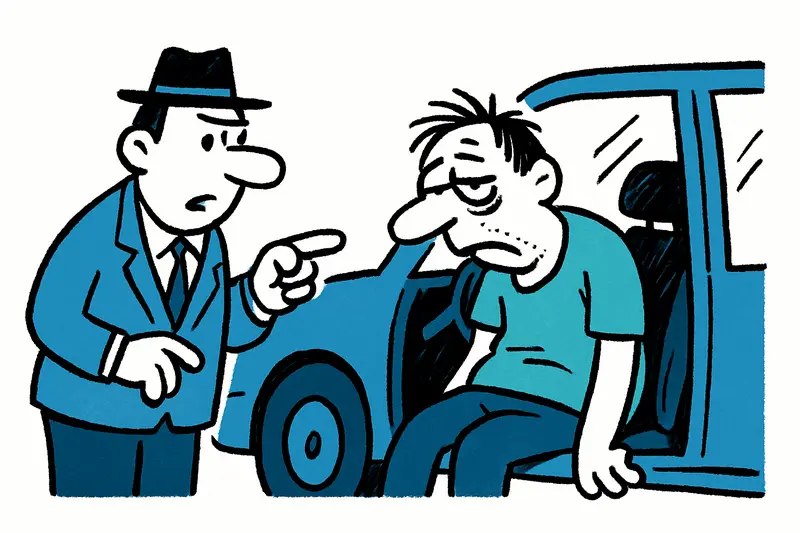
In the fatal crash on the Ma-3460 on November 15, a 53-year-old Dutch man died. He initially claimed to have been driving. Later investigations showed the 29-year-old companion was heavily intoxicated and likely the driver. What does this say about safety, procedures and prevention in Mallorca?
Alcúdia: Who was really at the wheel? A reality check
Key question: Why did the truth in a fatal crash case only emerge weeks later — and what does this say about our safety and investigative procedures in Mallorca?
The case in brief
In the early hours of November 15, a Hyundai Kona collided head-on with an SUV on the Ma-3460 while travelling against the direction of traffic. A 53-year-old Dutch man later succumbed to his injuries. The 29-year-old companion was taken injured to Inca hospital and initially stated that the deceased had been driving. Shortly afterwards her tests showed a blood alcohol level of 1.87 g/l and a positive result for cannabis. Investigators, however, found indications suggesting she had been driving: seating position, length of the seatbelt and the locations where shoes were found in the car, as reported in Who Really Drove? Forensics Reinterpret Crash around Port d'Alcúdia. After her hospital stay she initially refused to leave the facility and was arrested on December 10.
Critical analysis: How plausible are the procedures?
It seems odd that a seriously injured man in hospital would reportedly say he had been driving, while later forensic traces at the scene painted a different picture. Possible explanations range from protective reflexes and shock to false statements under the influence of medication. Crucially, the later investigations relied on physical evidence inside the vehicle. This shows how thin the initial, dramatic version often is and how much we must depend on subsequent forensic assignments.
What is missing from the public debate
Debates about such accidents often focus on questions of blame and emotions. Procedural gaps are rarely discussed: How quickly and reliably are blood and drug tests performed? What role do medical staff and police play in the immediate care of injured, potentially intoxicated persons? And how reliable are statements made under shock or while medicated? These broader questions were highlighted in local coverage of the crash, for example Fatal accident in Alcúdia: Who is responsible — and what needs to change?.
A commonplace scene that sounds familiar
It is shortly before two in the morning, the December air in Alcúdia is crisp, and the distant hum of a last bus can be heard. At a roundabout blue lights flash, and somewhere there is the smell of a busy chip stand. Paramedics carry blankets. In Inca hospital the clock of the emergency services keeps ticking while relatives make phone calls and police officers document seat positions in the crashed vehicle. Scenes like this repeat here, except that this time the outcome was fatal.
Concrete weaknesses
- Delay in toxicology tests: The later blood samples are taken, the less reliable the reconstruction of the blood-alcohol level at the time of the accident becomes. - Unclear hospital protocols: If injured persons do not want or cannot leave the clinic, there are often no standardized procedures for police and medical staff. - Evaluation of evidence: Indications such as the position of shoes or seatbelt length are often weighed only afterwards; event data recorders in modern cars are not always read out or do not exist in every vehicle.
Concrete solutions
- Standardized immediate sampling: In serious traffic accidents, standardized blood draws should be carried out promptly according to clear medical and legal criteria. - Clear interfaces between clinics and the Guardia Civil: Handover protocols that record who made which statement and which samples were taken and when. - Local prevention: More visible checks and information signs on critical stretches like the Ma-3460, especially at night. - Use vehicle data: Where available, event data recorders and telematics data should be systematically read out. - Information for tourists: Rental companies and hotels could distribute information sheets about local laws on alcohol and drugs at the wheel.
What the justice system must consider
Court decisions will later weigh the evidence. It is important that documentation is precise from the start: times of sampling, medical findings, photos of seating positions and written witness statements. Without rigorous evidence preservation, there is a risk of misjudgments that carry not only legal but also moral consequences for the bereaved.
Conclusion
The crash near Alcúdia is not an isolated incident but an example of how easily information can fade or become distorted when shock, alcohol and early statements come together. We need clearer rules for immediate measures, better cooperation between hospitals and police, and more prevention along dangerous routes. Otherwise the question of who was truly responsible remains — and the sense that outcome relied more on chance than justice.
Frequently asked questions
What should you do if you are involved in a serious car crash in Mallorca and may have been drinking?
How reliable are early statements after a traffic accident in Mallorca?
Why do blood alcohol tests matter so much in Mallorca accident investigations?
How do police work out who was driving after a crash in Mallorca?
What happened on the Ma-3460 near Alcúdia?
Why was the Alcúdia crash case investigated again weeks later?
What can hospitals and police do better after serious crashes in Mallorca?
Is the Ma-3460 near Alcúdia considered a risky road at night?
Similar News
The End of the Cheap Ride? Why Mallorca Is Hit Harder by the Fuel-Price Shock
Gasoline and diesel average close to two euros per liter. What this means for commuters, supply chains and renters in Ma...
Relaxed liquid rules in Munich: What Mallorca travelers will notice
At Munich Airport the 100-milliliter rule will be lifted at all checkpoint lanes — thanks to new CT scanners passengers ...
For 45 Years on Mallorca — and Then This: How a Market Visit in Santa Ponsa Became a Lesson
A woman who has lived on the island for decades lost money and important documents at the Mercat Setmanal in Santa Ponsa...
10 percent surcharge on the beach: How legal and transparent is the extra charge at Playa de Muro?
A German part-time resident noticed days after a restaurant visit in Playa de Muro that the bill included a flat ten per...
Body near the Llevant Market: What this death says about our city
A man was found dead on Sunday afternoon near the Llevant Market. Police say the death appears natural. The scene raises...
More to explore
Discover more interesting content

Can Cap de Bou

Townhouse Lleo 72
