
Turning point or breathing space? What Mallorca's rental market is really revealing
Turning point or breathing space? What Mallorca's rental market is really revealing
The figures from the state observatory indicate a slowdown in rents. But is this a relief—or simply the result that many households can no longer keep up? A reality check from Palma.
Turning point or breathing space? What Mallorca's rental market is really revealing
Key question: Is this a sustainable turning point—or a valve closing because tenants have reached the limits of their means?
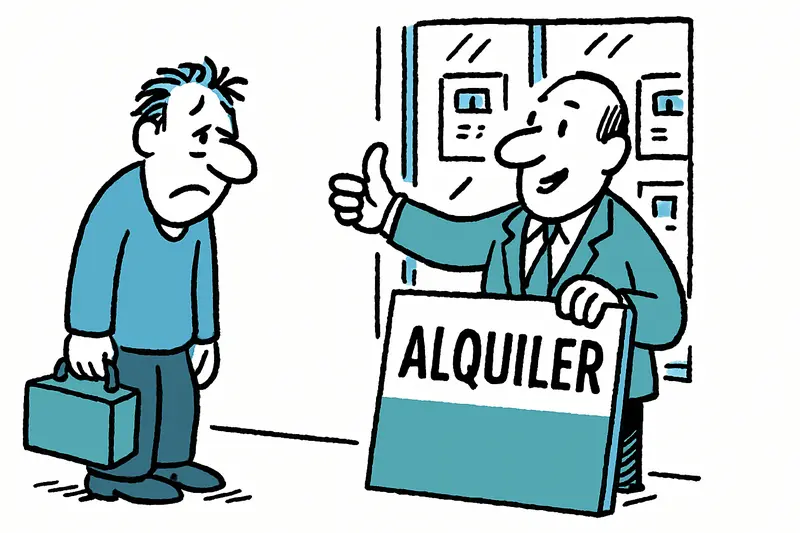
On Passeig Mallorca in the early morning the usual sounds are present: a van honks, a café owner sweeps the terrace, and the little slips reading "Alquiler" with hardly believable figures still hang in the windows of the estate agencies. The state observatory for the rental market (Observatorio del Alquiler) actually records a slowdown for 2025 — while growth nationwide was around 11.3 percent in 2024, it fell to 5.9 percent in 2025 — in the Balearics Mallorca still records average monthly rents of about €1,643, as discussed in Just a Sigh of Relief? First Easing in the Rental Market — and Why That's Not Enough. At the same time, more than a hundred interested parties typically compete for a single apartment. The question is: why is the pace slowing?
Critical analysis: The observatory makes an important point: the slowdown does not stem from a sudden increase in supply, but from the fact that many households are no longer willing or able to accept higher prices. Anyone who spends almost half of their income on rent eventually has no reserves left. That dampens demand at the top — but it does not solve the underlying problem, as Buying and Renting in Mallorca: Why Prices Are Pushing Locals to the Edge — and What Could Help Now illustrates. A market that is "stabilized" because buyers and tenants are economically halted is not a socially acceptable market.
What is missing from the public debate: people often talk about averages, not about distribution. The figure €1,643 says little about the many households that have to get by on €700–900 or the pensioners who are being pushed out. There is also little open discussion about forced sales, evictions and the actual waiting times for social housing, as highlighted in Rent-price shock 2026: How Mallorca is heading toward a social crisis. Data on vacant apartments, conversions into holiday rentals and the turnover of rental contracts are missing from the headlines — although they are decisive for understanding whether anything will change in the long term.
An everyday scene: In Son Gotleu an elderly woman is having breakfast near the Mercado de l’Olivar. She says her grandson can no longer find a room in Palma, even though he holds down three jobs. On the way back to Plaza Mayor a young tradesman with a toolbox stands in front of a single-family house that has been empty for months — the "Se vende" sign has faded. Such small observations add up to a picture: scarcity remains, displacement remains, only payment capacity is collapsing.
Concrete solutions: In the short term, municipalities must increase transparency. A mandatory register for vacant apartments and holiday rentals, better information exchange between municipalities and tax authorities to detect conversions, and stricter sanctions for illegal short-term letting would ease pressure on the market. Tax incentives could motivate landlords to offer long-term leases instead of catering to holiday guests — tied to binding minimum rental periods, an issue explored in Why long-term rentals in Mallorca are dwindling — and what could help.
In the medium term, more affordable housing is needed: municipal housing construction programs, accelerated conversion of suitable existing stock into social housing, and subsidized loans for cooperatives and self-help projects. It is important to consider mobility: better bus and bicycle connections in suburbs and peripheral areas allow people to live more affordably without being completely cut off.
Legally and financially, instruments are conceivable that address the imbalance: progressive vacancy taxes, a transparent categorization of rental properties in the land register and targeted subsidies for low-income households. All of this must be linked to clear deadlines and benchmarks, otherwise measures risk becoming mere symbolic politics.
What matters now: politics and administration must not hide behind falling percentage figures. A breathing space in price growth is no solution when 137 applicants compete for one apartment and families are pushed further to the periphery. The observatory has put its finger on the wound: demand is capped, not regulated. Those who want real relief must act on two levels — create supply and change market structures.
Pointed conclusion: Yes, the numbers point to a turning point — but it is a turnaround born of exhaustion, not of planning. In Palma's streets you hear the rustle of empty wallets louder than the debates about short-term breathing spaces. If the island government, municipalities and landlords do not now jointly set rules and create housing in a targeted way, the "stabilization" will remain a deceptive calm that will break apart at the next upswing.
Frequently asked questions
Why are Mallorca rental prices still so high even if the market is slowing down?
Is it easier to find an apartment in Mallorca now than before?
What does the slowdown in Mallorca's rental market actually mean for tenants?
When is the best time to look for a long-term rental in Mallorca?
What can Mallorca municipalities do to ease the rental shortage?
Why are so many people being pushed out of Palma by rent prices?
What role do holiday rentals play in Mallorca's housing problem?
What kind of housing solutions are being discussed for Mallorca?
Similar News
Released with Conditions: The Plus Ultra Suspicion and a Mallorcan Finca as Residence
A Dutch entrepreneur, sought in connection with the Plus Ultra case, was extradited to Spain after his arrest in Germany...

Haute Nuit in Puerto Portals: Fashion, Art and Indulgence by the Water
On October 2 the Lobster Club in Puerto Portals will be transformed into a stage for curated fashion, art and culinary e...

Magaluf: Watchtower Alarm – Lifeguards Pull Unconscious Beachgoer from the Water
After a drama in the late afternoon, two lifeguards at Magaluf beach rescued an unconscious 44-year-old man. He was stab...

Turquoise in the City: How dangerous is the color play of the Sa Riera?
The Sa Riera in Palma suddenly turned turquoise — a pretty motif, but behind the effect lies a discharge of saline waste...

Jeckliner at Sunnesching: Cologne spirit sets sail from Palma
In September 2027 the Mein Schiff 2 briefly becomes a floating carnival stage: four days with Cologne bands, comedy and ...
More to explore
Discover more interesting content

Can Cap de Bou

Townhouse Lleo 72
