
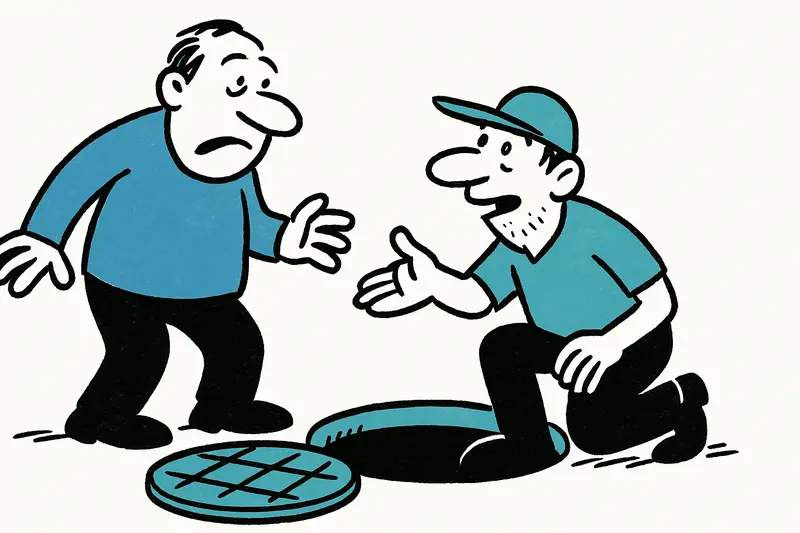
For Emergencies: The Underground Tunnel Maze beneath Ses Veles in Bunyola
For Emergencies: The Underground Tunnel Maze beneath Ses Veles in Bunyola
Beneath the Ses Veles industrial park in Bunyola lies a system of service tunnels built about 20 years ago. Could it really provide protection in an emergency — and what should the municipality do now?
For Emergencies: The Underground Tunnel Maze beneath Ses Veles in Bunyola
Key question: How safe is the underground facility under the Ses Veles industrial park really — and what is missing for it to protect people in an emergency?
If you drive through Bunyola in the morning, the first sounds are the trucks laboring up the slope and, occasionally, motorcyclists on the MA-11. The Ses Veles industrial park lies somewhat off the main road, a flat strip of warehouse roofs and paved access ways. Beneath this surface, according to available information, is a system of tunnels and shafts built about twenty years ago, originally intended to make water, electricity and telephone lines accessible without repeatedly tearing up the asphalt.
The idea sounds practical: consolidating utilities underground to simplify repairs. But in recent days the subject has caused alarm because the labyrinth is said to be large enough to offer protection to several people in the event of an armed conflict. That is one perspective. The other is the present-day reality: illegal piles of construction debris, car wrecks and rubbish accumulate on the site, according to residents and tradespeople. The combination of a neglected surface and allegedly extensive underground structures raises questions.
My critical analysis: the facility may be technically extensive, but functional protection and usability are two different matters. First: who decides who gets access? It was mentioned that the entrances are guarded. Guarding does not automatically mean orderly emergency opening. Second: a utility corridor is not automatically a shelter: ventilation, emergency lighting, water supplies, sanitary facilities, fire protection and secure entrances are indispensable. Third: safety and liability issues — who is liable for accidents underground? Is the municipality responsible or the industrial park operators?
Much is currently missing from the public discourse: transparency about ownership and technical data (floor plans, ventilation, load-bearing capacity), an official inspection report on condition and safety, concrete statements on capacity and access for people with reduced mobility. A clear emergency plan is also lacking — one that describes how people would be notified, guided in, and brought back out in a crisis. At the moment speculation and worry dominate — and that helps no one. Local debates around subterranean infrastructure, such as plans to remodel the Génova tunnel in Palma, show the need for public inspections.
A mundane scene from Bunyola highlights the discrepancy: on a rainy afternoon I watched an old van stop next to a warehouse entrance, three men get out and unload mattresses and kitchen appliances into a dark corner. The barrier to the park is hardly noticed; the place feels half-abandoned. At the same time I wonder looking at the torn grass and ripped roadside strips: if people are supposed to find shelter underground here, is this the right condition?
Concrete solutions are possible and realistic. In the short term the municipality should commission a technical inventory: professional surveying of the tunnels, inspection of ventilation and escape routes, fire safety tests and a safety assessment. This investigation must be public and transparent. At the same time the surface should be tidied up: remove illegal dumping, secure access roads and install signage.
In the medium term a binding emergency and operator plan is needed: who opens the facility, who provides power and light, how is capacity managed, how long can people remain there? For this the municipality, the industrial park operators, civil protection and emergency services must work together and document clear responsibilities. Drills and information campaigns for residents and park employees would create routine for an emergency, and long-term coordination with regional transport projects, such as plans to extend the metro to Son Espases hospital, would also affect access and evacuation routes.
Practically, some measures can take effect immediately: entrances that are currently unsecured should be fitted with standardized locking mechanisms that can be remotely opened by emergency services in a crisis. Storage for drinking water, basic medical supplies and flashlights should be set up at central points. Entrances must be designed so that older people or those using walking aids can enter in an emergency.
What must not happen: the facility continue to be ...
Frequently asked questions
How safe is the underground tunnel system in Bunyola during an emergency?
What is missing for an underground shelter in Mallorca to work properly?
Who would be responsible for an underground facility in Bunyola during an emergency?
Is the underground site beneath Ses Veles in Bunyola open to the public?
Why are residents worried about the Ses Veles industrial park in Bunyola?
What should be inspected before an underground tunnel in Mallorca is used as a shelter?
Is the underground tunnel maze in Bunyola accessible for older people or people with reduced mobility?
What should Mallorca municipalities do with neglected underground infrastructure?
Similar News

More Electric Cars in the Balearic Islands: Sales Rise Sharply
Between January and August, 14,185 vehicles without petrol or diesel propulsion were sold — an increase of more than 40 ...
Autumn in Mallorca: What Truly Remains of Summer
The days grow shorter, the evenings cool — and yet more of summer lingers than you might think: sounds, recipes, people,...
Rescue operation at Tolleric: Why nighttime cliff parties become dangerous
A British holidaymaker fell about ten meters at the cliffs of Tolleric during the night, later climbed back up and was r...
Car accident on the MA-1: Mother and daughter on a bicycle struck by a fellow countryman – Who protects cyclists here?
On the MA-1 between Portopí and the Cala Major exit, a mother and her daughter on a bicycle were struck by a car. A para...
Smoke over the UIB: Who is responsible for the fire on the roof?
On Saturday afternoon a fire broke out on the roof of the Arxiduc Lluís Salvador building at the University of the Balea...
More to explore
Discover more interesting content

Can Cap de Bou

Townhouse Lleo 72
