
Used-clothing containers in the Balearic Islands: When donated bags become a cost trap
Used-clothing containers in the Balearic Islands: When donated bags become a cost trap
Many used-clothing containers are full of unusable garments. Why does so much waste end up in the containers, what are the consequences for social organisations, and what could help on Mallorca?
Used-clothing containers in the Balearic Islands: When donated bags become a cost trap
Leading question: Why are containers filling up with unusable clothing – and who pays the bill in the end?
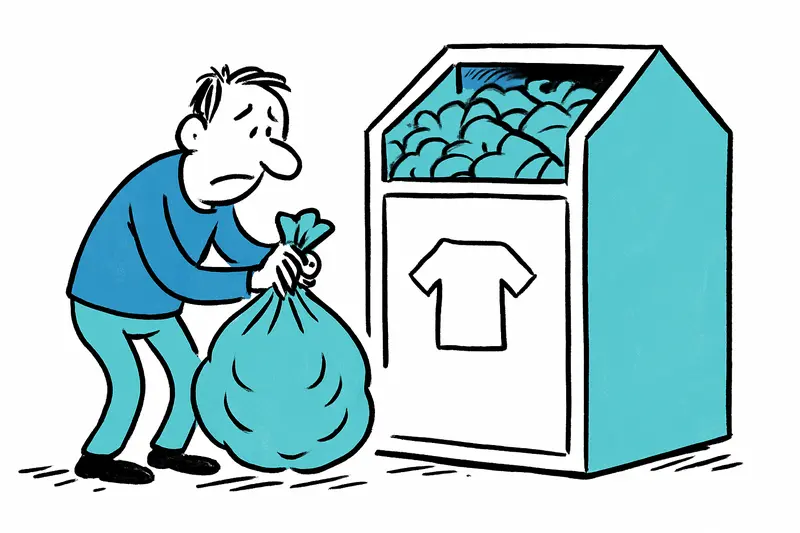
Early in the morning in front of the Mercat de l'Olivar there are plastic bags next to the container, from which dirty jumpers and torn T-shirts bulge out. A moped rides by, the garbage truck has not yet rumbled past, and a volunteer from a charity wrinkles her nose. Scenes like this repeat themselves on Mallorca, Menorca, Ibiza and Formentera, as documented in Who cleans up the sea? Almost eight tons of waste off the Balearic Islands — and the uncomfortable answers.
Organisations like Cáritas therefore warn to put only clean, intact clothing in the containers, ideally well packaged. The most important figure in terms of quantity comes from REAS Baleares: around 3,500 tonnes of textiles are collected on the islands each year. A large portion of that is usable, but a noticeable amount ends up as contaminated waste in the collection bins.
Critical analysis: the problem has several facets. First: lack of information. Many people do not know which clothes are still wearable and which are not. Second: convenience and bad habits. Old textiles are quickly thrown into the container without being sorted or washed beforehand. Third: tourist dynamics. In holiday accommodations guests often change wardrobes frequently and dispose of textiles in the quick-and-easy way. This dynamic is reflected in recent clean-up figures such as 6.5 tons of waste pulled from the sea in July. Fourth: logistical gaps. If containers are not emptied regularly or are labelled incorrectly, misfilling increases.
The consequences are concrete: clothes with stains, mould or broken zips can hardly be resold, tear sorting belts and raise disposal costs for the non-profit organisations that process the volumes. The money that has to be spent on transport, sorting and disposal is then missing for social work on site.
What is missing in the public debate: two points are often overlooked. First, the responsibility of municipal infrastructure. It is not enough to place containers; a system with clear collection intervals, quality controls and transparent contracts between municipalities and collectors is needed, especially given problems such as the provisional halt to waste transfers between the islands. Second, there are no incentives for consumers: why not simple drop-off points in supermarkets, second-hand discounts or return points at large chains, so that the often uncertain trash bin is not the first and only option?
Everyday scene from Mallorca: In the car park of a large supermarket chain in Palma there is a yellow container with a large sticker: Only clean clothing. Still, a holidaying family is just throwing in an open bag that smells of fish. An older pensioner from Son Armadams stops, shakes his head and picks up a plastic bottle lying next to the container. These small observations show that information alone is not enough; behaviour changes slowly and only with practical alternatives.
Concrete measures that can be implemented for Mallorca and the other islands:
1) Clearer labelling and protected openings: Pictograms in Catalan, Spanish and German as well as narrow slots help keep bulky waste and rubbish out.
2) Regular quality checks and transparent emptying cycles: Municipalities should publish collection intervals and check whether operators are causing contaminated loads.
3) Cooperation with hotels and holiday rental providers: Drop-off points near large accommodations or mandatory information for guests so that textiles are disposed of properly.
4) Repair and sorting offers: Repair cafés, workshops and special collection boxes for damaged textiles that are suitable for industrial recycling.
5) Incentive systems: Small vouchers, discounts or bonus points for handing in qualitatively usable clothing could steer behaviour.
Such steps are technically feasible and cost less when coordinated. But more decisive is a cultural change: donated clothing should not be a quick alibi for disposal, but a conscious sharing of resources.
Conclusion: the overfilled containers are a symptom of several failures: information gaps, logistical weaknesses and a too-lax consumer attitude. The islands collect considerable quantities — REAS Baleares cites 3,500 tonnes annually — but the quality of the collection determines the benefit. If municipalities, operators, charities and the tourism industry jointly create rules, infrastructure and incentives, the cost trap can become a circular system again that helps people and conserves resources. Until then, containers will remain half open on market days, and volunteers will rummage through bags while the sun beats down on Palma.
Frequently asked questions
What is the weather like in Mallorca in spring?
Can you swim in Mallorca in spring?
What should I pack for Mallorca in spring?
Is spring a good time to visit Mallorca?
What is Palma de Mallorca like in spring?
Are Mallorca beaches busy in spring?
What is Sóller like in spring?
What is Alcúdia like to visit in spring?
Similar News

Bloody clash in Canòdrom Park: What is missing in addressing violence on Mallorca's streets?
At midday on October 23, an 18-year-old man was critically injured in Canòdrom Park in Palma. The attack raises question...

Palma raises bus fares: Who pays the bill for public transport?
Single tickets rise from €2 to €3, airport trips have a reference price of €4.50. It remains unclear whether residents w...

Palma's New Indoor Pool: Sea View, Sunbeds and Space for Everyone
At Aigua Dolça, near the Paseo Marítimo, Palma has a new municipal indoor pool. For a small fee people can now train, re...
How Four Burglars Emptied Ten Houses with a Simple Trick — and What It Means for Mallorca
Four men used the impressioning technique, posed as delivery workers and accepted two years in prison. A reality check f...
Bundles of Drugs, Containers and Open Questions: A Reality Check for Mallorca
3.3 tonnes of marijuana, 80 kilos hidden in golf-ball vending machines and a 44-year-old German released on conditions i...
More to explore
Discover more interesting content

Can Cap de Bou

Townhouse Lleo 72
