
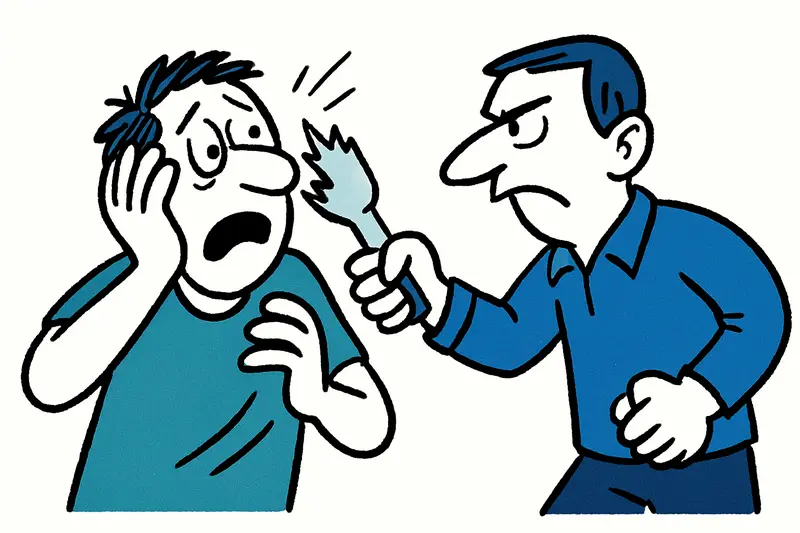
Violence in Santa Catalina: Glass attack in club – Why do nighttime disputes escalate so quickly?
Violence in Santa Catalina: Glass attack in club – Why do nighttime disputes escalate so quickly?
A 20-year-old was seriously injured with a broken glass in a nightclub in Santa Catalina. The National Police arrested a 28-year-old German. A reality check: what's missing in the debate and what solutions are possible?
Violence in Santa Catalina: Glass attack in club – Why do nighttime disputes escalate so quickly?
An incident, many questions
In the early morning hours of this Saturday a 20-year-old man suffered severe lacerations after being attacked with a broken glass in a nightclub in the Santa Catalina neighborhood. The victim – according to on-site reports of Moroccan origin – had to be stitched with more than ten stitches at Son Espases hospital. The National Police detained a 28-year-old German on suspicion of bodily harm with a dangerous object. Hospital treatment, witness statements, surveillance recordings from the club and the quick intervention of security personnel and emergency services are among the few reliable elements of this case.
Key question: Why is the combination of bouncers, surveillance, emergency services and police not always enough to prevent such escalations?
In short: it's not a lack of individual measures, but of a coherent whole. On site, in Santa Catalina, you can often still smell espresso from the market in the evening, you hear scooters rushing by and the voices of people walking along the narrow alleys. On nights like this, when the temperature in Palma is around 15 °C and the night is still cool, small triggers turn into larger conflicts: group formation, alcohol, language barriers, misunderstandings — and: glass bottles as potentially deadly tools. This pattern is visible in other incidents such as Brawl at Playa de Palma: Why a verbal exchange could have ended fatally.
Critical analysis: The sequence as can be reconstructed points to several weaknesses. First, the presence of glass in an environment where physical contact and crowding are likely. Then the escalation from a verbal provocation against an accompanying person to a physical confrontation between two groups. Finally: a victim who was clearly intoxicated, and an attack with a broken glass that caused such severe injuries that deep facial wounds and stitches were necessary. That the surveillance cameras recorded the events and security stepped in is important – but the cameras apparently served more for later clarification than for immediate prevention. A comparable late-stage intervention in Palma is discussed in Palma: Roof acrobat faces charges —
Frequently asked questions
Why do nightclub disputes in Mallorca sometimes escalate so quickly at night?
Is it common for broken glasses to be used in club fights in Palma?
What should you do if someone is badly cut during a night out in Mallorca?
Why are security staff and CCTV not always enough to prevent violence in Mallorca clubs?
What is Santa Catalina like at night in Palma?
Does cooler weather in Mallorca make nightlife conflicts more likely?
How serious are facial cuts from broken glass in a club fight?
What can club-goers in Mallorca do to reduce the risk of a night out turning violent?
Similar News
When the Wallet Becomes a Danger: Attack in Peguera and Lessons for Mallorca
In Peguera, two women are said to have stolen the wallet from a 75-year-old German couple. When the victim intervened, t...
Plata stays Plata: Young people take over, Llonguets remain
A small bar on Carrer de l'Argenteria will continue: Tolo Serra hands the place over to young Mallorcans at the end of t...
Unnoticed in the Luggage Compartment: How a Boy Traveled More Than 100 Kilometers in a Team Bus
A minor traveled in the undercarriage of a team bus for more than 100 kilometers until his cries for help were heard. A ...

Cap Vermell Grand: Second Michelin Key – a Gift for the East
The Cap Vermell Grand in Capdepera has been awarded its second Michelin key. For the region this elevates the luxury off...
Eurowings lets four aircraft carry names – a friendly idea that also reaches Mallorca
Eurowings is launching a campaign: four Airbus A320s are to carry the first names of people who help others in everyday ...
More to explore
Discover more interesting content

Can Cap de Bou

Townhouse Lleo 72
