
Sea view for free? The problem at the Peñón and what it reveals about Mallorca's housing market
A dilapidated lobster house at the Peñón has been occupied for months. Between late-night bass, unclear electricity connections and vacant flats, a bigger problem emerges: How can Palma respond without tearing neighbourhoods apart?
Right on the water, but in a bad state: the house at the Peñón
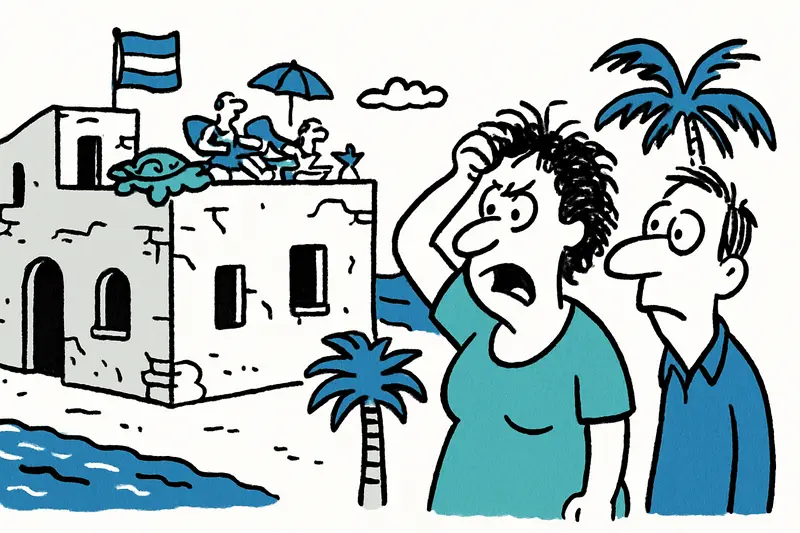
Anyone walking the promenade in Es Coll d'en Rabassa in the late afternoon hears it first: the distant bass, occasional laughter, sometimes the sizzle of a small grill. And then many see the same picture – an old, dilapidated building directly on the Peñón, once used to keep lobsters, now inhabited by several men, according to coverage of occupiers at the Peñón in Es Coll d'en Rabassa. Chairs on the terrace, colourful parasols, an inflatable turtle as an audience. A Spanish flag flutters above the improvised living room. For some an annoyance, for others the only way out.
What exactly is happening?
Neighbours estimate that up to ten people live on the upper floor. A communal space has been set up on the roof terrace: loungers, plastic tables, a small barbecue. In the evenings loud music reaches across the beach path; on weekends more rubbish accumulates by the roadside. Some claim the group regularly posts videos on social networks – with the sea view as a backdrop. Others say the occupation has been going on since spring.
The residents' nerves
"You can hear the bass until 11 pm," says a man who has lived in the area for ten years. A mother explains she no longer feels comfortable taking her small children to the Peñón in the evenings. Such statements seem banal, but they add up: lack of sleep, insecurity, a feeling of lost control over one's own living environment. These are not just isolated voices. In cafés along the avenue people discuss it, emails are sent to the town hall. Authority vehicles drove back and forth; there have been several checks. But the situation has not been permanently resolved.
The odd question: who pays for the electricity?
What particularly puzzles many people: apparently there is a working electricity connection in the building. How is that possible? Is the meter still registered? Electricity theft, an illegal connection or simply an exposed cable – speculations are varied. What is clear: this uncertainty fuels neighbourhood resentment and complicates police operations, because technical and legal questions arise.
A reflection of larger problems
The house at the Peñón is not an isolated case, but a visible piece of a larger puzzle, as explored in analysis of Mallorca's housing crisis. Empty properties on the island, a demand for affordable housing, long waiting lists for social housing – all this affects people who have to improvise, a situation reflected in background on homelessness in Spain. At the same time, authorities face legal hurdles: evictions are lengthy, ownership relations often unclear, court proceedings take time. In this gap space for occupations – and for conflicts – emerges.
What is often missing from public debate
The discussion is often limited to "evict or tolerate." Less noticed are technical and administrative practicalities: Why has a central control of vacant properties not been enforced? Are there registered electricity connections at derelict properties? How quickly can municipal services organise psychosocial support and accommodation? And: how do short-term police operations affect the social situation of those affected who have no alternatives?
Concrete approaches instead of mere symbolic politics
Some measures would provide short-term relief, others would have long-term effects. Concrete proposals:
1. Rapid intervention teams: Mobile teams made up of social workers, energy and safety specialists could assess the situation factually after an initial report and outline alternatives.
2. Vacant property register: A publicly accessible register for unused properties with sanctions for prolonged vacancy would increase pressure on owners.
3. Temporary emergency accommodations: Short-term available, dignified solutions would relieve pressure on the streets and buy time for more sustainable placements.
4. Energy checks and meter inspections: Technical checks prevent illegal connections and clarify liability issues more quickly.
5. Mediation and arbitration offices: Easily accessible contact points that mediate between neighbourhoods, occupiers and owners.
A difficult balancing act
The call by many residents for decisive action is understandable. No one wants nightly noise, rubbish or the feeling that the neighbourhood is losing its order. At the same time, the scenes at the Peñón show the limits of purely police responses: without affordable alternatives, similar cases will reoccur.
Looking ahead
In the evenings, when the sun becomes lower and the smell of grilled fish hangs in the air, you can see both at the Peñón: a beautiful view of the sea and the small, uncomfortable reality behind it. The island needs solutions that combine firmness with social sense. Otherwise this house will remain yet another visible symptom of a task Mallorca will soon need to tackle even more urgently: keeping housing affordable without tearing the social fabric apart.
Frequently asked questions
Why is housing such a problem in Mallorca right now?
What happens to vacant properties in Mallorca when they are left empty for too long?
What is the Peñón in Es Coll d’en Rabassa, Mallorca?
Can you swim or walk near the Peñón in Es Coll d’en Rabassa?
How hot does Mallorca get in late afternoon by the sea?
Is it a good idea to visit Palma’s seafront in the evening?
What should I pack for a late-day walk in Mallorca by the coast?
How do Mallorca authorities deal with occupied buildings?
Similar News

Caro Robens: 15 kilograms lighter — and again in the crossfire of online comments
Bodybuilder Caro Robens, who lives in Mallorca, has lost 15 kilograms. Her success on Instagram was met with applause — ...

Meager Industry in Mallorca: How the Island Can Be More Than Just Tourism
The industrial sector in Mallorca is shrinking, productivity is falling and firms remain tiny. The key question: can the...
Pre-Nit de l'Art: Galerie Mensing invites to a special evening with Tom Boston
Before the big art night, Galerie Mensing opens its doors: pop art, champagne, a DJ and a hand-signed print by Tom Bosto...

Sea view and more seats: Cappuccino Grand Café reopens in Port d'Andratx
After a long renovation, the Cappuccino Grand Café on the Port d'Andratx harbor promenade has quietly reopened. Larger t...

Enric Mas wins the Vuelta – a triumph that resonates in Mallorca
Mallorcan Enric Mas has won the 82nd Vuelta — the first Spanish overall victory since 2014. Cyclists and neighbors on Ma...
More to explore
Discover more interesting content

Can Cap de Bou

Townhouse Lleo 72
