
Sky-high prices, tents, empty promises: Why Mallorca's housing crisis is no longer a marginal issue
Sky-high prices, tents, empty promises: Why Mallorca's housing crisis is no longer a marginal issue
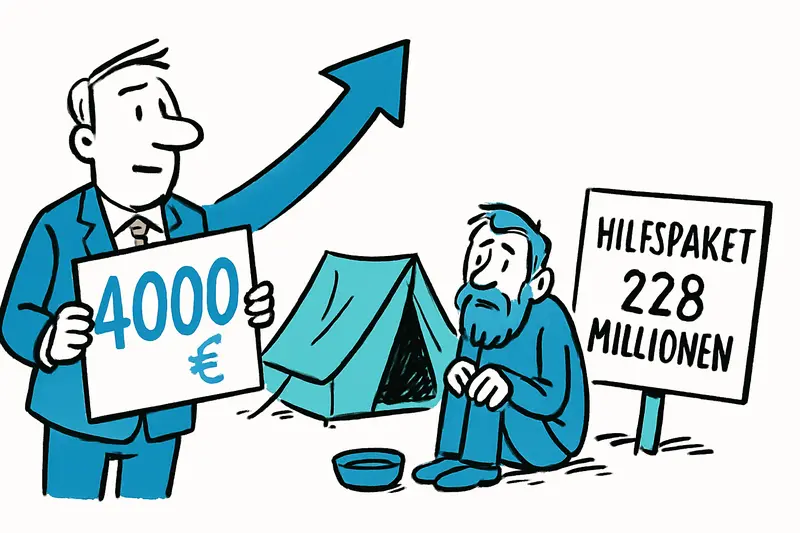
The gap between luxury properties and homelessness is growing. Tent camps on the edge of Nou Llevant, square-meter prices close to €4,000 and an aid package of €228 million — is that enough? A reality check with proposals on how Mallorca can break the spiral.
Sky-high prices, tents, empty promises: Why Mallorca's housing crisis is no longer a marginal issue
Key question: Are 1,213 social housing units and a budget of €228 million enough to save an island where second-home owners and people without a roof are moving ever closer together?
On the edge of Nou Llevant, between a Lidl parking lot, the soft three-note rhythm of the conveyor belts in front of Rossmann and a highway that sets the city's pace, tents and motorhomes stand, as reported in More than 800 people now sleep on Mallorca's streets. In the morning you smell espresso from the corner bar, hear children on the playground and people discussing prices with their feet and shopping trolleys. At the same time, the island's price per square meter climbs to values many of us know only from postcards: approaching the €4,000 mark.
The numbers make the contradiction visible, as detailed in Balearic Islands in the Price Squeeze: Who Can Still Afford Mallorca?: according to the Agencia Tributaria, owners reportedly received an average of €12,487 per renter in 2023. The Spanish average is €8,888; regions like Extremadura or Murcia remain miles behind. Mallorca attracts solvent buyers, many pay cash and avoid traditional mortgages. The result: sellers can push prices up, tenants are left empty-handed.
The regional government responds with a package: €228 million to create 1,213 social housing units in the Balearics. For Mallorca, 613 units are planned, 210 of them in Palma; the rest are distributed across towns like Marratxí, Sóller, Llucmajor, Petra, Sineu and Manacor. Well intentioned, but scant. There are already 2,509 social housing units; the announced number would increase the stock by roughly 48 percent on paper. In reality, construction takes years, especially when rezonings, permits and building works are pending on the ground.
Looking closely, unanswered questions remain: Who should move into the new flats? How will allocation be controlled? What deadlines apply? And above all: what happens while permits are being awaited? Public debate focuses a lot on sums and headlines, and little on transitional programs for people who are sleeping outdoors now.
Politically, there's reluctance to touch a measure that could help many in the short term: rent caps. The conservative ruling party rejects comprehensive caps, despite analysis in Rent-price shock 2026: How Mallorca is heading toward a social crisis. Yet there are examples of cities that achieved relief through time-limited interventions: in La Coruña, a rent limit restricted to two and a half years led to a noticeable drop in offered rents; there the average rent is now around €730 — a figure most families on Mallorca can only dream of.
What's missing from the public discourse? Three things: transparent figures on vacancies and second homes, clear rules against cash-only deals in expensive sales and binding measures against short-term rentals, which privatize profits and fragment housing. Also, there is too little talk about timelines: construction projects need months, emergency shelters need days.
On the ground you see the consequences: a mother with shopping bags on Avenida Gabriel Roca, annoyed about the next rent increase; an older man folding his blanket on a park bench in southern Palma; neighbors wondering whether their quarter will soon consist only of holiday apartments. These scenes are not statistics, they are the island in the present, and they echo warnings in Housing Price Shock in Mallorca: How Legal Large Rent Increases Threaten Tenants.
Concrete solutions, without romanticism: 1) Expand immediate aid — mobile emergency shelters, a winter quarter with a clear perspective. 2) Pilot a rent-price cap in Palma, tied to monitoring and limited duration. 3) Purchase public land and vacant buildings specifically and transfer them to the municipal housing authority. 4) Tax incentives for landlords who rent long-term; higher levies on permanently vacant second homes. 5) Accelerated conversion of commercial space into housing, but with social occupancy quotas. 6) Transparency requirements for property transfers — cash buyers must be registered to make speculative cycles visible.
A few words about the money: €228 million is better than nothing. But on an island where purchase prices and rents in some zones climb to astronomical heights, it feels like a bandage on open ground. You can ease rezoning and building, you can pay subsidies. Without accompanying rules — against excessive short-term rentals, against unchecked speculation, for strong tenant rights — the situation remains precarious.
Conclusion: Mallorca doesn't need PR photos of newly planned apartment blocks. Mallorca needs a plan that eases immediate hardship and exerts long-term influence on supply and demand. That requires political toughness, transparency and speed. Anyone who walks past the tents at Nou Llevant in the morning sees not just a social problem, but a warning sign: if politics keeps underestimating and markets stay oversized, the island will lose its social fabric. And that will hurt far more loudly than any price bubble.
Frequently asked questions
Why is housing so expensive in Mallorca right now?
Are the planned social housing units in Mallorca enough to ease the crisis?
What can people do in Mallorca if they cannot afford rent anymore?
Would rent caps help tenants in Mallorca?
What is happening with housing in Palma’s Nou Llevant area?
Which towns in Mallorca are included in the new housing plan?
Why do second homes make housing harder to find in Mallorca?
Is Mallorca doing enough to protect tenants from rising rents?
Similar News
Yellow Alert: Is Mallorca Prepared for the Next Rain Band?
Aemet has issued a yellow alert for the south, southwest and the island's interior. Thunderstorms and heavy rain are for...
Kegel brothers trial postponed: Why Mallorca must wait for a verdict
The trial of 13 German holidaymakers will not begin until May 2028. The long wait raises questions — for victims, defend...

Chaos on Palma's Runway: Why the Summer at the Airport Was So Disrupted
This summer laid bare where Palma airport is faltering: only just over half of departures were on time and seven percent...

Cocaine Offer on Ham Street: Why the Open Trade Should Ring Alarm Bells
In the middle of Pare Bartomeu Salvà a tourist was offered a packet of cocaine as part of a sunglasses deal. A short int...

Yellow Alert on Mallorca: Next Rain Front Approaches — Is the Island Ready?
Aemet issues yellow warnings for the south, southwest and central Mallorca: thunderstorms and heavy rain will push down ...
More to explore
Discover more interesting content

Can Cap de Bou

Townhouse Lleo 72
