
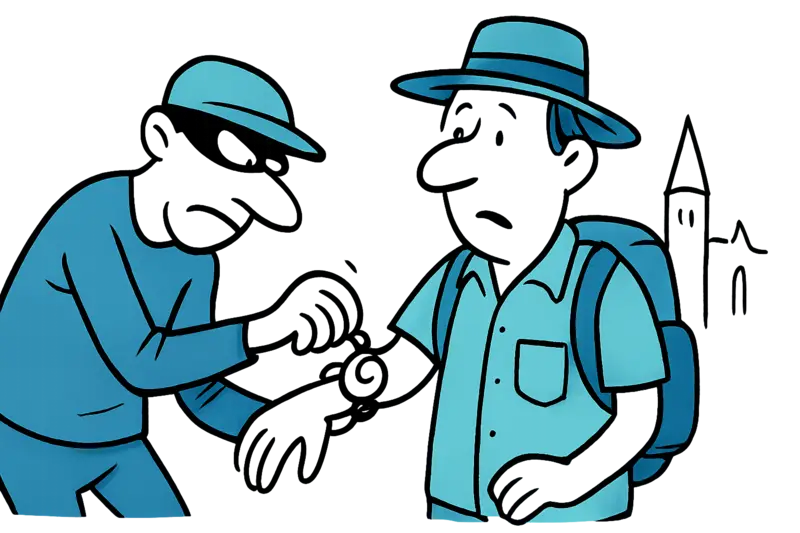
Watch robberies in Palma: Who protects tourists from wrist thieves?
Watch robberies in Palma: Who protects tourists from wrist thieves?
Three brutal robberies in Palma — in La Llotja, a parking garage at Passeig Mallorca and on Carrer de Ramón Llull — netted luxury watches worth over €262,000. One suspect was arrested. What is missing from the debate on safety and prevention?
Watch robberies in Palma: Who protects tourists from wrist thieves?
Key question: Are foot patrols and press reports enough, or do we need a different security approach for the city centre?
In Palma this year three targeted robberies of people wearing conspicuous luxury watches have come to light. The incidents occurred between May and September: on 24 May, in the La Llotja/Moll Vell area, a watch worth €37,500 was snatched; on 4 September, on Carrer de Ramón Llull, another for €25,000; and on 26 September, in the underground car park at Passeig Mallorca, a watch worth €200,000. The National Police are treating the cases together. A young man of Algerian origin has been arrested; he is said to have been part of a group, and his companion had previously been arrested for similar offences in Palma.
In short: Perpetrators targeted tourists with expensive watches, observed them and struck when the opportunity arose. Violence against victims and obstacles to apprehension — the pattern is brutal and efficient. That the attacks took place in broad daylight makes the situation even more unsettling for residents and visitors alike.
Critical analysis: The police have detained a suspected perpetrator. Good. But the crimes could take place over several months, even though they repeatedly occurred in comparable areas: the harbour promenade, narrow pedestrian zones and parking garages around the Palma's Old Town. Why could offenders operate as observers in these places for so long without attracting attention? Two focal points stand out: visibility and prevention.
What is missing from the public discourse: The public discusses individual arrests and high loss amounts. Two questions usually remain unanswered. First: What concrete precautions exist for areas where tourism and crime intersect — for example Passeig del Born or the car parks at Passeig Mallorca? Second: What preventive information do tourists receive upon arrival — at the airport, the car rental desk, in hotels? There is a lack of clear, everyday guidance rather than alarm messages.
An everyday scene from Palma: It is early afternoon, the bells of the cathedral La Seu ring softly, delivery vans honk in the narrow Carrer de la Llotja, and people stroll along Passeig del Born with iced coffee. Tourists take photos, vendors quietly call out their offers. Between café tables and designer shops someone sometimes watches for too long. Plainclothes officers stroll, uniformed patrols drive past, but not every observation prompts action. It is precisely in this in-between space that the perpetrators operate.
Concrete solutions, not just rhetoric: First, targeted foot patrols at varying times. Regularly appearing patrols are better than predictable tours. Second, expand targeted video surveillance at known hotspots and in car parks, coupled with rapid analysis — not endless storage, but a focus on prevention. Third, cooperation with hotels, car rental companies and tourist information: short notices and tips at check-in (for example: do not wear valuables openly; store watches in the safe) reach many people. Fourth, raising awareness among residents and shopkeepers — if people feel they can report suspicious onlookers, they create another protective layer. Fifth, simple registration of watch data (serial numbers) in a police database allows later identification; this can be voluntary and data protection compliant. These measures gain urgency given reports of organized watch robbers in the Balearics.
Practical tips for travellers: Wear watches under clothing or leave them in the hotel safe. Record photos and serial numbers. In case of a robbery stay calm and contact the National Police immediately — documentation helps. These are simple steps to consider when packing.
What authorities should do now: Accelerate analysis of crime scenes, interview known accomplices, maintain visible presence in the named areas and provide transparent information to the public about measures taken — without revealing operational details. Only this creates the feeling that security is not a matter of chance.
Concise conclusion: Arrests are important. But they are only part of the answer. Palma needs a mix of visible policing, targeted prevention at tourist hubs and practical information for visitors. Otherwise, after every arrest the same feeling remains: we reacted, but did not prevent.
Frequently asked questions
How can I protect my valuables while visiting Palma's tourist areas?
Which Palma areas have seen watch thefts against tourists?
What measures could improve security for visitors in Palma's city centre?
How should I respond if I’m approached during a theft attempt in Palma?
What practical information should hotels and car rental desks share with guests in Palma?
How can residents and shopkeepers help prevent watch thefts in Palma?
What packing tips can reduce the risk of theft when visiting Mallorca?
What should authorities focus on next to improve Palma’s safety for visitors?
Similar News
Addiction in the Balearic Islands: A Reality Check on the Action Plan 2025–2032
The Plan Integral de Adicciones 2025–2032 names prevention and care. Our reality check asks: Is that enough? What is mis...
Violence on the Paseo Marítimo: Beating Allegation Against Security Guards Raises Oversight Questions
In the early hours of the morning, a young man was allegedly attacked by several security guards outside a nightclub on ...
Coaching change after six games: Panic or professionalization at FC Germania?
Thorsten Legat steps down after six games as head coach of the newly founded FC Germania and takes on a managerial role....
When the Sea Pulls: Why Mallorca's Winter Eddies Should Concern Us
New measurements off Mallorca show: small, turbulent eddies are stronger in the winter months than in summer. What this ...

After just six games: Change at FC Germania – a small Mallorca drama in everyday football
Co-founder Thorsten Legat withdraws as head coach of FC Germania after six games. A reality check: what lies behind the ...
More to explore
Discover more interesting content

Can Cap de Bou

Townhouse Lleo 72
