
Water, Horses, Outrage: Who Bears Responsibility in Palma's Carriage Dispute?
Water, Horses, Outrage: Who Bears Responsibility in Palma's Carriage Dispute?
A dispute about thirsty horses, a video and a determined tourist: the incident in Palma raises questions about the responsibility of carriage drivers, politicians and the public. What is missing in the public debate — and how can such escalations be prevented in future?
Water, Horses, Outrage: Who Bears Responsibility in Palma's Carriage Dispute?
An incident in the old town exposes fractures in the debate about animal welfare, tourism and public conduct
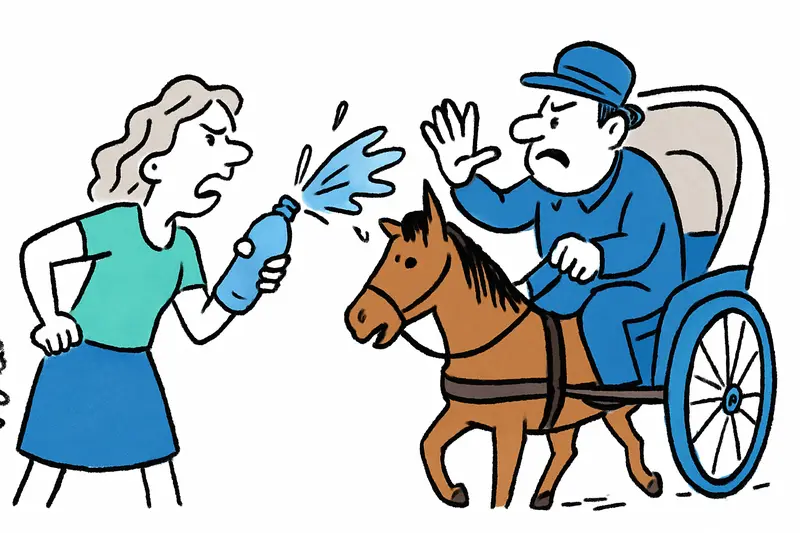
Late in the morning, when the sun on the Passeig del Born is already strong and the clip-clop of hooves is heard between café tables, a dispute that had been heating tempers for days escalated. A German tourist accused carriage drivers of not providing enough water for their horses. Shortly afterwards a water bottle landed in the woman's face, a phone video of the sequence spread online — and immediately the usual ritual began: outrage, camps forming, and calls for quick solutions.
The central question is simple and hard at the same time: who carries the responsibility — the carriage drivers who earn a living with the horse-drawn carts, the animal welfare activists and tourists, or the municipality that must enforce rules and controls?
From the available material one can reconstruct: the driver, who later expressed regret, says he was provoked and even racially insulted. The woman and several bystanders documented the scene with their phones. The city administration has announced an investigation procedure, and an animal welfare organization wants to have the matter examined, echoing Palma orders medical checks for carriage horses — turning point for horse-drawn carriages?. So far, so familiar — but that still does not explain why the conflict was possible at all.
Critical analysis: the situation is complex. On one side are people who can be overwhelmed by loud accusations and video recording. On the other side is the concern to protect animals from exploitation. Both are legitimate interests — yet there are unclear interfaces: what protocols apply on hot days? Who regularly checks horse health and access to water? How transparent and accessible are the inspections to the public? Past incidents such as Horse collapses in front of San Nicolás: A wake-up call for Palma underline the concern.
Five things are currently missing in the public debate: first, reliable, publicly viewable control data (when were which horses last examined?). Second, clear codes of conduct for tourists and tour groups (where to turn in case of suspicion?). Third, standardized procedures for carriage drivers in conflict situations (de-escalation, translation apps, documentation). Fourth, a comprehensible transition plan toward technical alternatives (electric carriages) with a timeline and funding conditions. And fifth: more on-site education instead of outrage clips — signs, flyers, a short briefing at the start of the route.
Everyday scene: anyone passing Plaça Cort now hears the town-hall bells, the rumble of buses and the clinking of serving plates. An older Mallorcan woman fans herself in the shade, a boy chases a plastic bottle across the paving stones. Between the clatter of cafés and the hooves of the carriages small encounters happen. It is precisely here, between routine and spectacle, that public confrontation discharges — and often sounds louder than what actually happened.
Concrete solutions: escalation cannot be solved by expressions of outrage. Practically implementable steps would be:
1) Mandatory water intervals and checklists: On hot days each ride must document when the horse last received water. These lists are available for inspection by authorities.
2) Regular, independent vet checks: A binding schedule with a public inspection protocol — not only on demand, but by plan.
3) De-escalation and language training for drivers: Short courses on conflict management, basic phrases in several languages and documentation using phone apps.
4) Clear complaint channels and rapid mediation: A hotline or online form run by the city with mandatory confirmation of receipt and a deadline for review.
5) Transition plan for alternative offers: A phased roadmap for electric carriages, subsidized by municipal grants and accompanied by retraining for drivers.
Why these steps? Because they depoliticize the tensions: not every confrontation needs to end up as a viral clip, and not every criticism is unfounded. Rules and transparency remove the rhetoric of absolutes from both sides.
What else is missing from the debate? The working conditions of the drivers — how long are shifts, how are breaks organized, how much do the families behind the carts earn? Also lacking is solid information on the practices of animal welfare groups: what criteria do they apply when reporting grievances? Both are questions the city should answer so that outrage does not become the only currency.
Concise conclusion: the water attack was symptomatic, not causal. It shows that the island is neither just sunny postcard streets nor moral certainty, but complicated everyday relationships. The administration must now act transparently and swiftly — with clear rules, visible controls and a realistic transition plan to animal-free alternatives, as urged in After Two Collapsed Horses: Palma Faces a Decision — Rethinking Carriage Rides. And the public should learn: filming is easy, being responsible is hard. Those who want responsibility must do more than post a clip — they must document clear allegations and use the prescribed complaint channels.
In the end the street in Palma remains: the warmth on the stone, the sound of hooves, the voices of people. If calm is to return here, more than words are needed — concrete steps and the slow rebuild of trust that rules apply to everyone.
Frequently asked questions
What is the best time to visit Mallorca for pleasant weather and fewer crowds?
Can I swim in Mallorca year-round, or is it a seasonal activity?
What should I pack for a trip to Mallorca in spring or autumn?
What are some family-friendly beaches in Mallorca?
What's the best way to get around Mallorca without renting a car?
What outdoor activities suit nature lovers visiting Mallorca?
How does Mallorca's weather change with the seasons and how could it affect plans?
Are there practical tips for staying safe and respectful while visiting Mallorca?
Similar News
From Iris Jet to Filo Jet: A Catamaran with a Dark Past and What Mallorca Must Learn
The catamaran that sank off northern Cyprus once operated as the Iris Jet between Mallorca (Cala Rajada) and Menorca in ...
125 euros for two sunbeds: When beach comfort displaces the commons
At Cala Major beach, new premium prices — 125 euros per day for two sunbeds and an umbrella — are causing discontent. Wh...
Up to 400 euros a month: When parking spaces in Palma become a luxury
Parking spaces in Palma's old town are scarce — rents have risen significantly over a decade. Who pays, who is left out,...

After the large demonstration: Human chain in Palma — can perseverance move politics?
On Saturday activists in Palma plan to form a human chain from Plaça d'Espanya to La Lonja. Chairs, pens and conversatio...
Dead Dolphin in Peguera — a Lesson for Beach Protection
A young dolphin was first seen alive at Palmira Beach in Peguera and was found dead at the boat dock the next day. The s...
More to explore
Discover more interesting content

Boat Tour with BBQ along Es Trenc Beach

Private transfer from Mallorca Airport (PMI) to Pollensa
