
Water main at Playa de Muro to be renewed – what residents and tourists can expect
Water main at Playa de Muro to be renewed – what residents and tourists can expect
The Balearic government is renewing a 2.5 km main water pipe between the Son Carbonell bridge and the Son Sant Joan spring. Construction time: around six months, cost: about €2.6 million. What this means for everyday life at Playa de Muro.
Water main at Playa de Muro to be renewed – what residents and tourists can expect
2.5 kilometers of pipe, six months of work and looking ahead
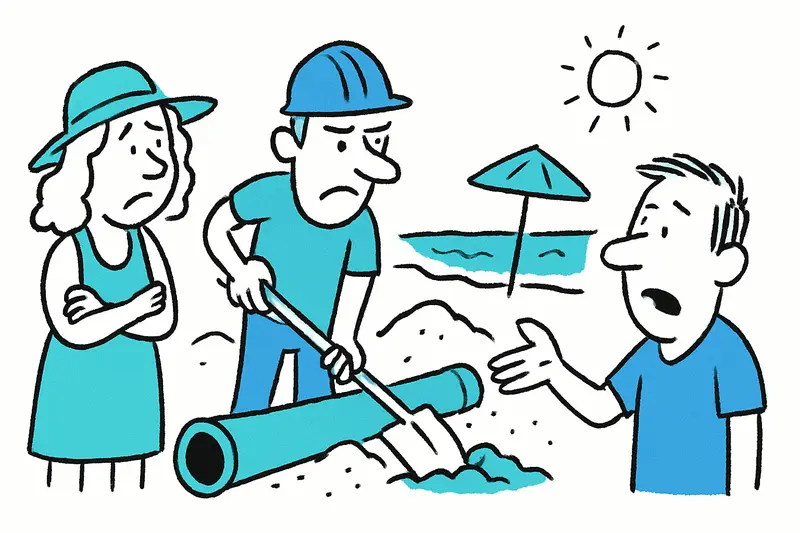
At the Playa de Muro beach it smells of salt and damp sand in the mornings, joggers make their rounds, older couples sit on the wooden bench along the promenade and look out over the bay. Soon construction vehicles will be opening a new chapter here: the Balearic government has announced it will replace an important drinking water main between the Son Carbonell bridge and the Son Sant Joan spring. For related local coverage see Emaya wants to renew Palma's pipeline network faster – Between promises and construction reality.
The project concerns an almost 2.5-kilometre section of pipe. Estimated costs are around €2.6 million; construction time is given as about six months. Those are the core facts – the rest depends on how the work is organized on site.
For residents and businesses at Playa de Muro this is initially good news. A more stable supply means fewer short-term supply interruptions, fewer improvised repairs in the middle of the season and, in the long term, lower losses from leaks. For hotels, restaurants and the small shops on the avenue, planning is crucial; reliable water is part of what supports both holiday and everyday life here.
Of course, such a construction site also brings everyday restrictions. Short-term closures, detours and construction traffic can be expected at the Son Carbonell bridge and on the access roads to the spring. Dust, noise and parked construction vehicles will be among the new sounds for months. The best expectation: daytime work, clear signage and coordinated logistics so that peak season isn't unnecessarily burdened.
What can you specifically expect? Repairs to mains are usually organized in two phases: first exposing and replacing the vulnerable pipe sections, then pressure tests and connection work. After the replacement, flushing follows to avoid discolouration. During the transition period there may be local pressure fluctuations. Anyone who's ever had a cold shower in the morning should keep a few buckets handy – better safe than sorry.
A good side effect: modern pipes contain leaks much better than old, corroded lines. Less water loss also means a small plus for the environment – especially in drier months. Additionally, the construction provides an opportunity to improve control points and measuring stations; that helps detect smaller faults quickly in the future. Regional context is discussed in When the Tap Runs Scarcer: Mallorca Between a Tourism Boom and a Dwindling Water Source.
Everyday tip for residents: if you have sensitive appointments (e.g. cleaning of holiday flats or medical home visits) planned, check briefly with service providers during the construction weeks. For businesses it means planning supplies of drinking water and possibly additional water reserves for operations. Authorities will likely post information on site – keep an eye on the promenade.
The construction site is also an opportunity for the neighbourhood: short, coordinated measures – flexible delivery times, signage for tourists, agreed parking bans during work shifts – reduce stress. Tradespeople and construction companies are also workers who buy breakfast at the bakery, drink a cola at the bar; that helps the local economy cushion the construction months. Similar municipal repair coverage appears in Costa de Canyamel: Repairs Begin — and Now?.
In the end, what counts is that water flows reliably from the tap again. The €2.6 million is an investment in everyday quality: fewer breakdowns, fewer shortages, less wasted drinking water. Someone walking on Playa de Muro in the morning won't see the change immediately – but will feel it in many small moments of the day: a warm shower, a full glass, a quieter phone when all the neighbours open the tap at once.
Outlook: if the planning is right and the work is carried out in a concentrated manner, the six months could pass quickly. Afterwards the task remains to make the benefits visible: clean water, fewer emergency interventions and a bit more everyday security at one of the island's busiest coasts.
What's important now: stay informed, coordinate appointments and respond with an eye for local needs – that way a construction site becomes a manageable transition period and ultimately a noticeable gain for Playa de Muro.
Frequently asked questions
Why is the water main at Playa de Muro being replaced?
How long will the water works in Playa de Muro take?
Will tourists in Playa de Muro notice disruptions during the pipe replacement?
Can the water supply in Playa de Muro be affected while the new main is installed?
Where exactly is the water main work taking place in Playa de Muro?
Will hotels and restaurants in Playa de Muro be affected by the water main replacement?
What should residents in Playa de Muro do to prepare for the water works?
Is the Playa de Muro water main project good news in the long run?
Similar News

Released with Conditions: The Plus Ultra Suspicion and a Mallorcan Finca as Residence
A Dutch entrepreneur, sought in connection with the Plus Ultra case, was extradited to Spain after his arrest in Germany...

Haute Nuit in Puerto Portals: Fashion, Art and Indulgence by the Water
On October 2 the Lobster Club in Puerto Portals will be transformed into a stage for curated fashion, art and culinary e...
Magaluf: Watchtower Alarm – Lifeguards Pull Unconscious Beachgoer from the Water
After a drama in the late afternoon, two lifeguards at Magaluf beach rescued an unconscious 44-year-old man. He was stab...
Turquoise in the City: How dangerous is the color play of the Sa Riera?
The Sa Riera in Palma suddenly turned turquoise — a pretty motif, but behind the effect lies a discharge of saline waste...

Jeckliner at Sunnesching: Cologne spirit sets sail from Palma
In September 2027 the Mein Schiff 2 briefly becomes a floating carnival stage: four days with Cologne bands, comedy and ...
More to explore
Discover more interesting content

Can Cap de Bou

Townhouse Lleo 72
