
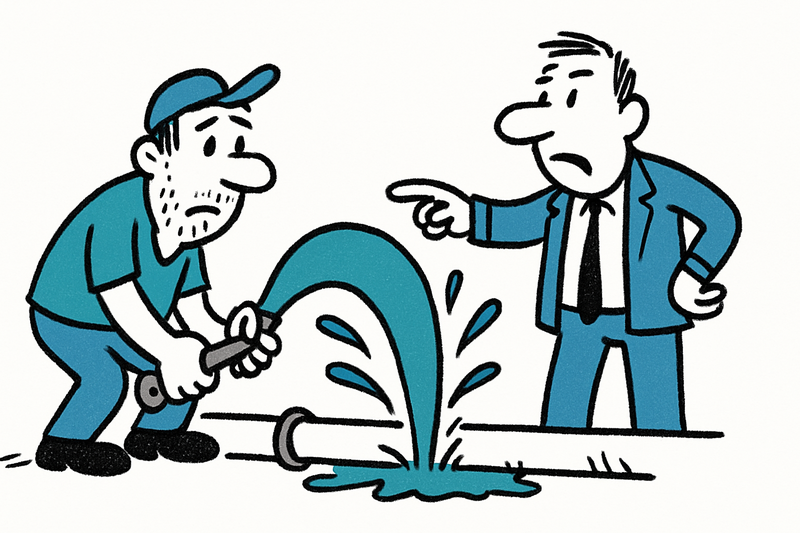
Emaya wants to renew Palma's pipeline network faster – Between promises and construction reality
After two pipe bursts in Palma, Emaya announces an accelerated renewal program. The announcement is necessary, but the city faces tricky questions: How quickly can the pipes really be replaced, who will pay, and how can traffic flow and quality of life be maintained?
Pipe bursts as a wake-up call
The loud crack in the asphalt on Monday morning – first the snapping, then the water that gushed out like a burst vein of the city – was for many residents in Son Castelló, Es Molinar, Can Pastilla and Santa Catalina not a mere piece of news but an experience, and similar incidents such as the Pipe burst in Calle Olmos: a warning sign for Palma's aging infrastructure have alarmed locals. For hours there was no water from the tap, coffee went cold, showers were out, and the street smelled of wet concrete and metal. Such scenes now occur too often in Mallorca, and Emaya has finally reacted: the renewal of the pipeline network is to be accelerated, with initial measures already in 2026 and the aim of renewing about 21 percent of the network by 2030.
The central question: Is the pace sufficient?
It sounds ambitious in theory. In practice, the question is whether the planned acceleration is enough to solve the acute problems. Last year only 15 kilometres were rehabilitated – merely 1.35 percent of the network. At that pace the 2030 target would hardly be achievable. What matters is not only the kilometres covered but also prioritisation, working methods and strategies for returning supply to service. Is it enough to replace old pipes, or does Palma need a smarter network with pressure management and leakage detection?
What is often overlooked in public debate
Authorities and the press often talk about figures and kilometres, but less about everyday consequences: Who will coordinate night work so that the heat of summer is not made worse by months-long construction sites? How is supply guaranteed in tourist hotspots without hotels and restaurants suffering for weeks? And how will residents react when a main street becomes a construction site closed for hours? This problem is compounded by traffic pressures described in EMT is booming — but Palma's streets remain clogged. Also little discussed are personnel and material shortages: specialist companies are in demand, and concrete and specialised pipes are not always immediately available.
Another, less frequently mentioned point is the choice of technology. Open trenches bring visibility and quick results but clog streets and sidewalks. Modern trenchless methods (such as horizontal directional drilling or CIPP/inliner techniques) would often be more suitable in densely built-up areas like Santa Catalina, but they are more expensive and require specialised firms.
Concrete opportunities and feasible solutions
From the situation, concrete proposals can be derived. First: prioritise by risk, not just by pipe age. Districts with repeated failures, such as Santa Catalina or Can Pastilla, should be given priority, especially in historic quarters affected by events like the Burst Pipe in Palma's Old Town: Carrer Oms Underwater. Second: start pilot projects with trenchless techniques, for example at night, to minimise noise and traffic disruption. Third: introduce pressure regulation and segmented shut-offs so that only small areas are affected during repairs. Fourth: invest in leakage detection and smart metering — these are cost-saving in the long run: every lost litre of water is lost money and resource.
Financing, communication, timetable
Emaya will need funds, possibly through cooperation with the city of Palma, regional authorities and EU funding programmes. Transparency is now important: a comprehensible timetable, clear priority lists and regular updates for neighbourhoods would build trust. Residents have a right to know when their street will be drivable again – and how long temporary measures, such as water tanks or delivery trucks, will be necessary.
Looking ahead
The announcement is a step in the right direction, but it must not remain a promise. Practical implementation, smart technology choices and citizen-centred communication will decide whether Mallorca can avoid dry taps next summer. Walking through Palma you hear the usual hum of the city: the clatter of market traders, the screech of the gulls at the harbour, the distant rumble of an excavator. These sounds will remain – they should simply be less associated with the annoying drip from the pipe in future.
In the short term only pragmatic management helps: emergency plans, night work, temporary water deliveries. In the long term Palma needs an intelligent, leak-resistant network. Emaya has the chance to turn the pipe-burst nightmare into a modernisation programme that actually works. Now it comes down to speed, transparency and technical wisdom.
Frequently asked questions
Why are pipe bursts happening so often in Palma?
When will Palma’s water pipeline network be renewed?
Will pipe works in Palma disrupt traffic and daily life?
What are the best ways to reduce water cuts during pipe repairs in Palma?
Which areas of Palma are most affected by pipe problems?
Is trenchless pipe repair a good option for Mallorca’s cities?
How should Palma prioritise water pipe replacements?
What do residents in Palma need to know during a pipe burst or repair?
Similar News
Masked Images, Real Panic: When Social Media Aesthetics Alarm Neighbors
Five German content creators filmed on a recently vacated detention site using deceptively realistic props. The result: ...
Why the Striped Breams in Cala Pí Should Be a Wake-up Call
Once again bathers in Cala Pí were surrounded while swimming by small, nippy fish — some wounds bled. Time for clear rul...
Daily from New York: How Palma's Air Traffic Is Growing — and What Must Change
United will increase the Newark–Palma service to daily flights in 2027 (Boeing, 231 seats). Strong tourist numbers clash...

When Love Ends in Shards: Destruction in Son Vida and the Questions That Remain
In Son Vida a relationship dispute escalated: a woman destroyed furniture in a luxury villa, later pressed a panic butto...

Who Bears the Burden? Mallorca Between Tenant Protection and Landlord Fears
Madrid's new housing decrees strengthen tenant rights — but on Mallorca concern is growing: will the law drive small lan...
More to explore
Discover more interesting content

Can Cap de Bou

Townhouse Lleo 72
