
Waterless in Porto Cristo: How Did the Repair Get Out of Control?
Waterless in Porto Cristo: How Did the Repair Get Out of Control?
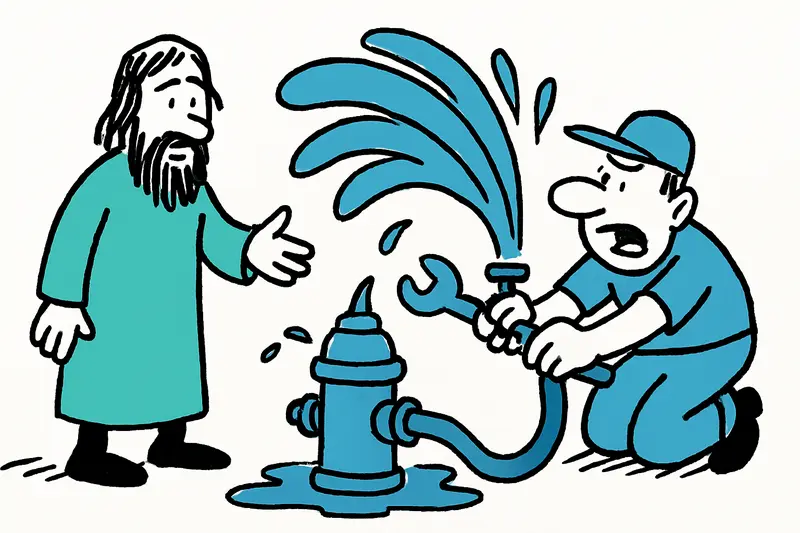
What was announced as a brief cleaning of the municipal reservoir ended in a multi-day supply outage for parts of Porto Cristo. A reality check: who was prepared — and who wasn't?
Waterless in Porto Cristo: How did the repair get out of control?
Main question: Why did an announced reservoir cleaning lead to a multi-day outage in parts of the town?
In Porto Cristo, on the eastern tip of Manacor, many households faced empty pipes this week. The city administration had announced a cleaning of the central water reservoir — it sounded routine. When the basin was drained, the concession company Aigües Son Tovell discovered much more extensive damage to the pipes and tanks, according to officials. Result: the planned short interruption turned into a multi-day supply gap, especially in the higher neighborhoods around Ca na Biela. Similar scarcity measures have affected other towns in Mallorca, as reported in Water alarm in Mallorca: Seven municipalities turn off the tap — is saving alone enough?.
In short: the repair became necessary because leaks were larger than expected. The company reported delays, the city administration informed residents about temporary shut-offs, and requests for emergency water resulted in tanker deliveries. Still, numerous residents report they had to manage for several days without reliable tap water.
Critical analysis: when carrying out technical interventions on central facilities, two problem areas came together here. First: the on-site technical assessment — apparently potential defects were underestimated when the basin was emptied. Second: crisis management on the ground. If only a few houses in a neighborhood have their own intermediate storage, emergency logistics must act very quickly. That did not function smoothly in several places.
From the everyday life of a port town: early in the morning you can hear the seagulls over Porto Cristo's small fishing harbor, the mossy smell of old nets mixes with the wail of an approaching tanker. At the market, shopkeepers fill buckets with water, an elderly couple carries plastic canisters from the supply vehicle up the steep alleys to their apartment, a scene similar to reports from other municipalities like Valldemossa on the drip: When jerrycans are louder than tourist walks. Children who should wash their hands at school in the morning had to make do with wet wipes. Such scenes show: water outages begin with small inconveniences and can quickly lead to hygiene and social problems.
What is missing in the public discourse? Two points stand out. First: transparency about the condition of critical infrastructure. Citizens often learn only the bare minimum — that work is being done — but not what risks exist and what contingency plans are in place. Second: the debate about household preparedness. In older residential areas without cisterns or intermediate storage, occasional tanker deliveries are not enough to meet all needs.
Another aspect: prioritization. Who receives water first when supply is limited? Hospitals, care homes, households with young children and people with medical needs should, after a factual assessment, be given priority. Instead, decisions often appeared improvised.
Concrete, immediately actionable solutions: 1) In the short term, emergency plans must be standardized: central collection points for water distribution, clear priority lists and pre-designated sites for tankers. 2) Communication to the public needs more precise time windows instead of vague announcements — people plan shopping, work and caregiving based on that information. 3) Mobile water stations and free bottled water at social facilities can reduce acute health risks.
In the medium term I recommend creating pressure zones and redundancy. Many supply networks operate in larger pressure zones; additional buffer tanks at higher elevations prevent entire districts from drying out in the event of a defect. Also: regular, publicly accessible inspections of reservoirs and pipes as well as real-time monitoring with remote alarm systems so that leaks are not only visible when a tank is completely drained; see reporting on stressed reservoirs such as Palma's water at the limit: reservoirs almost empty — how should we react now?.
Long term: the island needs an investment program for water infrastructure that reduces repairs and increases resilience against outages. Graduated measures are suitable here: subsidies or tax incentives for households to retrofit small cisterns, promotion of municipal reserve tanks, and linking maintenance cycles with seasonal pressures (tourism, dry periods). Coordination between the municipality, the concessionaire and national authorities must be better formalized.
A pragmatic example that works in other municipalities: routine maintenance is scheduled in two shifts so that when one basin is emptied a diversion basin can automatically take over. Such technical redundancy costs money, but in an emergency it saves trouble, protects health and often reduces spending on urgent repairs.
Concise conclusion: the incident in Porto Cristo showed that routine work on central systems becomes a crisis when technical uncertainties meet organizational weaknesses. The rapid discovery of extensive leaks was correct and unavoidable. Equally unavoidable must be the consequence: transparent risk communication, reliable emergency logistics and targeted investments in redundancy. As long as these lessons are not learned, the next heat wave, the next pipe burst or the next unexpected draining will be an invitation to silence in the pipes.
Frequently asked questions
Why did Porto Cristo run out of tap water during a planned reservoir cleaning?
Which areas of Porto Cristo were most affected by the water outage?
How long can water outages last in Mallorca when a reservoir repair goes wrong?
What should residents do during a tap water outage in Porto Cristo?
How are emergency water deliveries handled when parts of Mallorca lose tap water?
Why do older neighbourhoods in Mallorca struggle more during water shortages?
Is it safe to live with repeated water cuts in Porto Cristo?
What needs to improve in Mallorca’s water infrastructure after incidents like Porto Cristo?
Similar News

Fewer Airlines, Fewer Destinations: What Palma's Winter Flight Schedule Means for Mallorca
Analysis shows: Winter at Son Sant Joan Airport will be quieter, with significantly fewer airlines and destinations. Who...
German tourist dies in Sa Calobra – a reality check for emergencies on Mallorca's beaches
A 40-year-old tourist died at the Torrent de Pareis. The emergency call, a doctor who happened to be present, a defibril...
Deadly Tractor Accident in Bunyola: What Needs to Be Done Now
In a work accident on an estate near Bunyola, a roughly 40-year-old man lost his life. His wife and a small child were o...
Head-first dive into the shallow part of Cala Fonoll: An accident and the unresolved question of responsibility
A young tourist dove into Cala Fonoll and was seriously injured. Key question: Why are clear warning signs missing at da...
Mistaken identity with fatal consequences: Brutal assault in S'Aranjassa — what's missing in the follow-up?
At S'Aranjassa a visitor to a finca was tied up, beaten and thrown out of a van. Three men have been arrested, including...
More to explore
Discover more interesting content

Can Cap de Bou

Townhouse Lleo 72
