
Waterspout off Cala Mesquida: How safe are beachgoers really?
Waterspout off Cala Mesquida: How safe are beachgoers really?
On Monday a waterspout passed in front of Cala Mesquida and surprised beach visitors. A reality check: How well is the island prepared for such events?
Waterspout off Cala Mesquida: How safe are beachgoers really?
A reality check after the waterspout that passed over the sea on Monday afternoon
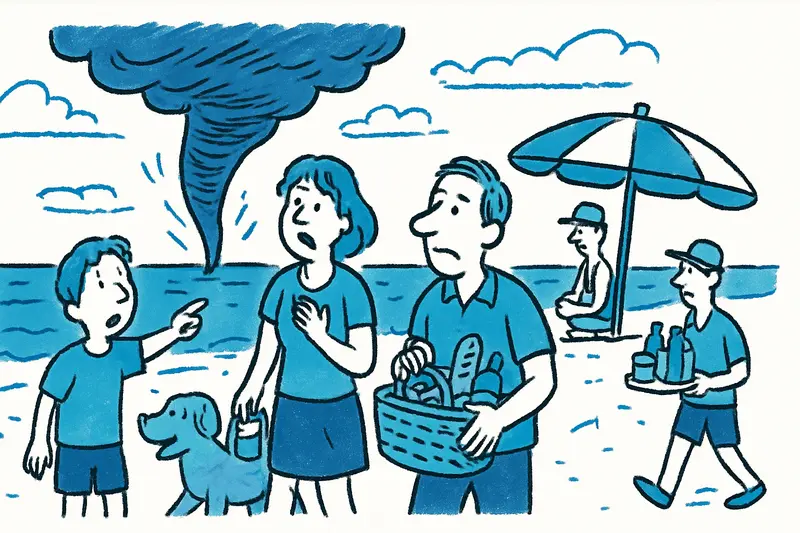
Around midday the quiet scene at Cala Mesquida changed abruptly: a dark funnel pinched out of a bank of clouds, a waterspout formed over the sea and moved toward Cala Agulla. Holidaymakers who were adjusting sunshades or paddling in shallow water stared briefly, took photos and breathed a sigh of relief: there was no damage, no panic. But the question remains: How well prepared is Mallorca for such sudden phenomena?
Key question: How do beach visitors and those responsible react when an atmospheric event develops within minutes and photos spread faster than official warnings?
Briefly analysed: A waterspout occurs when particular air layers and moisture come together — visible as a funnel from cloud to the water surface. Such phenomena usually last only minutes but can be locally very impressive. On Mallorca the national weather service did not issue an alert level for the island; Menorca, by contrast, recorded an orange warning. For beachgoers on site these notices are important, but they are not always timely or clear enough. See also Yellow Warning on the North Coast: Wind, Waves — and What We Should Really Pay Attention To for an example of regional alerting.
What is missing from public discussion: People tend to talk about storm categories and flight cancellations — there were recent delays at the airport — but the small, fast danger on the beach often remains a side issue. Simple, visible cues for visitors are lacking: What does an "orange warning" concretely mean for beach use? When should families leave the beach bar? And who explains to holidaymakers in plain words how to behave in case of a waterspout or a sudden gust of wind? Recent incidents such as Tragedy in Son Bauló: Small Cove, Big Questions — How Safe Are Mallorca's Unassuming Beaches? underline how quickly situations can escalate on small, often unsupervised shores.
An everyday scene: On the path between the dunes of Cala Mesquida a family hurriedly packs away its picnic. The children glance at the sea once more, a dog shakes itself, a vendor carrying a crate of refreshments walks past, and from the beach bar at the end of the shore you can hear chairs clattering. The waterspout has already fallen apart again, but the memory remains: "That happened fast," says a woman with wet hair and sand between her toes.
Concrete approaches without demanding complicated technology: First: better local information signs at access points to popular beaches — briefly explaining what different warning levels mean and which behaviour rules apply. Second: clearer, digital immediate alerts to users registered on the coast (for example SMS/WhatsApp alerts from the municipality or rescue service). Third: regular training for lifeguards and beach staff on rare phenomena like waterspouts — exercises that include simple communication phrases ("Come ashore immediately", "Keep away from small boats"). Fourth: cooperation between tourist offices and accommodations so staff can give guests short-term notices — when in doubt a brief info sheet is better than no information at all.
Some measures are small but effective: visible sirens at heavily frequented beaches are expensive, but coloured flags with added text and a simple information card at check-in could be introduced quickly. Drone surveillance is technically possible, but the priority should first be clear signage, fast communication and staff training; see Sudden autumn in Mallorca: Are harbors and coasts prepared for short storms? for related preparedness discussion.
Conclusion, pointed: The waterspout at Cala Mesquida was spectacular — and fortunately harmless. Still, the event shows that at the interface between meteorological specialist information and everyday life on the beach we can improve. More transparency, simple rules and a few targeted training sessions would suffice so that photos of unusual weather events in future perhaps only end up in holiday albums — and not in debates about who was warned when. For further reading on similar local waterspouts see Like a movie: Waterspout over Calvià — what you need to know.
Frequently asked questions
What exactly is a waterspout and should I worry when I'm at a Mallorca beach?
How reliable are weather warnings for Mallorca beaches?
What practical steps can Mallorca beaches take to improve safety during sudden weather events?
What should I do if I see a waterspout forming while on Mallorca's coast?
What happened at Cala Mesquida and Cala Agulla when the waterspout appeared?
Are Mallorca beaches currently clear about weather warnings and what signage exists?
How can hotels and tourist offices help guests stay safe during sudden weather events on Mallorca?
Planning a Mallorca beach day? What should families know about potential sudden weather phenomena?
Similar News

When the Rooster Steals the Morning: The Chicken Dispute at Plaza Mediterráneo
At Plaza Mediterráneo in Palma a chicken enclosure is causing trouble: noise, odor and passersby feeding the animals hav...
Battle of the Budget Airlines: Why Wizz Air Overtook Ryanair in Late Summer — and What Mallorca Should Learn
Wizz Air gained significantly more in late summer than Ryanair. A review of the numbers, a look at the effects for Mallo...
Motorcycle crash at Portals Nous: An accident — and many unanswered questions
In the night leading into Friday a 48-year-old motorcyclist crashed heavily on the Ma-1 near Portals Nous (km 9). He suf...
Rent explosion in the Balearic Islands: Why prices rose so sharply between 2020 and 2025
New data from the Observatori show: the average rent for new contracts in the Balearic Islands was €1,390 in 2025 — almo...
First Day, First Consequences: What Palma's Rent Freeze Really Means
A new decree stops a planned eviction in Palma — but what really changes for tenants and landlords? A reality check with...
More to explore
Discover more interesting content

Can Cap de Bou

Townhouse Lleo 72
