
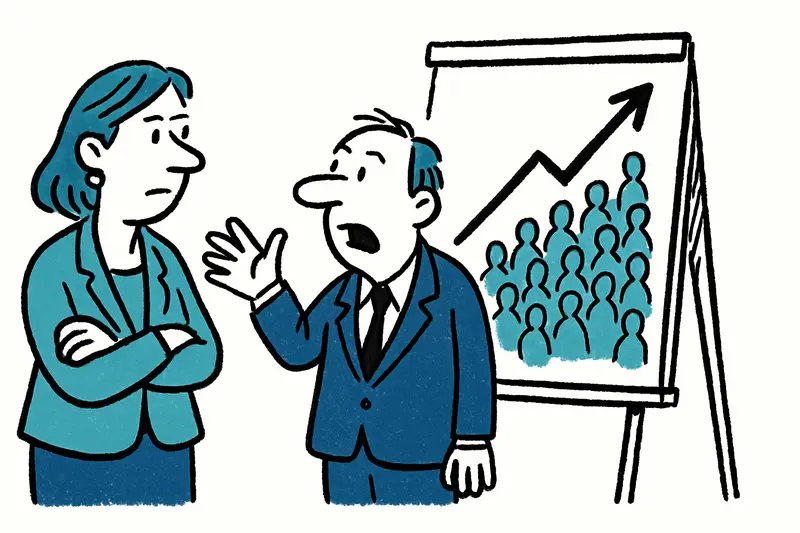
"We must rethink": Alarm in Mallorca — Growth without a plan?
Almost 50 percent more people in three decades — the minister-president warns: Mallorca is growing faster than its roads, schools and hospitals. What is missing are pragmatism, coordination and brave solutions.
"We must rethink": Alarm from Parliament
Late on Tuesday evening, still with the echo of the general debate in their ears, a sentence was spoken that felt like a wake-up call to many on the island: "We must rethink." Not as alarmism, but as a sober observation. Almost 50 percent more residents in three decades are not an abstract statistic — they mean crowded waiting rooms, long traffic jams on the Passeig Marítim and construction sites whose cranes already shape the new skyline in many places.
Key question: How can growth coexist with quality of life?
This is the central question: How can Mallorca absorb the projected additional up to 250,000 people without destroying its villages, beaches and neighborhoods? It is not about keeping people away. It is about planning — and planning is often reactive at the moment. In the Santa Catalina market you can hear the vendors in the morning, but also conversations about housing costs and long queues at the local health center. Anyone driving past Son Espases hospital or Palma's bypass knows that infrastructure is falling behind.
What public debate is missing
There is much talk about concrete. Far less is said about subtler problems: distortions from padrón registrations, seasonal workers who are not always formally recorded, and the growing number of people who live here but pay their taxes elsewhere. Water and sewage systems, the stress on aquifers in the Tramuntana and the capacity of the power grid rarely make headlines, yet they are crucial for quality of life. Also overlooked is the emigration of young Mallorcans because they cannot find affordable housing.
Who governs — and who pays?
The minister-president made an important point: many decisions do not lie solely with the island government. Migration policy, EU freedom of movement and larger financing questions come from Madrid or Brussels. Nevertheless, much remains to be done at the local level. Who pays for new schools in Alcúdia, additional health centers in Calvià or for expanding bus fleets? And how do you prevent new projects from causing sprawl instead of densifying existing urbanized areas?
Pragmatic proposals instead of fake debates
A few ideas that could be implemented quickly on the island: targeted support for cooperative and social housing projects; stronger taxation of vacant apartments and short-term rentals that withdraw housing from the market; conversion of unused hotel areas for long-term housing; expansion of school and health capacities along Mallorca's new residential axis: Villages grow, Palma keeps moving. It is also important to invest seriously in public transport — safe bus connections instead of more parking, bike lanes across Palma and regional transport concepts that relieve commuters.
Coordination, data and local participation
Planning needs facts. An up-to-date, more transparent registry, regular population projections at municipal level and a binding coordination mechanism between municipalities, the island government and the state would be first steps. At the same time, more local participation is needed: discussions not only in parliament but at the bus stop, in the café on the Paseo or at the weekly market. There the decision is made whether a new project is accepted — or not.
A call for responsibility — and creativity
The minister-president is right to call for a wide-ranging debate. It is not enough to talk about numbers. It is about soundscapes: the clatter of construction cranes next to the village church bell, the surf in Cala Mayor drowned out by traffic noise. Mallorca remains livable if politics, business and citizens plan together — boldly, locally and with a view to the next decades. Otherwise we will continue to lag behind until reality overtakes us again.
In short: The challenge is bigger than a single household or municipality. But it is solvable — if we start now to really think differently.
Frequently asked questions
Why is Mallorca’s population growth becoming a concern?
What problems does rapid growth create for daily life in Mallorca?
Is Mallorca becoming too crowded for its infrastructure?
What housing solutions are being discussed for Mallorca?
Why are people talking about water and sewage capacity in Mallorca?
What is happening in Santa Catalina, Palma, as Mallorca grows?
What changes are being suggested for Alcúdia and Calvià?
What can Mallorca do to plan growth better?
Similar News
Near-miss on Lanzarote: Landing Ryanair Jet and Iberia Takeoff — what really went wrong
On Lanzarote there was a dangerous incident: A Ryanair flight (FR5910) from Dublin landed on runway 03 while an Iberia E...

Eurowings introduces new Premium Business seats on Mallorca routes
From December 1, selected Eurowings flights to Palma and other destinations will feature eight particularly generous sea...
Car on MA-13 near Inca in flames – a safety check for the island
A vehicle caught fire on the MA-13 towards Alcúdia on Tuesday afternoon. The driver was uninjured, the car was destroyed...
Real Estate in Mallorca: Fewer Buyers, Higher Prices — What's Behind It?
Sales on Mallorca are falling, yet prices continue to climb. Why fewer transactions do not equal relief — and what shoul...
Just Bought — Already Trouble: Water Damage in the Heiters' Villa and What Owners in Mallorca Should Know Now
A newly purchased sea-view property — and within days a water damage. What risks lurk in new properties in Mallorca, and...
More to explore
Discover more interesting content

Can Cap de Bou

Townhouse Lleo 72
