
Welcome, Olivia — and two births at the same minute in the Balearic Islands
Welcome, Olivia — and two births at the same minute in the Balearic Islands
The first newborn on Mallorca in 2026 is named Olivia. On Ibiza and in Manacor two more babies were born at 5:53 a.m. — a morning that shows: life goes on.
Welcome, Olivia — and two births at the same minute in the Balearic Islands
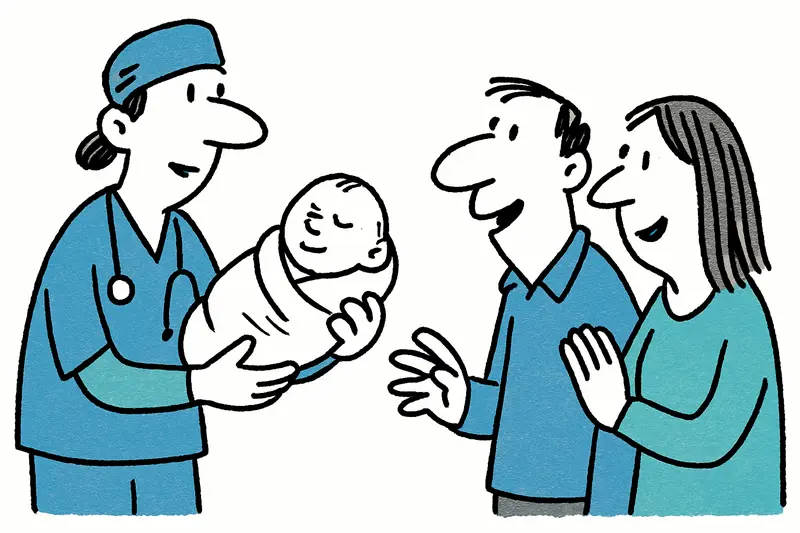
When the clock struck 12:50 a.m. on New Year's at the Hospital Universitario Son Espases in Palma, the island welcomed a small bundle of life: a girl was born and given the name Olivia Sánchez Salazar. Slightly petite at 2,580 grams, the daughter of parents from Colombia entered the new year — far from fireworks and champagne glasses, but with the familiar pulse of a hospital corridor and the soft beeping of monitors.
Moments like these are special on the island: in the early morning hours you hear, alongside traffic and delivery vans on Passeig Mallorca, bird calls and the footsteps of nurses down long corridors. Families who usually fill the Plaza de Cort or stroll along the harbour begin their year now with diapers and breastfeeding instead of good resolutions. That brings its own warm energy.
It wasn't only Palma reporting new arrivals: in the private Quirónsalud group the first birth in their Balearic facilities this year took place at 5:18 a.m. at Clínica Rotger — a boy who adds to the circle of new beginnings on the island. And a remarkable coincidence: at 5:53 a.m. health services recorded two births simultaneously on two different islands. On Ibiza, Marwa Udari Checa was born at Hospital Can Misses, weighing 3,200 grams and delivered naturally, attended by midwife Judith Català. Exactly the same minute, a boy was born at the Hospital de Manacor: Liam Ismael Espínola Ortiz.
One has to pause at the thought: two newborns, the same minute, two different corners of the archipelago. On days like these it becomes visible how closely the Balearic Islands are connected in everyday life despite the distances. Midwives, doctors and care teams work for hours, some take extra shifts, others run quickly to the pharmacy after finishing work — the wheel keeps turning because the people in the clinics keep it running.
For Mallorca these births are more than statistics, as explored in Crisis de natalidad en las Baleares: ¿Qué significa la caída para Mallorca?, and they also sit within the broader demographic picture described in Cuando faltan los cochecitos: la silenciosa llamada demográfica de Mallorca. They are a sign that families are putting down roots here, that new neighbours in the neighbourhoods, at the market and in the schools will soon become familiar voices in daily life. Homes that stood empty just months ago are now enlivened with strollers and diaper bags; cafés see mothers with young children again, and local services — from the paediatrician to the daycare — get new names added to their lists.
A small, practical observation from Palma: on the road to Son Espases there's a taxi driver well known here who often leaves at dawn. He has kept a thermos in the glove compartment for years and often offers a reassuring word to anxious relatives. It's these unassuming gestures that support new beginnings on the island. So if you soon see a young family, a bit of neighbourly help or a homemade loaf of bread can mean more than you think.
What remains after such a morning? A feeling of continuity. Year after year people here go through the same passage from ending to beginning — some celebrate loudly, others quietly in a hospital room. For Mallorca that's a good reminder: the island is not only a holiday destination, but a home with neighbourhoods, schools and birthdays. And for the newborns it means: welcome to a community that receives you with open arms, a mix of calm, helping hands and the sound of everyday life that never fully fades.
Olivia, Marwa and Liam are small symbols of this transition. No big spectacle, just the simple daily tasks — changing diapers, sleepless nights, laughter at the breakfast table. That's the normality that will shape Mallorca in the coming months. And anyone who walks attentively through the streets will soon discover new faces in cafés, on playgrounds and at the markets — often with tired eyes but a very determined smile.
A short look ahead
If you meet families in the near future, be a piece of the support that is so appreciated here: a friendly greeting, letting them go ahead in line at the bakery, a few used baby items — small things, big impact. For the babies the year has only just begun. For all of us it's a reminder: life happens, in hospitals like Son Espases, in clinics like Rotger, in Can Misses and Manacor — and in the streets and squares we call home.
Frequently asked questions
What happens when a baby is born at Son Espases in Palma on New Year’s Day?
Why do births on New Year’s Day feel especially meaningful in Mallorca?
How common are simultaneous births in the Balearic Islands?
What do new births say about life in Mallorca beyond tourism?
How busy is the maternity ward at Son Espases in Palma?
What is the role of Clínica Rotger in Mallorca’s maternity care?
What makes Manacor an important place for families on Mallorca?
What should you do to help a new family in Mallorca?
Similar News
Palma Gets a Welcoming Park: Tirador Goes Greener — and a Café Is Coming
A new green project in Es Fortí/Camí de Jesús will transform the old Voltadora into a city park with an experience fores...
Why the End of "Los Últimos Mohicanos" Is More Than the Closing of a Bar
With squealing tires and one last glass, an icon on the Palma–Manacor expressway closes. Why the demise of this German b...
Protest camp on Plaza España: Who asks for solutions to the right to housing?
Around 30 activists set up a tent camp on Palma's Plaza España to push for stronger tenant rights. Our analysis asks: Ar...
In the Name of a Gang: Alleged Extortion in El Molinar and What It Reveals About the Protection of Sex Workers
A man is accused of posing as a member of the Hells Angels and extorting two women at accommodation in El Molinar. The s...
When Chile Meets the Mediterranean: A New Flavor at Can Bordoy
At Can Bordoy in Palma's old town, Chilean chef Jhonatan Maldonado combines Patagonian seafood with Mediterranean island...
More to explore
Discover more interesting content

Can Cap de Bou

Townhouse Lleo 72
